Lipstick is one of the most essential beauty products in any makeup routine. From bold reds to soft pinks, lipsticks can make a statement and complete your look. However, as the beauty industry evolves, consumers are becoming more aware of what goes into their products. Synthetic lipstick ingredients are often a topic of discussion, as many people seek to understand the materials that make up the lipstick they use daily.
In this article, we will dive deep into synthetic lipstick ingredients, exploring the components that make up your lipstick, their functions, and how they affect both your skin and the environment. Whether you’re a beauty enthusiast or someone simply interested in the ingredients of your favorite products, this guide will provide all the information you need to make an informed choice when selecting your next lipstick.
What Are Synthetic Lipstick Ingredients?
Synthetic lipstick ingredients refer to chemicals and compounds used to create the texture, color, and durability of the product. Unlike natural lipstick that uses plant-based or naturally derived ingredients, synthetic lipsticks often rely on artificial substances. These ingredients are typically used for their ability to provide longer wear, vibrant color, and smoother application. However, concerns around synthetic ingredients have sparked discussions about their safety and potential effects on health.
Why Do Brands Use Synthetic Lipstick Ingredients?
Synthetic lipstick ingredients are commonly used because they offer several benefits:
- Consistency: Synthetic ingredients provide a consistent quality and performance across different batches.
- Stability: Synthetic ingredients can help increase the shelf life of lipsticks, making them more durable and resistant to oxidation.
- Cost-Effectiveness: Artificial ingredients are often less expensive to produce, making them an attractive option for mass-market products.
While synthetic ingredients help create high-performing lipsticks, many consumers are beginning to question their long-term impact on health and the environment.
Common Synthetic Lipstick Ingredients
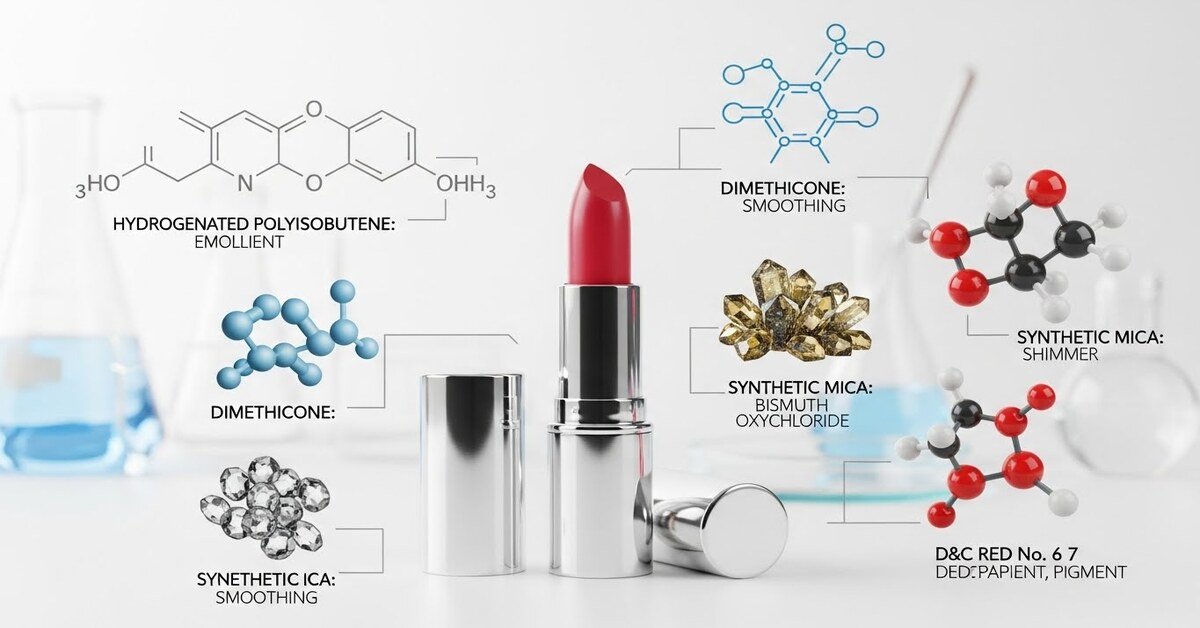
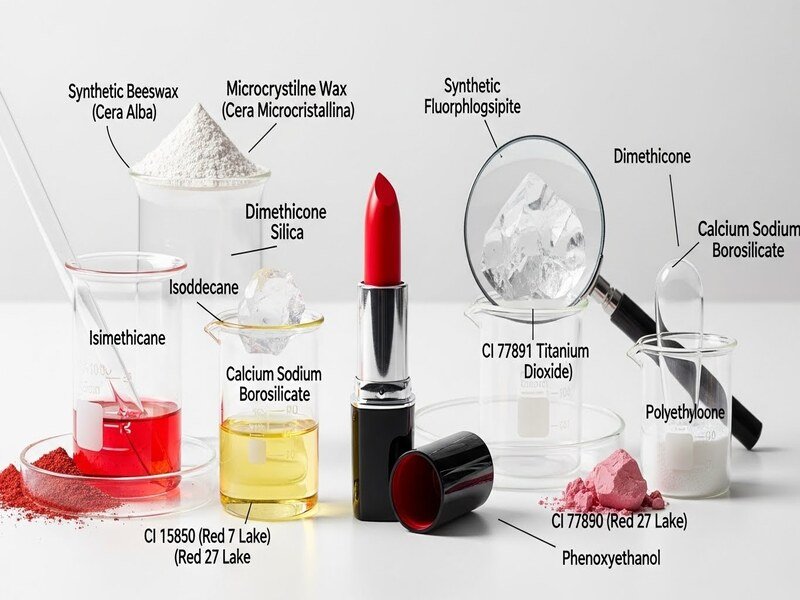
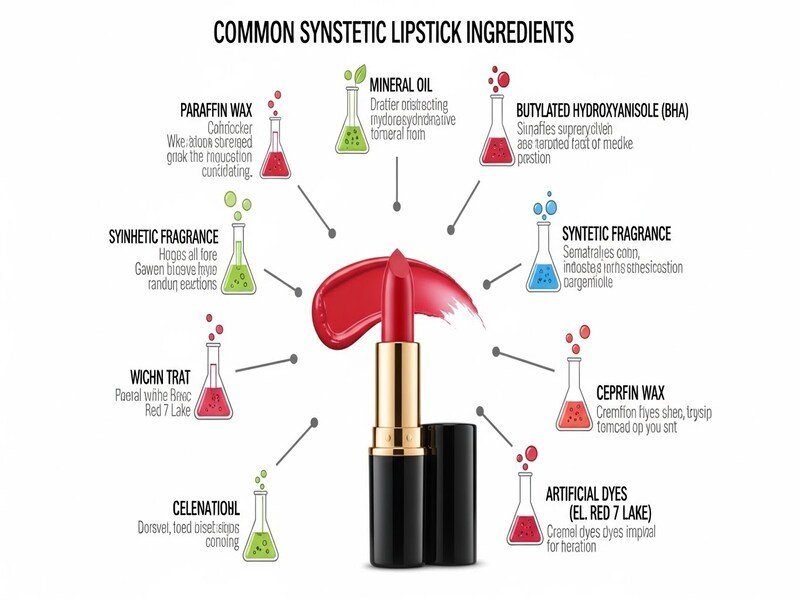
To understand synthetic lipstick, it’s important to examine the specific ingredients commonly used in these products. Let’s take a closer look at some of the most common synthetic lipstick ingredients.
1. Synthetic Wax in Lipsticks
One of the most important components of synthetic lipstick is synthetic wax. Synthetic wax lipstick is used to create a smooth texture, allowing the product to glide easily onto the lips. Unlike natural waxes, which come from beeswax or carnauba wax, synthetic waxes are artificially made, often derived from petrochemicals or other synthetic sources.
Synthetic waxes help lipsticks maintain their shape and provide stability. These waxes also help the lipstick maintain its consistency, preventing it from melting in warmer temperatures. For many, the appeal of synthetic wax lipstick lies in its ability to create a flawless, uniform texture with fewer variations than natural alternatives.
2. Parabens
Parabens are a common group of preservatives used in synthetic lipsticks to prevent bacterial growth and extend shelf life. While they are effective in prolonging the usability of a product, parabens have been under scrutiny due to potential links to hormone disruption. Despite these concerns, parabens are still widely used in cosmetics, including lipsticks, due to their proven ability to preserve the product.
If you’re concerned about parabens, you can opt for paraben-free synthetic lipsticks or choose those that contain alternative preservatives.
3. Artificial Colorants and Pigments
The vivid colors of synthetic lipstick are often achieved using artificial colorants and synthetic pigments. These are created in laboratories to mimic natural colors, providing a consistent and vibrant hue. Common examples include FD&C and D&C color additives, which are approved for use in cosmetics. These synthetic pigments are often more intense and long-lasting than natural pigments, making them ideal for producing bold lip colors.
While synthetic pigments are generally considered safe, there is ongoing research into their potential long-term effects. Some individuals may also experience allergic reactions to certain artificial colorants, leading many consumers to opt for organic lipsticks that use plant-based pigments.
4. Mineral Oil
Mineral oil is a byproduct of petroleum and is often used in synthetic lipsticks as a moisturizing agent. It helps provide the smooth texture that many people love in their lipstick and acts as a barrier to lock in moisture. However, some people avoid products containing mineral oil due to its petrochemical origins and concerns about potential buildup on the skin.
While mineral oil is generally regarded as safe by regulatory agencies, those with sensitive skin may prefer lipsticks that use natural oils like jojoba or coconut oil.
5. Silicones
Silicones, such as dimethicone and cyclopentasiloxane, are often found in synthetic lipsticks to create a silky, smooth texture. They help the lipstick glide on effortlessly and provide a long-lasting finish. Silicones also help enhance the color payoff and improve the wear time of lipsticks.
However, some people may avoid silicones due to concerns about their long-term effects on the skin and the environment. If you’re looking for a more natural alternative, consider choosing lipsticks without silicones.
The Pros and Cons of Synthetic Lipstick Ingredients
Like any cosmetic product, synthetic lipstick has its benefits and drawbacks. Understanding these pros and cons will help you make an informed choice when selecting the right lipstick for your beauty routine.
Pros of Synthetic Lipstick Ingredients
- Long-Lasting: Synthetic ingredients, like synthetic wax and silicones, often provide a more durable finish, ensuring your lipstick stays intact for hours.
- Vibrant Colors: Artificial pigments offer bold, vibrant shades that are consistent from tube to tube.
- Smooth Application: Ingredients like mineral oil and synthetic waxes allow for a smooth, easy application, making lipsticks feel comfortable and luxurious on the lips.
Cons of Synthetic Lipstick Ingredients
- Potential Irritation: Some synthetic ingredients, like parabens or artificial fragrances, can cause irritation or allergic reactions, especially for sensitive skin.
- Environmental Impact: Many synthetic ingredients are derived from petrochemicals, which can have a negative impact on the environment when produced or disposed of.
- Health Concerns: While most synthetic lipstick ingredients are considered safe by regulatory bodies, concerns about long-term exposure to certain chemicals (like parabens and phthalates) remain.
How to Choose the Right Synthetic Lipstick for You
When selecting a synthetic lipstick, it’s important to consider your personal preferences and needs. Here’s a step-by-step guide to help you choose the best synthetic lipstick:
- Check the Ingredients: Read the ingredient list to identify potential allergens or irritants, like parabens, synthetic wax, or artificial fragrances.
- Choose the Right Finish: Decide on the finish you want—matte, satin, or glossy. Consider whether you prefer a long-lasting formula or one that’s more hydrating.
- Consider Your Skin Sensitivity: If you have sensitive skin or are prone to allergic reactions, look for lipsticks formulated without irritating ingredients like parabens or phthalates.
- Test for Wearability: Apply the lipstick and test it for comfort and wear. Choose a formula that feels good on your lips and lasts throughout the day without drying out or smudging.
Frequently Asked Questions (FAQs)
1. What is the difference between synthetic lipstick and natural lipstick?
Synthetic lipstick uses artificial ingredients like synthetic waxes, silicones, and mineral oil, while natural lipsticks use plant-based ingredients. Synthetic lipsticks often offer longer wear and bolder colors but may contain chemicals that some people want to avoid.
2. Are synthetic lipsticks safe to use?
Yes, synthetic lipsticks are generally considered safe for use by regulatory agencies. However, some people prefer to avoid certain synthetic ingredients like parabens or phthalates due to potential health concerns.
3. What are synthetic waxes in lipstick?
Synthetic waxes are artificially created waxes used in synthetic lipstick to provide structure and texture. They help the lipstick stay in place and glide smoothly on the lips.
4. Can synthetic lipsticks be moisturizing?
Yes, many synthetic lipsticks include moisturizing ingredients such as mineral oil or silicones to keep lips hydrated and smooth throughout the day.
5. What are the best alternatives to synthetic lipstick?
If you prefer a more natural option, look for lipsticks made with organic ingredients like beeswax, shea butter, and jojoba oil, which are free from synthetic chemicals and better for sensitive skin.
Conclusion
Synthetic lipstick has been a mainstay in the beauty industry for decades due to its long-lasting properties, vibrant colors, and smooth application. However, it’s essential to be aware of the synthetic lipstick ingredients used in these products and their potential impact on your skin and the environment. By understanding what goes into your lipstick, you can make an informed decision that aligns with your beauty preferences and values.