Lipstick is a beauty staple for many, but when it comes to choosing the perfect product, there’s more to consider than just color and texture. One of the biggest debates in the beauty world today is the choice between natural vs synthetic lipstick ingredients. While both options offer beautiful shades and finishes, the ingredients that go into these lipsticks can significantly affect your skin, health, and the environment.
In this article, we’ll break down the key differences between natural and synthetic lipstick ingredients, examine the benefits and drawbacks of each, and help you make an informed choice. Whether you’re looking for a bold synthetic lipstick or a more organic option like natural lipstick without chemicals, understanding these ingredients will ensure you’re picking the right lipstick for your needs.
What is the Difference Between Natural and Synthetic Lipstick Ingredients?
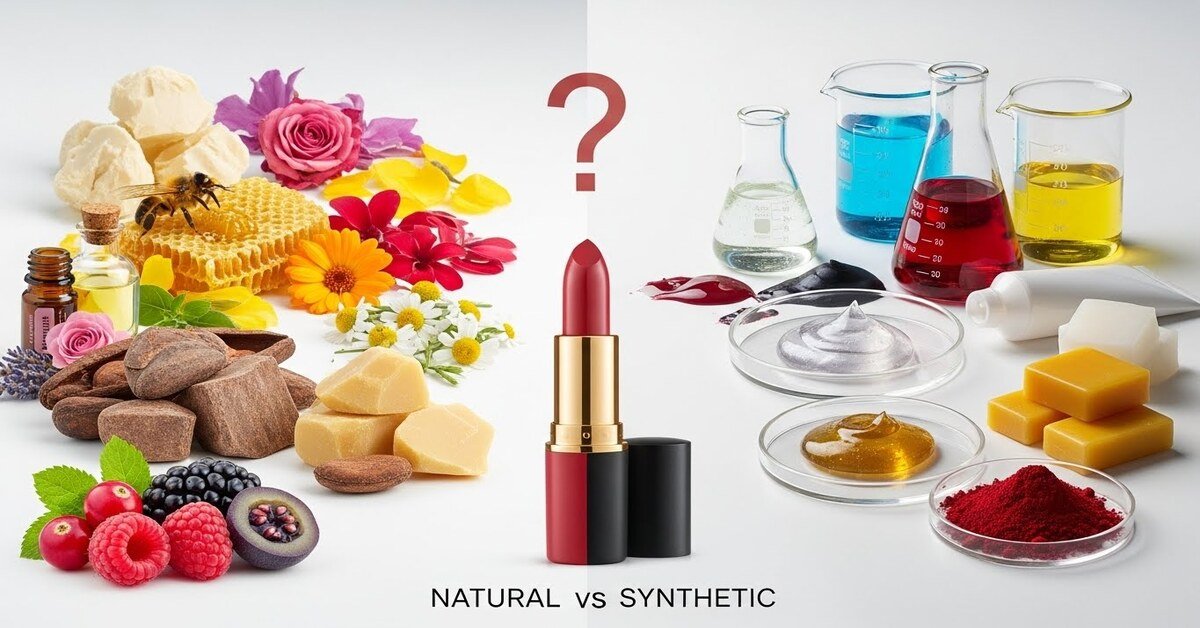
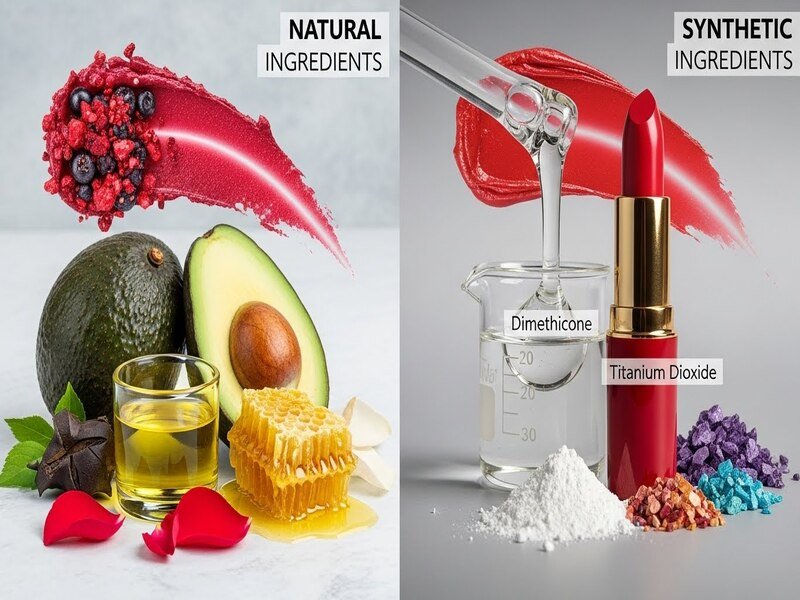
The main difference between natural vs synthetic lipstick ingredients lies in their sources. Natural lipstick ingredients are derived from plants, minerals, or animals, while synthetic lipstick ingredients are created in laboratories using chemicals. The shift towards natural lipstick has been growing over the years as consumers become more conscious of what they put on their skin.
Natural Lipstick Ingredients
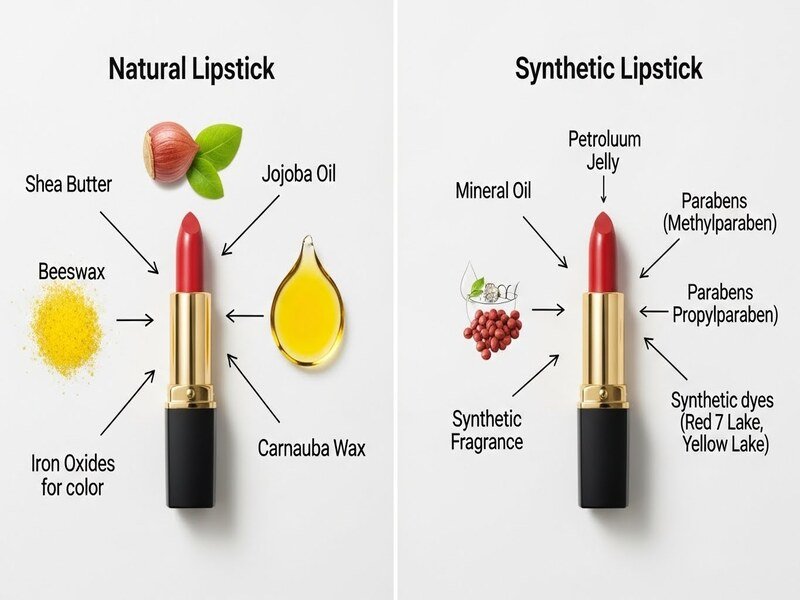
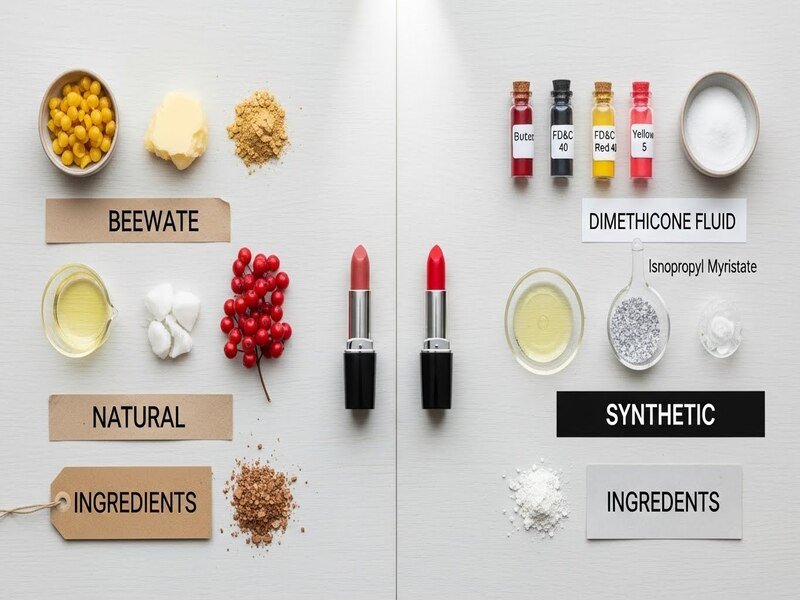
Natural lipstick typically features plant-based ingredients such as shea butter, beeswax, and jojoba oil. These ingredients are chosen for their ability to hydrate, soothe, and protect the lips. Natural lipsticks without chemicals use pigments from sources like fruits, vegetables, or minerals to achieve color without the use of synthetic dyes.
One of the key appeals of natural lipstick is that it’s free from harmful chemicals like parabens, phthalates, and artificial fragrances. Many people choose natural lipsticks because they are more environmentally friendly and gentle on sensitive skin.
Synthetic Lipstick Ingredients
On the other hand, synthetic lipstick ingredients are often used for their consistency, affordability, and longevity. Ingredients like synthetic waxes, petroleum-based oils, and artificial colorants provide a long-lasting, vibrant finish that many consumers prefer. Synthetic wax lipstick allows for a more uniform texture, ensuring that the product performs consistently over time.
While synthetic lipsticks are formulated to last longer and provide intense colors, many of the ingredients used in these products may come with environmental concerns and skin irritation potential. Some people with sensitive skin or allergies prefer to avoid synthetic lipstick due to these reasons.
The Pros and Cons of Natural vs Synthetic Lipstick Ingredients
When choosing between natural vs synthetic lipstick ingredients, it’s important to weigh the pros and cons of each option.
Benefits of Natural Lipstick Ingredients
- Gentler on Skin: Natural lipstick tends to be more hydrating and soothing due to the use of natural oils like jojoba oil and shea butter. These ingredients nourish and protect the lips, keeping them soft and moisturized.
- Free from Harmful Chemicals: One of the biggest advantages of natural lipstick without chemicals is that it is free from artificial additives, parabens, and phthalates. This makes it a safer choice for those with sensitive skin or allergies.
- Eco-Friendly: Natural lipsticks often use biodegradable ingredients and sustainable packaging, making them a more eco-conscious choice.
- Healthier for Your Body: Natural lipstick ingredients are generally derived from plants and minerals, which means they are less likely to cause irritation or other adverse reactions.
Drawbacks of Natural Lipstick Ingredients
- Limited Color Options: Natural lipsticks tend to have fewer color choices compared to their synthetic counterparts. While some brands have made significant improvements in pigment quality, natural pigments may not be as vibrant or long-lasting.
- Shorter Shelf Life: Without synthetic preservatives, natural lipsticks may have a shorter shelf life. They may also require more careful storage to prevent the product from spoiling.
- Less Long-Lasting: Natural lipsticks may not offer the same longevity as synthetic lipstick, especially when it comes to matte formulas. Frequent reapplication may be necessary.
Benefits of Synthetic Lipstick Ingredients
- Long-Lasting Color: Synthetic lipstick is known for its ability to deliver vibrant, intense color that lasts for hours. Many synthetic wax lipsticks are formulated with ingredients that create a durable finish, making them ideal for those who need their lipstick to stay in place throughout the day.
- Variety of Shades: One of the major benefits of synthetic lipstick is the wide range of colors available. From bold reds to pastel pinks, the color selection in synthetic lipsticks is often more diverse than that of natural lipsticks.
- Smooth Application: Synthetic lipstick is formulated to glide smoothly over the lips, providing an even finish with minimal effort. This makes it ideal for those looking for a quick and easy application.
Drawbacks of Synthetic Lipstick Ingredients
- Chemical Exposure: Many synthetic lipstick formulas contain preservatives, colorants, and fragrances that can be harmful to sensitive skin. Ingredients like parabens and phthalates may cause irritation or allergic reactions.
- Environmental Impact: Many synthetic ingredients are derived from petroleum-based sources, which can contribute to pollution and environmental degradation. In addition, synthetic products often come in non-biodegradable packaging.
- Less Hydration: Synthetic lipsticks may not offer the same level of hydration as natural lipsticks. While they provide long-lasting wear, they can sometimes dry out the lips over time.
How to Choose the Right Lipstick for You
Now that you understand the differences between natural vs synthetic lipstick ingredients, it’s time to consider how to choose the best lipstick for your needs. Here are a few steps to guide your decision:
Step 1: Determine Your Skin Type
If you have sensitive skin, opting for natural lipstick without chemicals may be a better option as it will be gentler and less likely to cause irritation. If you don’t have any skin concerns and are looking for bold, long-lasting color, synthetic lipstick may be your best bet.
Step 2: Consider Your Priorities
Do you prioritize hydration and health-conscious ingredients? Go for natural lipstick. If longevity, vibrant color, and a wide variety of shades are more important to you, synthetic lipstick may be the way to go.
Step 3: Try Both Types
One of the best ways to decide between natural vs synthetic lipstick ingredients is to try both! Many brands offer both types of lipsticks, so experimenting with both options will give you a better idea of which one you prefer based on performance, feel, and finish.
Frequently Asked Questions (FAQs)
1. What is the main difference between natural vs synthetic lipstick?
The primary difference is the ingredients. Natural lipstick uses plant-based oils and natural pigments, while synthetic lipstick uses artificial chemicals, waxes, and colorants to create longer-lasting color and smoother application.
2. Is synthetic lipstick harmful?
Synthetic lipstick is not necessarily harmful, but it may contain chemicals like parabens, phthalates, and artificial fragrances that can cause irritation for some individuals, especially those with sensitive skin.
3. What are the benefits of natural lipstick over synthetic lipstick?
Natural lipstick is made from nourishing, plant-based ingredients that are often gentler on the lips. It’s free from harsh chemicals and preservatives, making it a safer, more eco-friendly choice.
4. Can natural lipstick last as long as synthetic lipstick?
While natural lipstick may not offer the same level of longevity as synthetic lipstick, many natural formulas are designed to hydrate and provide lasting color. You may need to reapply it more frequently compared to synthetic options.
5. Which type of lipstick is better for sensitive lips: natural lipstick or synthetic lipstick?
If you have sensitive lips, natural lipstick is often the better choice. It typically contains fewer chemicals and uses natural oils that are less likely to cause irritation.
Conclusion
Choosing between natural vs synthetic lipstick ingredients ultimately depends on your personal preferences, skin type, and environmental values. While synthetic lipstick offers long-lasting color, smooth application, and a wide range of shades, natural lipstick provides a more eco-conscious, health-conscious alternative with nourishing ingredients. Whether you opt for natural lipstick without chemicals or a bold synthetic lipstick, understanding the ingredients will ensure that you choose the best option for your lips.
Explore more options for natural vs synthetic lipstick and other beauty products to find what works best for you. Happy lip coloring!