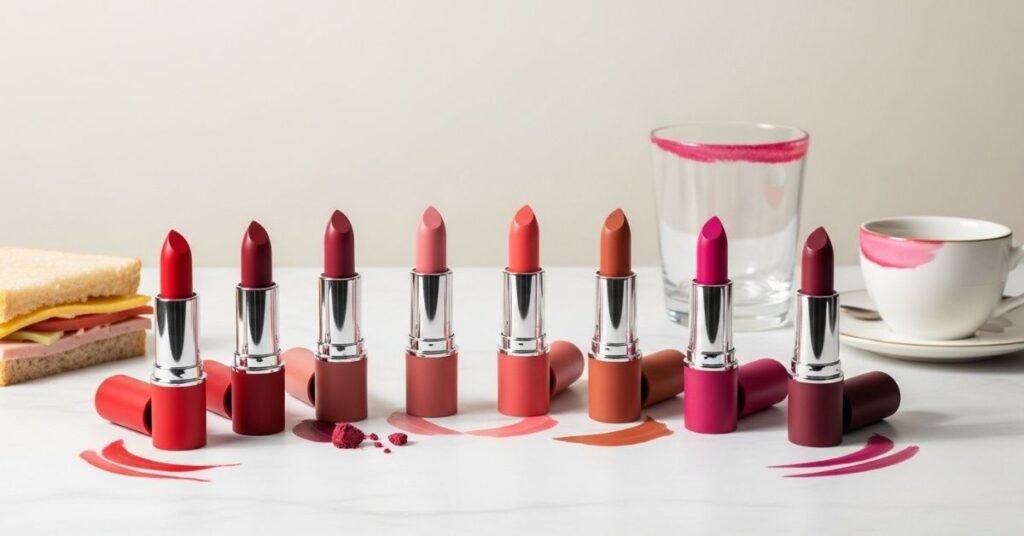
When you swipe on your favorite lipstick, the smooth glide, firm shape, and lasting finish might feel effortless. However, behind that perfect application lies careful formulation. One of the most essential components responsible for structure and performance is wax. Understanding Wax Types in Lipstick helps explain why some lipsticks feel creamy, others matte, and some last longer throughout the day.
Lipstick is not just pigment and oil blended together. Wax provides the backbone that holds everything in place. In this article, we’ll explore how different waxes work, why they matter, and how each type contributes to comfort, texture, and durability.
What Is Wax and Why It Matters in Lipstick Formulation
Before diving into individual waxes, it’s important to understand the role of wax in lipstick as a whole. Wax gives lipstick its solid form, allowing it to stay firm in the tube and glide smoothly onto the lips.
Without wax, lipstick would melt easily, lose shape, and apply unevenly. Wax also helps bind oils and pigments together, ensuring consistent color payoff and controlled application. This balance is what separates a high-quality lipstick from a messy one.
Understanding the Core Wax Types in Lipstick
Lipstick formulas usually contain a blend of hard and soft waxes. This combination helps achieve stability without sacrificing comfort. Among all options, natural waxes remain the most popular in modern formulations due to their performance and skin-friendly nature.
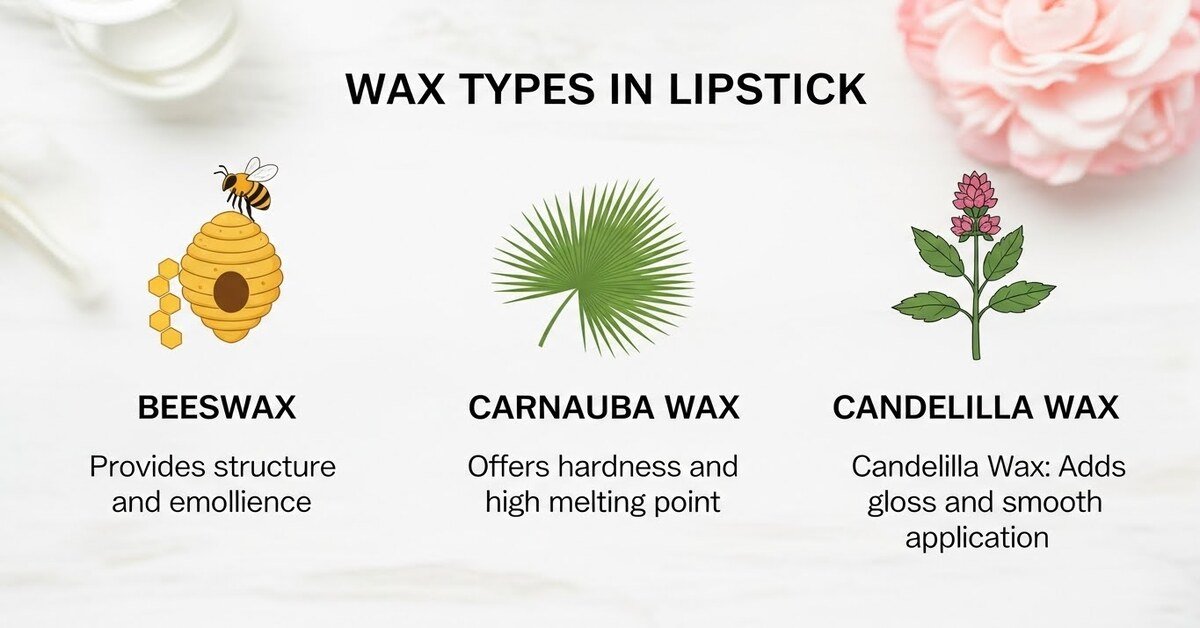
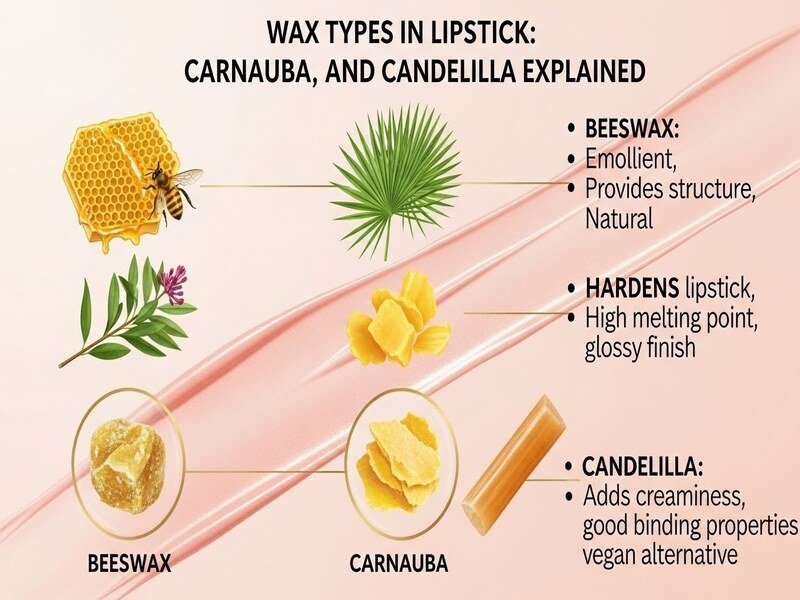
When discussing Wax Types in Lipstick, three names consistently stand out: beeswax, carnauba wax, and candelilla wax. Each one plays a unique role in shaping how lipstick looks and feels.
Beeswax: The Classic Choice for Comfort
Beeswax has been used in cosmetics for centuries and remains one of the most trusted ingredients today. Beeswax in lipstick is valued for its soft texture and moisturizing qualities.
This wax helps create a creamy feel that glides easily across the lips. It also forms a light protective barrier, helping prevent moisture loss. Lipsticks containing beeswax often feel comfortable for long wear and are ideal for everyday use.
Carnauba Wax: Strength and Longevity
Carnauba wax comes from the leaves of a Brazilian palm and is known for being one of the hardest natural waxes available. Carnauba wax in lipstick adds firmness and improves heat resistance.
Because of its high melting point, this wax helps lipsticks maintain shape in warm conditions. It also contributes to long-lasting wear, making it common in matte and long-wear lipstick formulas that need extra durability.
Candelilla Wax: Plant-Based Shine and Stability
Candelilla wax is derived from a shrub native to Mexico and the southwestern United States. It is widely used as a vegan alternative to beeswax and blends well with other waxes.
This wax adds structure while enhancing shine, making it especially useful in satin and glossy finishes. It supports smooth application and helps create a flexible texture that feels light on the lips.
Natural vs Synthetic Waxes in Lipstick
Many brands prefer natural waxes in lipstick because they offer skin compatibility and a more breathable feel. Beeswax, carnauba wax, and candelilla wax are all plant- or animal-derived and widely accepted in clean beauty formulations.
Synthetic waxes, on the other hand, are sometimes used to improve consistency and shelf stability. While effective, natural waxes remain the preferred choice for brands focusing on comfort and ingredient transparency.
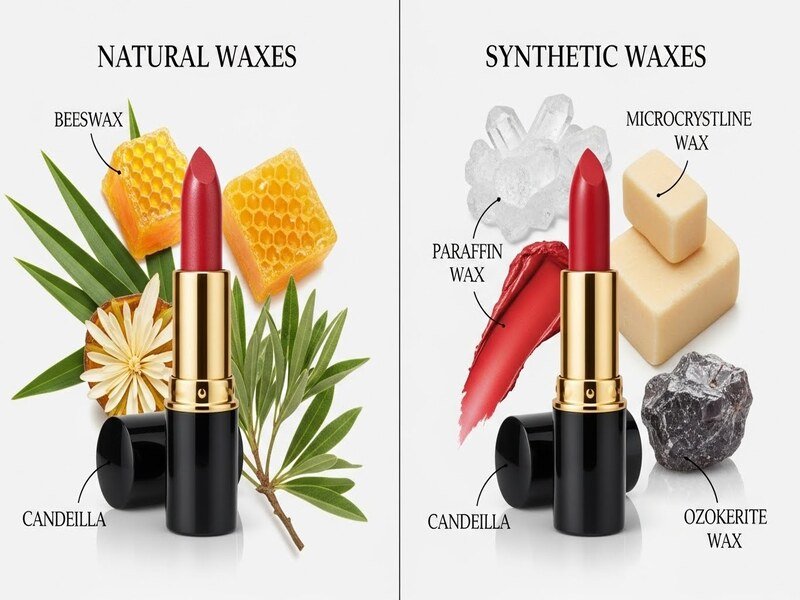
How Wax Affects Lipstick Texture and Finish
Wax plays a direct role in determining how a lipstick feels during application. Soft waxes contribute to creaminess, while harder waxes increase firmness and control.
A lipstick with more beeswax may feel smoother and more hydrating. One with higher carnauba wax content will feel firmer and more matte. The right balance ensures the product applies evenly without dragging or cracking.
Step-by-Step: How Wax Is Used in Lipstick Making
- Waxes are gently heated until fully melted.
- Oils are blended in to soften the mixture.
- Pigments are added and evenly dispersed.
- The formula is cooled and molded into shape.
This process allows different Wax Types in Lipstick to work together, creating a stable yet comfortable final product.
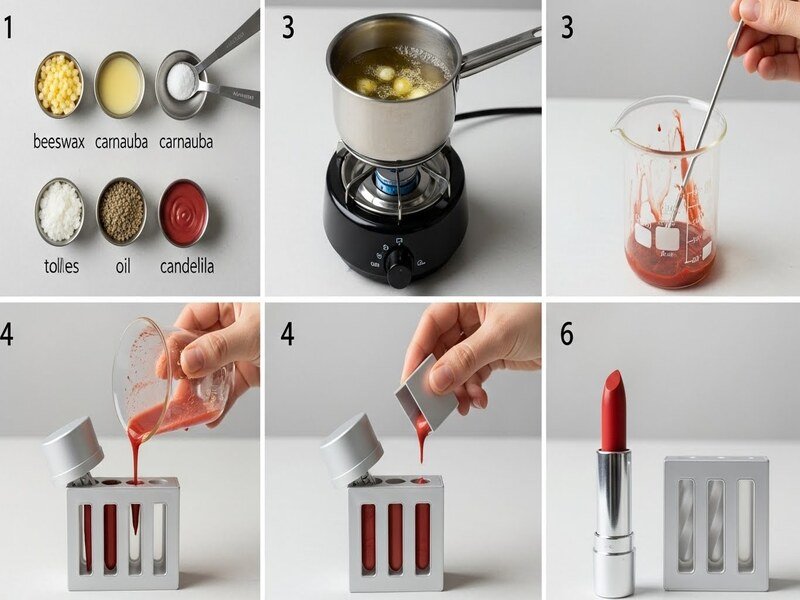
Why Wax Is Essential for Long-Lasting Lipstick
Longevity is one of the biggest concerns for lipstick users. Wax helps anchor pigment to the lips, reducing smudging and fading.
A well-balanced wax blend allows lipstick to move naturally with the lips instead of cracking. This is why understanding the role of wax in lipstick is key to creating formulas that look fresh for hours.
Choosing the Right Wax Combination
No single wax can do everything alone. That’s why most lipsticks use a blend of waxes. Beeswax adds comfort, carnauba wax adds strength, and candelilla wax improves flexibility and shine.
Together, these waxes create a formula that feels pleasant, performs well, and adapts to different finishes and preferences.
Conclusion: Why Wax Types Matter in Lipstick
Understanding Wax Types in Lipstick reveals why different lipsticks behave the way they do. Wax is not just a filler ingredient; it defines structure, texture, and wear performance.
From creamy comfort to long-lasting matte finishes, wax shapes every part of the lipstick experience. By combining beeswax, carnauba wax, and candelilla wax thoughtfully, brands create products that feel good and perform beautifully.
FAQs About Wax Types in Lipstick
1. What are the most common wax types used in lipstick?
The most common Wax Types in Lipstick include beeswax, carnauba wax, and candelilla wax. Each provides structure, texture, and stability.
2. Why is beeswax used in lipstick formulas?
Beeswax in lipstick helps create a smooth, creamy texture and supports moisture retention, making lipsticks more comfortable to wear.
3. How does carnauba wax affect lipstick performance?
Carnauba wax in lipstick improves firmness and heat resistance, helping the lipstick last longer and maintain its shape.
4. Are natural waxes better than synthetic ones in lipstick?
Many people prefer natural waxes in lipstick because they feel lighter on the lips and are often better tolerated by sensitive skin.
5. What is the main role of wax in lipstick?
The primary role of wax in lipstick is to provide structure, hold pigments together, and ensure smooth, even application.
For a complete understanding of wax in lipstick, read our detailed guide:
Wax in Lipstick and Its Role