When choosing a lipstick, most people focus on color and finish. However, what truly defines comfort, shine, and wear is the formulation behind the scenes. Oils play a critical role in how lipstick feels and performs. Among them, castor oil and jojoba oil are two of the most widely used ingredients.
Understanding castor oil vs jojoba oil in lipstick helps explain why some lipsticks feel glossy and long-lasting, while others feel lightweight and deeply moisturizing. This article breaks down their differences, benefits, and ideal uses in lipstick formulas.
Why Oils Matter in Lipstick Formulation
Lipstick oils are responsible for smooth application, pigment dispersion, and comfort. They prevent dryness and help bind waxes and pigments together.
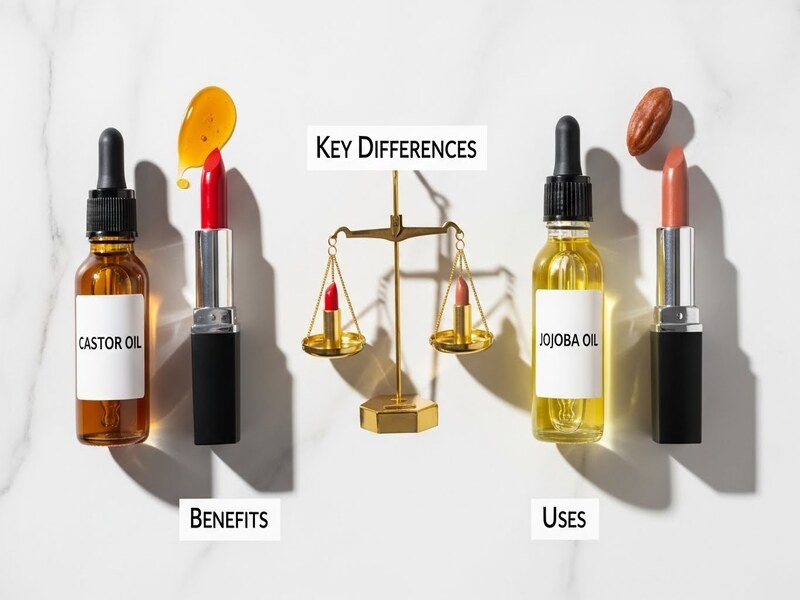
When comparing castor oil vs jojoba in lipstickkeyword, the key difference lies in texture and function. One enhances shine and payoff, while the other focuses on moisture and lip care. Knowing this difference helps brands and users choose the right formula.
What Is Castor Oil and How Does It Work in Lipstick
Castor oil is derived from castor beans and is known for its thick, glossy texture. In lipsticks, it acts as a powerful pigment carrier.
One major benefits of castor oil in lipstick is its ability to enhance color intensity. It helps pigments spread evenly, resulting in richer shades and better coverage. This makes it a staple in high-shine and bold color formulas.
What Is Jojoba Oil and Why Is It Used in Lipstick
Jojoba oil is extracted from the seeds of the jojoba plant and closely resembles the skin’s natural oils. Unlike heavier oils, it absorbs quickly and feels lightweight.
The benefits of jojoba oil in lipstick include hydration, comfort, and improved lip condition over time. It is especially popular in lipsticks designed for sensitive or dry lips.
Texture Differences: Castor Oil vs Jojoba Oil
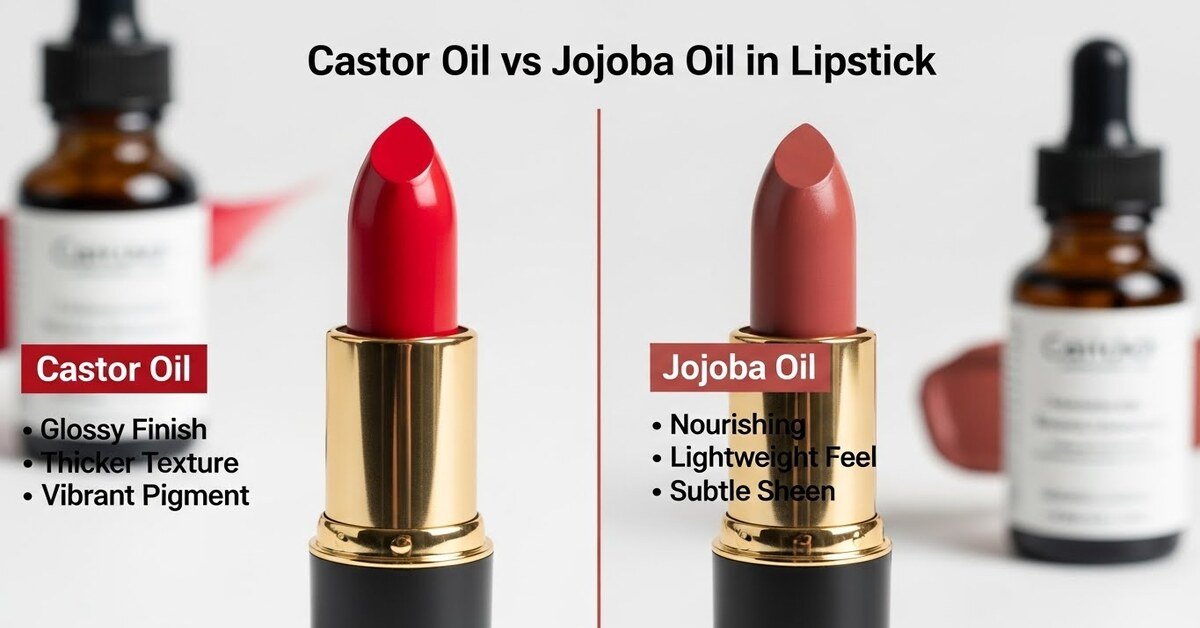
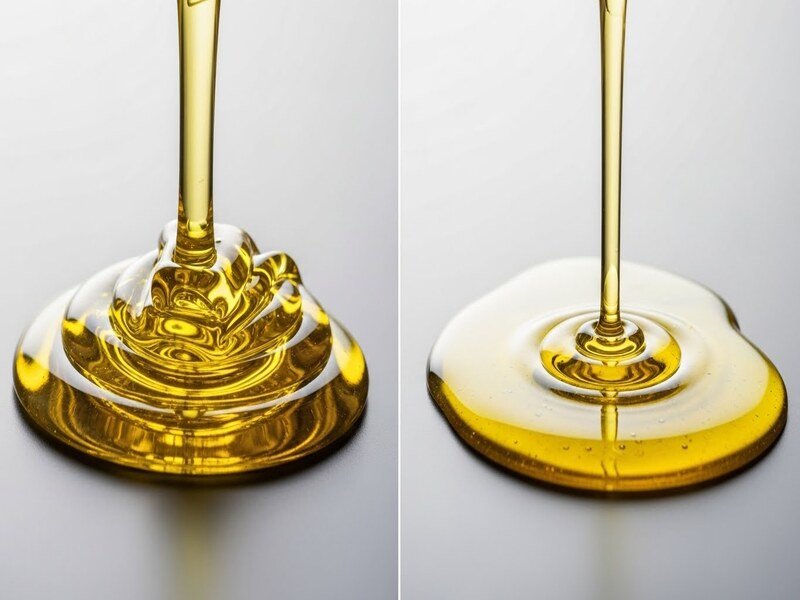
Texture is where the real contrast appears. Castor oil is thick and viscous, while jojoba oil is light and silky.
This distinction defines castor oil vs jojoba oil for lips in practical use. Castor oil creates a glossy, cushiony feel, whereas jojoba oil offers a soft, breathable sensation that feels almost weightless on the lips.
Shine and Finish Comparison
Castor oil is often chosen for glossy and satin finishes. Its thickness enhances shine and gives lips a fuller appearance.
Jojoba oil, on the other hand, supports natural or semi-matte finishes. It moisturizes without adding excessive shine, making it ideal for comfort-focused lipsticks.
Moisture and Lip Care Benefits
If hydration is the priority, jojoba oil stands out. It penetrates the lip skin and helps repair dryness over time.
This makes castor oil vs jojoba oil for dry lips an important comparison. While castor oil locks moisture on the surface, jojoba oil nourishes from within, offering long-term comfort.
Longevity and Wear Performance
Castor oil helps lipstick stay vibrant and smooth for longer periods. Its adhesive nature allows pigment to cling better to the lips.
Jojoba oil improves wear comfort but does not significantly enhance staying power. This difference plays a major role when deciding which oil is better for lipstick formulation based on performance goals.
Step-by-Step: How These Oils Are Used in Lipstick
- Oils are heated gently with waxes
- Pigments are dispersed into the oil blend
- Texture is adjusted for shine or softness
- Formula is cooled and molded
Both oils work differently during this process, reinforcing the contrast in castor oil vs jojoba in lipstickkeyword applications.
Which Oil Is Better for Different Lipstick Types
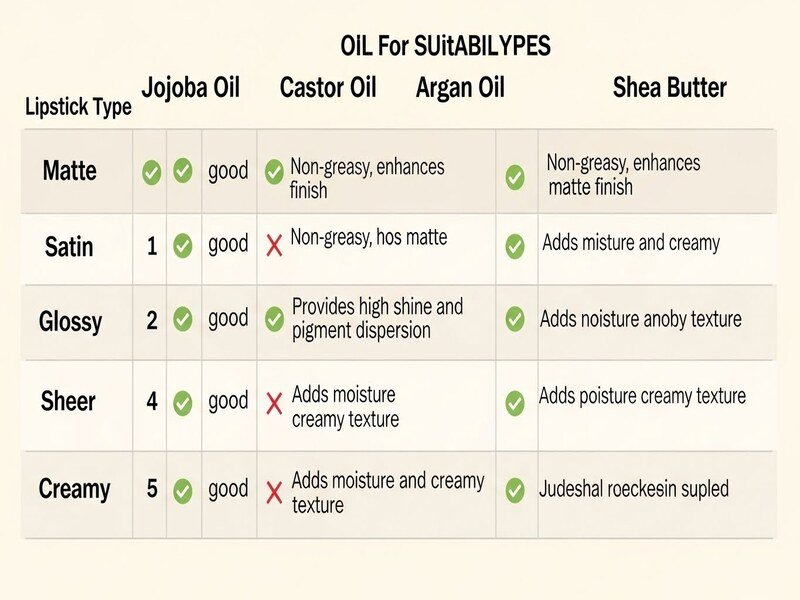
For glossy, bold, or long-wear lipsticks, castor oil is usually preferred. It enhances shine and color payoff.
For daily-wear, comfort-driven formulas, jojoba oil is ideal. Many brands combine both oils to balance performance and care.
Sensitive Lips and Skin Compatibility
Jojoba oil is extremely skin-friendly and rarely causes irritation. This makes it suitable for sensitive lips.
Castor oil is safe for most users but may feel heavy for those who prefer lightweight formulas. Understanding this helps clarify castor oil vs jojoba oil for lips based on personal comfort.
Choosing the Right Oil for Your Needs
If you want vibrant color and shine, castor oil delivers. If you want hydration and softness, jojoba oil excels.
In modern formulations, many lipsticks use both oils strategically. This combination offers the best of both worlds, reducing the need to choose just one.
Conclusion: Castor Oil vs Jojoba Oil in Lipstick
The debate between castor oil vs jojoba in lipstickkeyword is not about which oil is better overall, but which one suits a specific purpose. Castor oil enhances shine, color intensity, and wear, while jojoba oil prioritizes moisture, comfort, and lip health.
Understanding their differences allows brands to create balanced formulas and helps users select lipsticks that match their needs. Whether you prefer bold glamour or everyday comfort, both oils play an essential role in modern lipstick formulation.
FAQs About Castor Oil vs Jojoba Oil in Lipstick
1. What is the main difference between castor oil and jojoba oil in lipstick?
The key difference in castor oil vs jojoba in lipstick lies in texture and function. Castor oil enhances shine and pigment payoff, while jojoba oil focuses on hydration and comfort.
2. Which oil is better for dry lips in lipstick formulas?
When comparing castor oil vs jojoba oil for dry lips, jojoba oil is usually better because it absorbs easily and nourishes the lips deeply.
3. What are the benefits of castor oil in lipstick?
The main benefits of castor oil in lipstick include improved shine, better color dispersion, and enhanced longevity.
4. What are the benefits of jojoba oil in lipstick?
The benefits of jojoba oil in lipstick include moisture retention, soothing properties, and improved comfort for sensitive lips.
5. Which oil is better for lipstick formulation overall?
The answer to which oil is better for lipstick formulation depends on the desired result. Castor oil suits performance-focused lipsticks, while jojoba oil is ideal for care-focused formulas.
For a complete understanding of Oils in lipstick, read our detailed guide:
Castor Oil in Lipstick: Role, Benefits