I still remember the summer my favorite nude lipstick met its demise in my car’s glove compartment. What was once a perfect bullet had transformed into a melted, oily puddle. When I complained to a chemist friend, she simply asked, “What wax base did it use?” That question revealed everything. The role of wax in lipstick is often invisible until it fails.
Wax isn’t just a filler; it’s the unsung architect, the structural engineer, and the thermal guardian of every tube. It’s what allows a lipstick to hold its iconic shape on your vanity, glide on your lips without breaking, and survive (most) summer days. Understanding this single ingredient explains why some lipsticks feel creamy, others last for hours, and why that perfect red maintains its form.
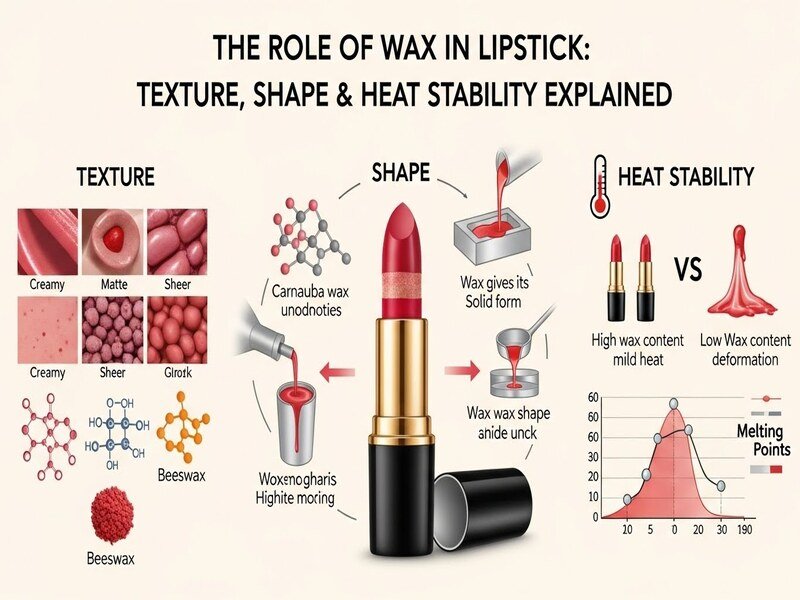
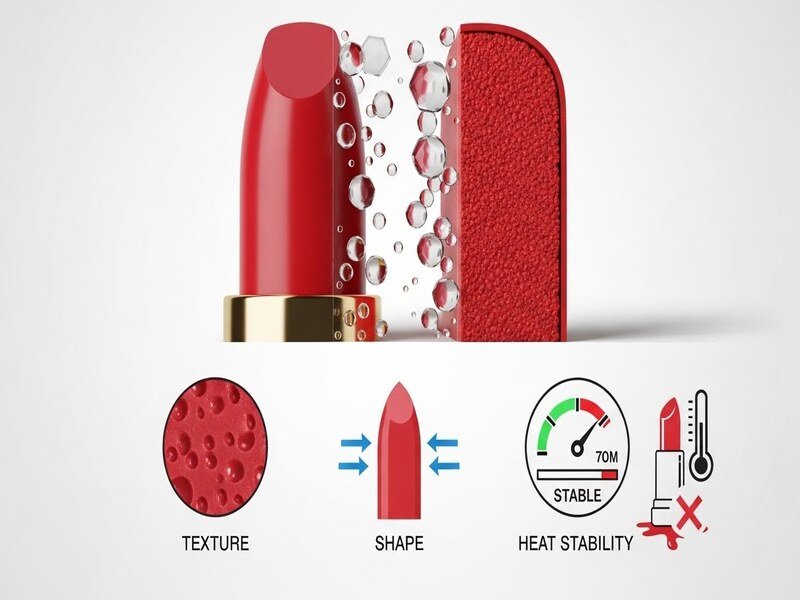
Beyond adding color, the fundamental question in lipstick science is: Why is wax used in lipstick? The answer lies in three critical functions: it dictates texture, provides structural shape, and ensures heat stability. Whether it’s the natural hardness of Carnauba Wax in Lipstick or the synthetic consistency of microcrystalline wax, each type plays a specific part in this delicate balance. Let’s dismantle the bullet to understand how wax works, answering your questions about everything from its core purpose to the infamous “forbidden lipstick.”
The Trinity of Function: What is the Main Function of Waxes?
At its core, the purpose of wax in cosmetics, and specifically in lipstick, is multi-dimensional. It’s the ingredient that transforms a colored paste into a usable, shelf-stable, and performance-driven product.
- Structural Shape & Moldability: This is the most visible role. Wax provides the rigid yet malleable structure that allows the lipstick to be molded into a bullet, remain solid at room temperature, and withstand the pressure of application without crumbling. Without wax, you’d have a lip gloss or a liquid.
- Texture & Application Feel: Wax directly controls the “drag” or “slip” you feel. A higher ratio of hard waxes creates a stiffer, more matte finish. Softer waxes like Beeswax in Lipstick contribute to a creamy, emollient glide. What does wax do to your lips? It forms a cohesive film that binds pigments and oils to your lips, creating an even layer of color.
- Heat Stability & Longevity: Wax has a defined melting point. This property gives the lipstick heat stability, preventing it from melting in your hand or bag. Furthermore, this stable film is key to longevity. What ingredients make lipstick long lasting? Primarily, the wax blend. Harder waxes create a more tenacious, water-resistant film that locks color in place.
The Wax Library: Natural vs. Synthetic Performers
Formulators choose from a vast library of waxes, each with a unique profile. What is the best wax for lipstick? There isn’t one—it’s always a strategic blend.
| Wax Type | Primary Function & Characteristic | Best For |
|---|---|---|
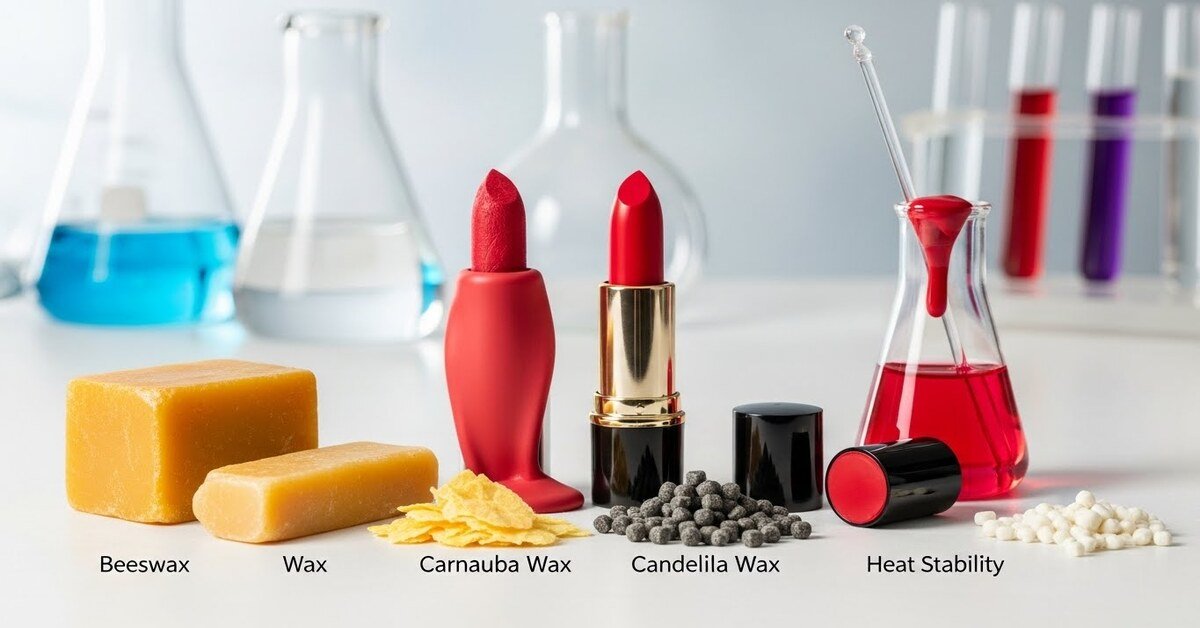
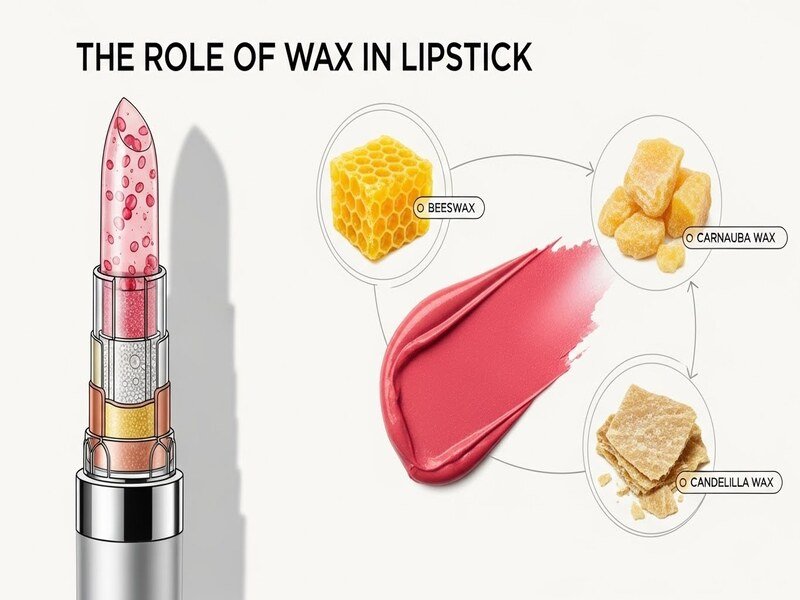
| Carnauba Wax | What is the function of carnauba wax? It is the hardest natural wax. It provides extreme structural strength, a high-gloss finish, and excellent heat resistance. | Long-wear lipsticks, glossy finishes, hardening bullet formulas. |
| Microcrystalline Wax | What is the function of microcrystalline wax? A synthetic/petroleum-based wax that is exceptionally flexible and adhesive. It prevents cracking, improves smooth application, and enhances shine. | Preventing “bleeding,” creating creamy textures, improving pay-off. |
| Beeswax | A natural, plasticizing wax. It provides structure while adding emollience and a creamy texture. It helps bind ingredients. | Creamy, conditioning lipsticks and balms. |
| Candelilla Wax | What is the use of candelilla wax? A vegan, hard wax with a high melt point. It’s a common vegan alternative to beeswax, providing good structure. | Vegan lipsticks, matte formulas where a hard wax is needed. |
| Synthetic Waxes (e.g., Polyethylene) | What is synthetic wax in lipstick? Lab-created waxes designed for specific, consistent properties like texture, stability, and feel. | Ensuring batch-to-batch consistency, creating specific textures (e.g., velvety mattes). |
The choice between natural wax in lipstick and synthetic options is a key decision, explored in depth in our guide Natural vs Synthetic Wax in Lipstick.
Beyond the Bullet: Common Wax Questions Decoded
What is the purpose of wax lips?
Historically, “wax lips” were a candy—a shaped wax novelty containing flavor and color. This highlights wax’s moldability. In a makeup context, what does lip wax do? It often refers to products for hair removal or, in formulation, it underscores wax’s primary role: to shape and hold.
What is the forbidden lipstick?
This is a myth-based term, often referring to urban legends about lipsticks containing harmful substances like animal fats or toxic metals. It underscores why knowing ingredients matters. Which ingredients should not be in lipstick? This is personal, but many avoid concerns by understanding components, from certain synthetic dyes to allergens. The wax itself is rarely the culprit; it’s about informed choices.
How does wax blend with other ingredients?
Wax never works alone. It is balanced with oils (for texture and moisture) and pigments (for color). The exact ratios are a formulator’s secret, determining if a lipstick is matte, cream, or glossy. The interplay is so crucial it forms its own topic, which we cover in Wax vs Oils in Lipstick.
FAQs About The Role of Wax in Lipstick
Can a lipstick have too much wax?
Absolutely. Excessive hard wax makes a lipstick brittle (prone to breaking) and difficult to apply, causing it to tug on the lips. It can also feel dry and uncomfortable.
Why do some lipsticks break so easily?
This is often a failure of the wax blend. It may have too much hard wax (like carnauba) without enough plasticizing agents (like certain oils or softer waxes) to provide flexibility, or it may have been exposed to heat that softened and then re-solidified its structure poorly.
Is all wax in lipstick vegan?
No. Beeswax is an animal by-product. Vegan lipsticks use plant-based waxes like Carnauba, Candelilla, or synthetic alternatives.
Does the wax affect the color?
Indirectly, yes. The wax’s texture and opacity influence how the pigment is delivered and perceived on the lips. A glossy wax can make a color appear brighter, while a matte wax base can make it appear deeper and more muted.
How can I tell what kind of wax a lipstick uses?
Check the ingredient list (INCI). Waxes are usually listed near the top. Common names include: Cera Alba (Beeswax), Copernicia Cerifera (Carnauba) Wax, Euphorbia Cerifera (Candelilla) Wax, and Microcrystalline Wax.
Explore the Science of Lipstick Structure:
- Wax in Lipstick – Your complete guide to the foundational ingredient.
- Beeswax vs Carnauba Wax in Lipstick – Compare two heavyweight waxes.
- Natural vs Synthetic Wax in Lipstick – Understand the material science choice.
- Wax vs Oils in Lipstick – See how wax partners with oils for perfect texture.
- Lipstick Ingredients Explained – Contextualize wax within the full formula.