You buy a lipstick that looks soft, bright, even flattering in the tube—but the moment you apply it, the color turns deeper, duller, or oddly uneven. If you’ve ever wondered why lipstick looks dark on pigmented lips, you’re dealing with a very common (and very fixable) issue.
This isn’t about bad lipstick or wrong shade choices. It’s about how natural lip pigmentation changes the way color shows up. Once you understand what’s happening underneath—and how color correction works—you can finally get lipstick to look the way it’s supposed to.
This concern is covered in our Lipstick Care & Tips section, where we explain common lipstick problems and how simple prep steps can prevent them.
Why Lipstick Looks Dark on Pigmented Lips
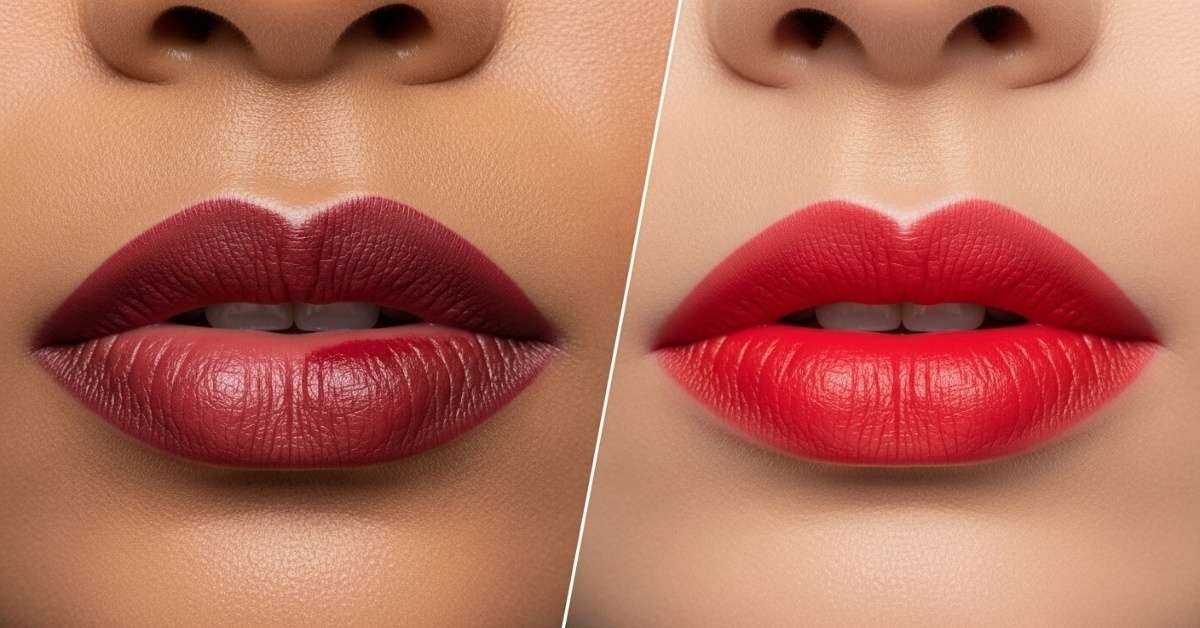
Pigmented lips have areas that are naturally darker—often the upper lip, corners, or inner rim. When lipstick is applied directly over this uneven base:
- Dark areas absorb more pigment
- Light areas reflect more color
- The final shade appears deeper than expected
That’s the core reason why lipstick looks dark on pigmented lips, even when the lipstick itself isn’t dark at all.
Why Does Every Lipstick Look Dark on Me?
This question comes up a lot—and the answer is almost always base color interference.
Lipstick doesn’t replace your natural lip color; it mixes with it. On pigmented lips:
- Nude shades turn brownish
- Pinks look muted or grey
- Reds pull deeper or brick-toned
Without correcting the base, every lipstick ends up looking darker than intended.

What Is Lip Pigmentation?
Lip pigmentation simply means uneven or darker natural lip color. It can be caused by:
- Sun exposure
- Genetics
- Hormonal changes
- Smoking or dehydration
- Frequent matte lipstick without prep
Pigmentation doesn’t mean damaged lips—but it does mean lipstick needs help to show true color.
How Color Correction Fixes the Problem
This is where color correction comes in.
Instead of adding more lipstick, color correction:
- Neutralizes dark areas
- Creates an even-toned base
- Allows lipstick to sit true-to-shade
If you want the full process, it’s explained step by step in color correction for pigmented lips.
In simple terms, correction removes the shadow so color can shine.
How to Color Correct Pigmented Lips (Quick Overview)
Here’s the simplified logic:
- Dark lips = cool/blue undertone
- Peach/orange corrector = warm tone
- Warm neutralizes cool
That balance is what stops lipstick from looking dark.
If you’re confused about whether to use a corrector or concealer, color corrector vs concealer for pigmented lips breaks down which works better and why.
Why Lipstick Makes My Lips Look Even Darker
Lipstick can intensify darkness when:
- It’s applied too thickly
- The formula is sheer or glossy
- The base isn’t neutralized
Sheer lipsticks allow underlying pigmentation to show through, which is why many people feel glossy or tinted balms make lips look darker instead of fresher.
How to Fix Dark Pigmentation on Lips (Makeup vs Reality)
There’s an important distinction here.
Makeup Fix (Instant)
- Color correction
- Proper prep
- Thin lipstick layers
This gives immediate, visible improvement.
Long-Term Care
- Sun protection for lips
- Hydration
- Gentle exfoliation
- Avoiding harsh matte formulas daily
Makeup fixes the appearance instantly; skincare improves tone gradually.
Can Lip Pigmentation Be Removed?
Pigmentation can often be reduced, not erased overnight.
Mild pigmentation may fade with:
- Consistent lip care
- Sun protection
- Hydration
Deeper pigmentation is often genetic or hormonal and won’t fully disappear—but it can be corrected visually every time with makeup.
How Long Does Pigmentation Take to Fade on Lips?
It depends on the cause.
- Dehydration-related pigmentation: weeks
- Sun damage: months
- Hormonal/genetic: may not fully fade
That’s why relying on lipstick alone rarely works—correction is the faster solution.
Can Dark Lips Go Back to Normal Color?
In many cases, lips can return closer to their natural tone with:
- Better hydration
- Reduced sun exposure
- Gentle care
But even if pigmentation remains, it doesn’t prevent you from wearing any lipstick shade once correction is done properly.
Does Kojic Acid Lighten Lips?
Kojic acid is sometimes used for skin hyperpigmentation, but:
- It’s not always safe for lips
- Lips are more sensitive than skin
- Misuse can cause irritation
Dermatologists usually focus on prevention and gentle care, not aggressive lightening, for lips.
How Do Dermatologists Lighten Dark Lips?
Professionally, dermatologists may recommend:
- Sun protection
- Avoiding irritants
- Treating underlying conditions
- Gentle topical care
They rarely suggest harsh bleaching for lips. Makeup correction remains the safest instant option.
How to Make Lips Go Back to Normal Color (Daily Habits)
If you want healthier-looking lips over time:
- Use SPF lip products
- Stay hydrated
- Avoid licking lips
- Don’t over-exfoliate
These habits reduce further darkening but don’t replace correction for makeup days.
How to Clear Pigmentation Around Lips
Pigmentation around the mouth is skin, not lips.
- Use sunscreen daily
- Avoid harsh scrubs
- Use gentle brightening skincare
Trying to fix surrounding pigmentation with lipstick or heavy concealer usually makes contrast worse.
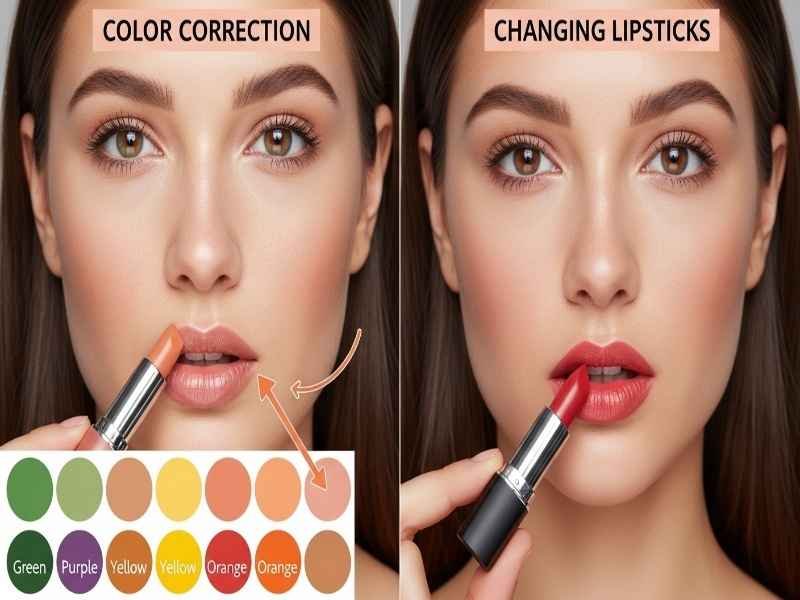
Why Color Correction Works Better Than Changing Lipsticks
Many people keep buying lighter or brighter lipsticks hoping one will “work.” But without fixing the base:
- Light shades still darken
- Bright shades still mute
Color correction fixes the foundation once—so every lipstick works better afterward.
That’s why it’s the real solution to why lipstick looks dark on pigmented lips.
Common Mistakes That Make Lipstick Look Darker
Avoid these:
- Skipping correction
- Using too much concealer
- Applying lipstick too thick
- Using sheer formulas on uncorrected lips
Each one allows pigmentation to overpower the lipstick color.
Final Thoughts: Why Lipstick Looks Dark on Pigmented Lips
If lipstick always looks deeper or duller on you, the issue isn’t your taste—it’s your base.
Why lipstick looks dark on pigmented lips comes down to uneven natural color mixing with lipstick. Once you neutralize that base through color correction, lipstick finally behaves the way it does on others.
You don’t need new shades.
You don’t need heavier coverage.
You just need the right correction step.
❓ FAQs – Why Lipstick Looks Dark on Pigmented Lips
Why does every lipstick look dark on me?
Because natural lip pigmentation darkens the final color.
How to color correct pigmented lips?
Use a peach corrector on dark areas before lipstick.
Can lip pigmentation be removed permanently?
Often reduced, not fully removed—but easily corrected with makeup.
How long does lip pigmentation take to fade?
Weeks to months depending on cause.
Can lips turn pink again?
They can improve with care, but makeup correction gives instant results.