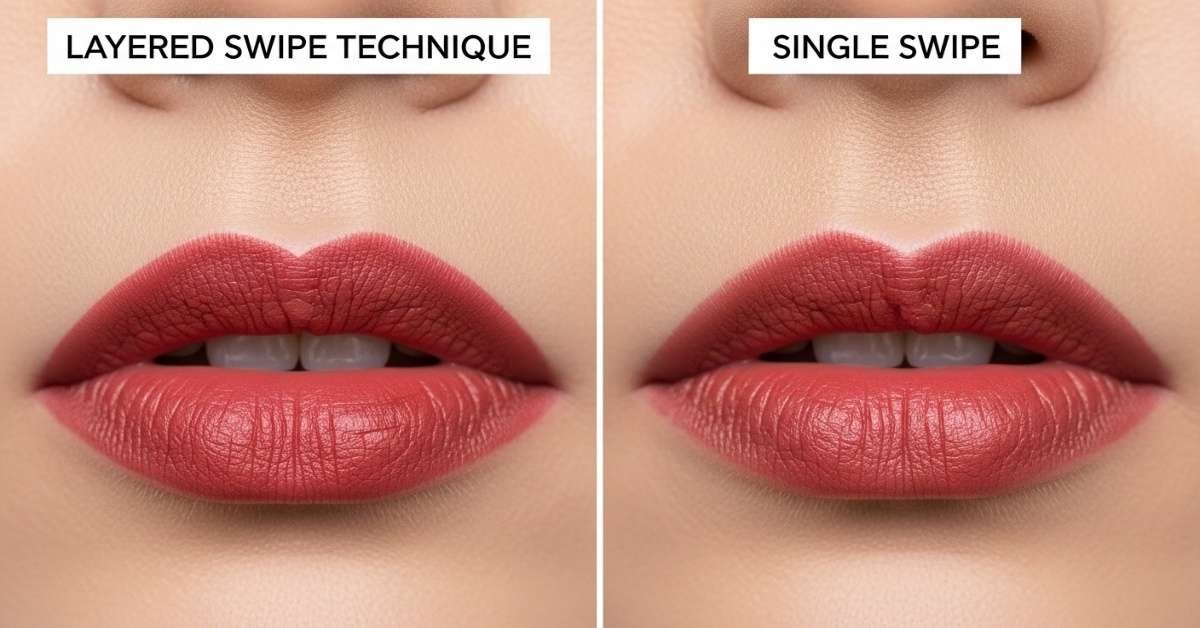
I’ll never forget my best friend’s wedding back in the summer of 2024. As the maid of honor, I had to give a speech, drink champagne, and smile for roughly a thousand photos. I chose a stunning crimson lipstick and, in my rush, just did a quick “Single Swipe” before heading to the altar. Layered Swipe Technique. By the time the cake was cut, my “bold red” had retreated to a messy ring around the edges of my mouth, leaving the center bare and sad.
Since then, I’ve become obsessed with Lipstick Longevity. In 2026, the beauty world is divided: do you go for the speed of a single pass or the ritual of the Layered Swipe Technique? If you’re tired of your color “ghosting” you by lunchtime, let’s look at which method truly provides that coveted All-Day Wear.
This comparison is part of our Lipstick Comparisons series, designed to help you choose the right prep methods before applying lipstick.
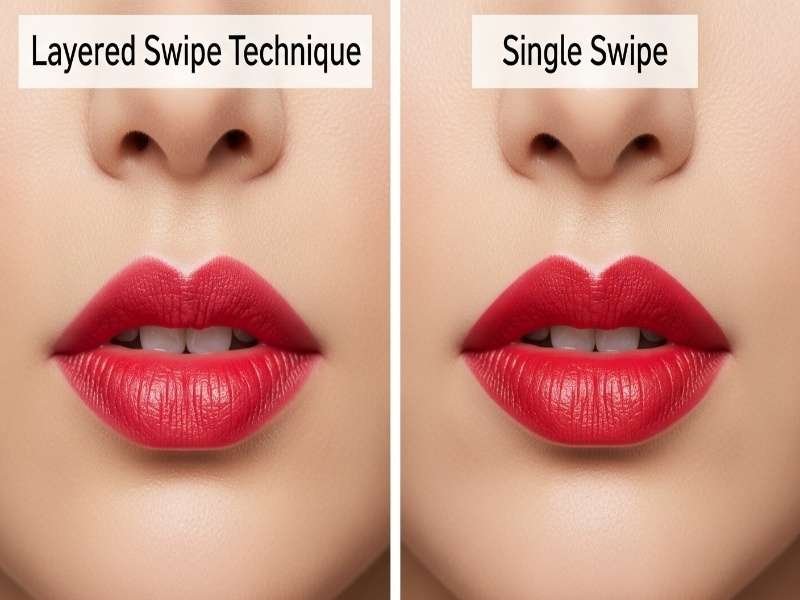
The Speed Demon: Single Swipe Lipstick
The Single Swipe is the ultimate “cool girl” move. It’s fast, it’s effortless, and it looks incredibly natural. For a light workday or a quick coffee run, it’s usually enough. However, when we talk about Staying Power, the Single Swipe often falls short.
Because you are only laying down one film of pigment, there is no “backup” once that layer starts to break down from talking or sipping water. If you are using a very high-quality, high-pigment bullet, you might get 3–4 hours, but for anything longer, you’ll find yourself constantly reapplying.
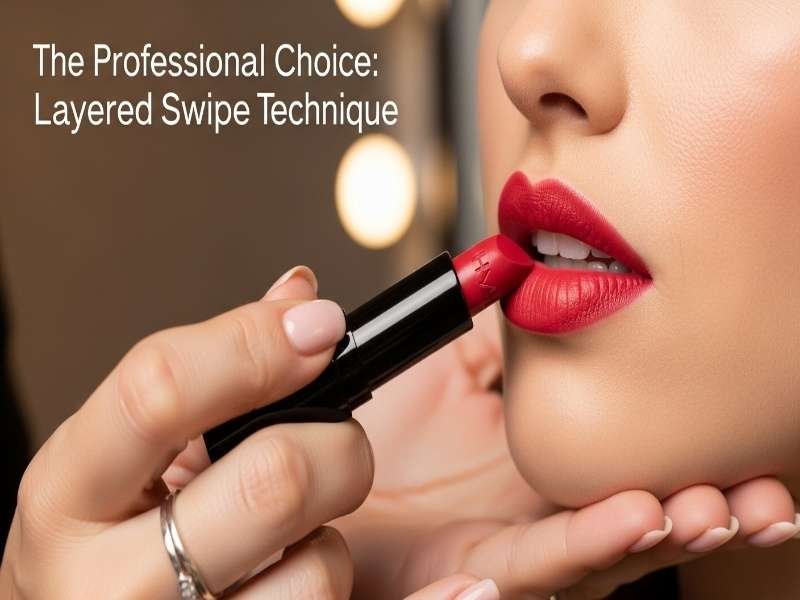
The Professional Choice: Layered Swipe Technique
If the Single Swipe is a sprint, the Layered Swipe Technique is a marathon. This method involves applying a thin layer, blotting it back, and then applying a second, more focused layer. The science behind it is simple: you are creating a “stain” on the skin that acts as a safety net for the top layer of pigment.
When you , you aren’t just making the color look better; you are physically bonding the product to your lips. This thin-to-thick approach is the only way to ensure All-Day Wear without the product feeling heavy or “waxy.”
Which Wins for Longevity? The Verdict
If we are strictly talking about Lipstick Longevity, the Layered Swipe Technique wins every single time.
- Friction Resistance: A single layer moves as your lips move. Multiple thin, blotted layers stay put.
- Oil Resistance: When you eat, the oils in your food have to work through multiple “bonds” of pigment rather than just one.
- Even Wear: Even if the top layer fades, the base layer remains, preventing that dreaded “donut” look.
For those who want to , the secret is the blot. By removing the excess wax between swipes, you leave behind only the pure pigment, which has much higher Staying Power.
How to Layer Your Lipstick for 8+ Hour Wear
If you want to transition from a “Single Swiper” to a “Layering Pro,” here is the 2026 blueprint for success:
- The Base: Apply your first swipe. Don’t worry about perfect edges yet.
- The Blot: Take a tissue and press—don’t rub. This removes the “slip” but keeps the color.
- The Finish: Apply your second swipe. This layer will now grab onto the blotted pigment, creating a high-impact, professional finish.
This method is also the secret to how to get fuller lips with lipstick. By layering a slightly darker shade in the corners and a lighter swipe in the center, you create a 3D effect that makes lips look plump without needing a liner.
Final Thoughts: Comfort vs. Coverage
While the Layered Swipe Technique takes an extra 60 seconds, the payoff is hours of freedom from your mirror. I personally save the “Single Swipe” for my lazy Sundays, but for anything that matters, I layer. It’s the only way to ensure your Staying Power matches your stamina for the day.
❓ Frequently Asked Questions (PAA Style)
1. How many swipes per lipstick for the best result? For daily wear, 2–3 thin swipes are ideal. The first swipe acts as your stain, the second builds the opacity, and the third (if needed) perfects the edges. One single swipe is rarely enough for a high-impact, long-lasting look.
2. What makes lipstick last longer?Lipstick Longevity is improved by two main factors: exfoliation and the Layered Swipe Technique. Removing dead skin cells allows the pigment to sit flat, while layering ensures that if the top coat wears off, a base stain remains.
3. Which lipstick texture is best for longevity? Matte and satin textures generally have the best Staying Power. Glossy or “balm-like” textures have too much slip, meaning they move around and disappear quickly. If you want a glossy look that lasts, layer a gloss over a layered matte base.
4. How to get a smooth lipstick look? The key to a smooth finish is avoiding “product pile-up.” Instead of one thick, heavy layer, use the Layered Swipe Technique to build thin, even coats. This prevents the lipstick from settling into lines or looking “cakey” by mid-afternoon.
5. How to get fuller lips with lipstick? You can use layering to “contour” the mouth. Apply your main color in layers, then add a tiny extra “swipe” of a slightly lighter, shimmery shade just to the center of your bottom lip. This catches the light and creates the illusion of more volume.