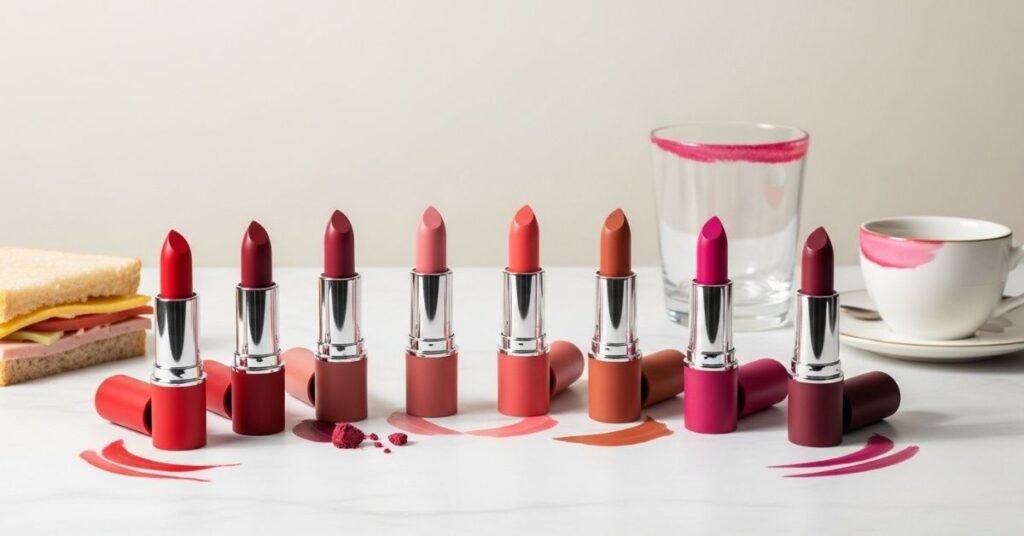

I’ll never forget my first high-stakes job interview in Chicago. I wore a stunning coral lipstick that I thought was “indestructible.” Midway through my presentation, I took a sip of water and realized—to my horror—that my white paper cup now had a perfect coral ring, and the color was “bleeding” toward my chin. I had chosen a “Dye-heavy” formula without realizing it was water-soluble and prone to migration.
In 2026, the USA beauty market is moving toward “Resilient Beauty,” where we demand color that survives coffee, humidity, and long days. But to get that staying power, you have to choose between dyes vs lakes in lipstick. Understanding the difference is the secret to a smudge-proof pout. If you’ve ever wondered why your favorite tube suddenly fails you, it might be due to Why Lipsticks Crack, Drag, or Melt because of the specific colorant balance.
At WomenClassy, we want you to be the expert of your own makeup bag.
This beginner-friendly guide is part of our Lipstick Basics series, where we break down everything from what lipstick actually is to how it works, so you can build your knowledge step by step with confidence.
What is the Core Difference Between Dyes and Lakes?
To settle the dyes vs lakes in lipstick debate, we have to look at how they behave on your skin at a molecular level. This isn’t just “makeup talk”; it’s chemistry.
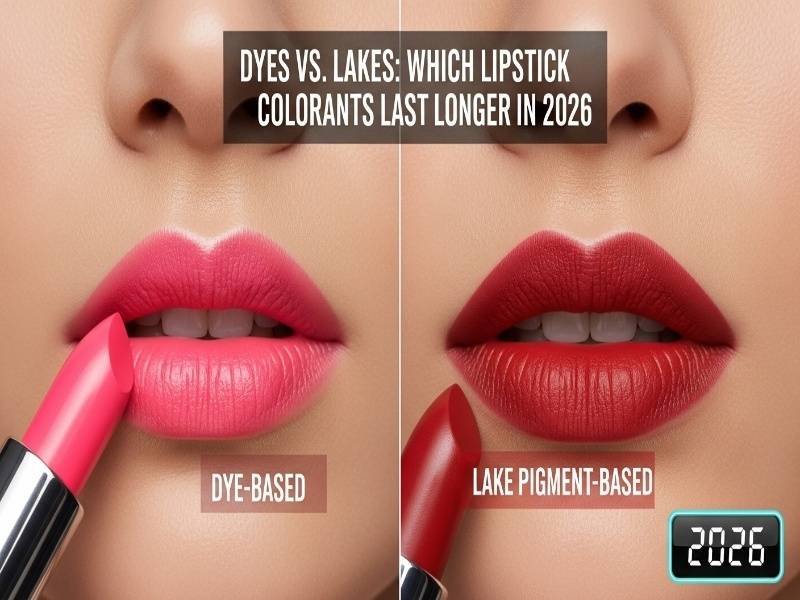
- Dyes: These are water-soluble chemicals. They work like wood stain—they sink into the top layer of your lip skin and “dye” it. They provide that transparent, “just-bitten” look. In the world of water-soluble vs oil-dispersible lip colors, dyes are the ones that bond with the moisture in your skin.
- Lakes: These are produced by precipitating a dye with a metallic salt (like aluminum). This turns the dye into an insoluble pigment. Instead of sinking in, Lakes sit on top of the skin like a vibrant coat of paint.
In 2026, many brands are focusing on Lipstick Ingredients Explained to show how Lakes provide the opacity we love in classic bullets.
Which One Lasts Longer? The 2026 Longevity Verdict
When asking which long-lasting lipstick colorants 2026 actually perform, the answer depends on how they wear off.
The Power of Dyes (The “Stain” Effect)
Dyes are the kings of “Ghost Color.” Even after the wax and shine of your lipstick wear off, the dye remains bonded to your skin. This is why dyes vs lakes in lipstick comparisons often favor dyes for 12-hour wear. If you love this long-lasting effect, you should How to Layer Stains? Master the Art of Long-Lasting Colorants Now in 2026 to build a bulletproof base.
The Power of Lakes (The “Vibrant” Finish)
Lakes are more stable and opaque. They don’t “bleed” as easily as pure dyes because they aren’t water-soluble. For a professional, crisp look, Lakes are superior. However, because they sit on the surface, they can be wiped away by friction or oils. This is often Why Lipstick Bleeds Outside Your Lip Line if the Lake isn’t “locked” in with a good wax structure.
2026 USA Beauty Trends: The “Hybrid” Revolution
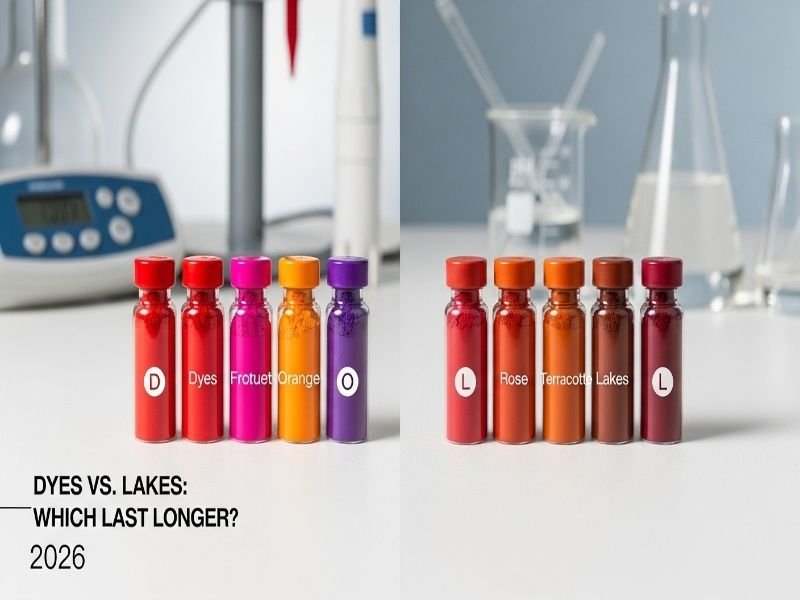
The most exciting smudge-proof lip colorant trends USA involves mixing both. Modern formulas use Dyes for a long-lasting base tint and Lakes for a high-impact surface color. This gives you the best of both worlds.
When you look for the difference between dyes and lakes in makeup, you’ll realize that high-end brands use Lakes to give that rich, “velvet” look while the Dyes ensure you aren’t left with “ghost lips” after dinner. If you are concerned about the chemicals used in these processes, it is important to check out our guide on Is Your Pout Safe? 5 Tips to Choose Safe Lipstick Pigments Now!.
Safety and Standards: The USA Perspective
In 2026, FD&C colorants safety and longevity is a top priority for USA women. The FDA strictly regulates which dyes can be used. “Clean Beauty” standards now require Lakes to be purified to extreme levels to ensure no heavy metals are present.
If you prefer a more natural approach, you can compare these lab-created colors with mineral options in our Natural vs. Synthetic Lipstick guide. While synthetic Lakes provide the most “vibrant” reds, natural minerals offer a different kind of safety.
How to Choose Based on Your Lifestyle
Understanding dyes vs lakes in lipstick helps you shop smarter.
- For the Office (The “Lake” Choice): You want a crisp, defined look that doesn’t stain your teeth. A Lake-based bullet lipstick is best.
- For Outdoor Weddings (The “Dye” Choice): You want something that survives humidity and drinks. A dye-based stain is your best friend.
- For the All-Day Glam: Use a hybrid. To make it truly last, you must Master the Blot and Reapply Technique for Transfer-Proof Finish.
Pro-Tip: The Science of “Bleeding”
Many women complain that their lipstick “moves.” In the water-soluble vs oil-dispersible lip colors category, dyes are the frequent culprits. Since dyes are water-soluble, they can follow the moisture in the fine lines around your mouth. Lakes, being insoluble particles, usually stay put until the oil in your skin (or your salad dressing) breaks down the wax holding them.
To stop this, check out our Lipstick Pigments Secrets: The 2026 Guide to Bold, Perfect Color for the ultimate barrier-building hacks.
Final Thoughts: Dyes vs. Lakes for the Modern Woman
In the battle of dyes vs lakes in lipstick, there is no single winner—only the right choice for your schedule. If you want a “Your Lips But Better” look that lasts through lunch, go for Dyes. If you want a “Power Red” that looks sharp in photos and provides full coverage, Lakes are your best friend.
At WomenClassy, we believe that knowing your ingredients is the ultimate beauty hack. When you understand long-lasting lipstick colorants 2026, you stop wasting money on products that don’t perform.
Stay bold, stay informed, and always stay classy!
❓ Frequently Asked Questions
What is the main difference between dyes and lakes in makeup? Dyes are water-soluble and stain the skin by soaking into it. Lakes are pigments made by combining a dye with a metallic salt, making them insoluble and opaque, so they sit on top of the skin.
Which lipstick colorants last longer, dyes or lakes? Dyes generally have better “ghost-wear” because they stain the skin, meaning even if the lipstick wears off, the color remains. However, Lakes are better for smudge-proof lip colorant trends USA because they don’t bleed as easily into fine lines.
Are aluminum lakes in lipstick safe for 2026? Yes, under FD&C colorants safety and longevity standards, the aluminum used in Lakes is a “precipitant” and is not absorbed into the bloodstream. It is considered safe for cosmetic use by the FDA.
Why does my stain look patchy but my lipstick looks smooth? Stains (Dyes) react with the skin’s moisture. If your lips are dry, the dye will soak into the dry patches more heavily. Lakes (Lipstick) provide a “blanket” of color that covers those patches.
Can I use both dyes and lakes at the same time? Yes! This is a major long-lasting lipstick colorants 2026 trend. Applying a lip stain (Dye) and then a traditional lipstick (Lake) over it ensures your color stays vibrant all day and night.