
I remember being eight years old and watching my grandmother bake her famous strawberry tart. She added a few drops of a vibrant red liquid, and when I asked what it was, she jokingly said, “It’s just a bit of beetle juice, honey!” I laughed then, thinking it was just a grandma joke. It wasn’t until years later, when I started my career in the beauty industry, that I realized she wasn’t entirely kidding.
If you’ve ever wondered, are there crushed bugs in lipstick, the answer might surprise—and perhaps unsettle—you. In 2026, as the USA shifts toward total transparency, the “Vegan” label has become more than a trend; it’s a necessity for many. But the truth about that perfect red pout often hides behind technical names in the Lipstick Ingredients Explained list.
At WomenClassy, we believe beauty shouldn’t be a mystery. Let’s unmask the secrets of the cochineal beetle.
This beginner-friendly guide is part of our Lipstick Basics series, where we break down everything from what lipstick actually is to how it works, so you can build your knowledge step by step with confidence.
What is Carmine? The Bug in Your Beauty Bag
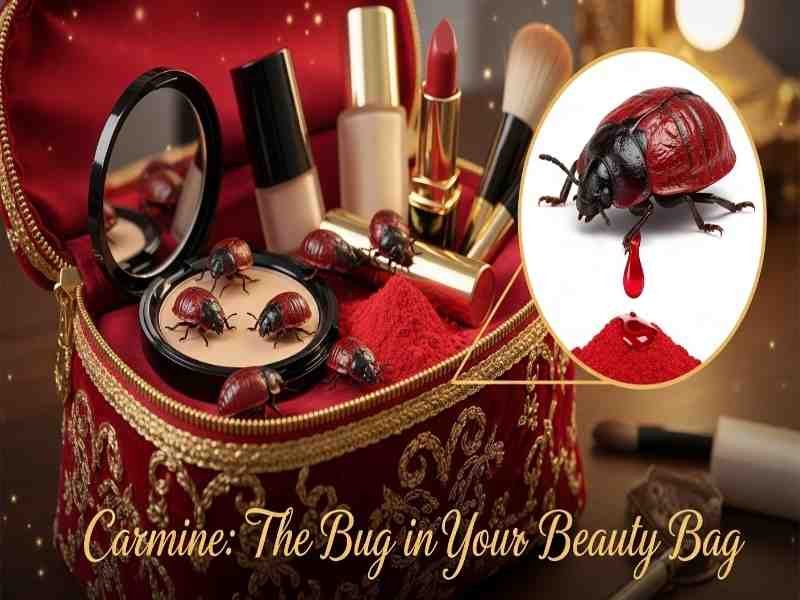
When people ask, are there crushed bugs in lipstick, they are usually talking about Carmine. Also known as Cochineal Extract, Natural Red 4, or E120, Carmine is a bright red pigment obtained by crushing the dried bodies of female cochineal insects. These tiny bugs live on cacti in Central and South America.
Why Do Brands Use Bugs?
For centuries, Carmine has been the gold standard for red. Unlike many synthetic dyes, it is incredibly light-fast and heat-stable. When we look at Dyes vs. Lakes: Which Lipstick Colorants Last Longer in 2026?, Carmine often acts like a natural lake, providing a rich, opaque finish that synthetic alternatives struggle to match without becoming “chalky.”
Vegan Lipstick vs. Carmine Pigments: The Ethical Choice
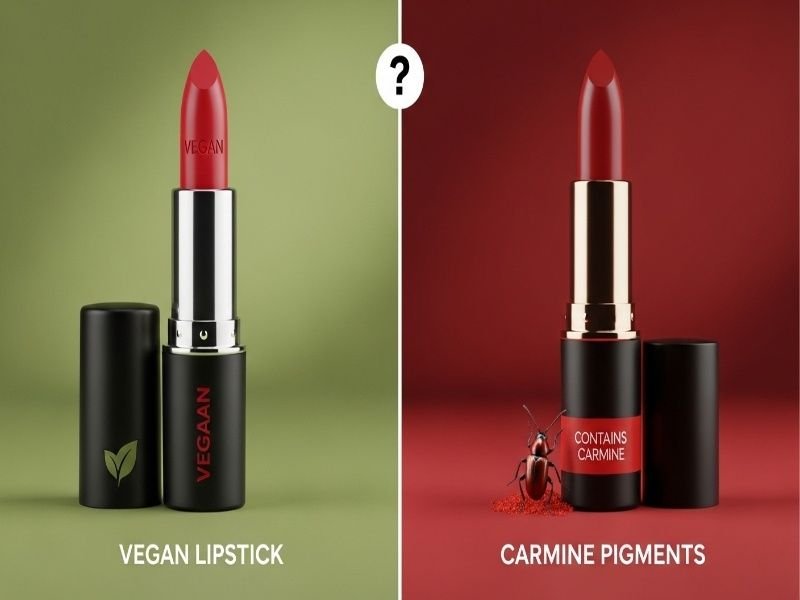
In the USA, the debate of vegan lipstick vs carmine pigments has intensified. A lipstick can be “Natural” and “Organic” while still containing thousands of crushed insects. For a product to be truly vegan, it must be 100% insect-free.
Many women are surprised to find that their “Natural” red lipstick isn’t vegan. To understand why some brands stick to these traditional methods, you can read our comparison on Natural vs. Synthetic Lipstick. In 2026, the Cruelty-free red lipstick guide 2026 standards have pushed brands to innovate with mineral-based or plant-based reds that don’t involve harvesting living creatures.
Health Concerns: Allergic Reactions to Cochineal Extract
It’s not just an ethical issue; it’s a health one. Some people experience severe allergic reactions to cochineal extract. Symptoms can range from mild lip swelling to full-blown anaphylaxis. Because Carmine is a protein-based dye (since it comes from an animal), the human immune system is more likely to react to it than to inorganic minerals.
If you have highly reactive skin, you should consult our guide on Organic vs. Mineral Pigments: Which Is Best for Sensitive Lips? to find safer, inert alternatives. Choosing insect-free lip colorants USA ensures you aren’t applying potential allergens to your delicate lip tissue.
How to Spot the Bugs: A 2026 Shopping Guide
Identifying are there crushed bugs in lipstick requires a sharp eye for labels. Look for these names on the packaging:
- Carmine / Carminic Acid
- Cochineal / Extract of Cochineal
- Natural Red 4
- C.I. 75470
If you see these, your lipstick is not vegan. To ensure you are choosing a formula that aligns with modern safety standards, check out Is Your Pout Safe? 5 Tips to Choose Safe Lipstick Pigments Now!.
The Rise of Insect-Free Lip Colorants USA
The good news? The Cruelty-free red lipstick guide 2026 is full of amazing alternatives. Brands are now using:
- Iron Oxides: Earth-derived minerals that provide beautiful earthy reds.
- Beetroot Powder: A truly botanical way to get a pinkish-red tint.
- Synthetic Red Lakes: While lab-made, they are 100% vegan and offer the same “pop” as Carmine.
Transitioning to these alternatives is a major part of Vegan Lipstick: What It Is & Why It Matters.
Final Thoughts: Transparency is the New Red
So, are there crushed bugs in lipstick? In many traditional and luxury reds, yes. But in 2026, you have the power to choose. Whether you choose Carmine for its historical brilliance or opt for insect-free lip colorants USA for ethical reasons, being informed is what matters most. Are there crushed bugs in lipstick.
At WomenClassy, we want your beauty routine to be as clean as your conscience. Stay informed, stay kind, and always stay classy!
❓ Frequently Asked Questions
Are there crushed bugs in lipstick really? Yes, specifically in many red and pink shades. The pigment is called Carmine and it is derived from the cochineal beetle. Thousands of insects are crushed to produce just a small amount of dye.
What is carmine in lipstick and is it safe? What is carmine in lipstick? It is a natural red dye. While the FDA considers it safe for most people, it can cause severe allergic reactions to cochineal extract in sensitive individuals. Are there crushed bugs in lipstick.
How can I find a 100% vegan red lipstick? Look for the “Certified Vegan” logo. Check the ingredients for “Carmine” or “C.I. 75470.” If those are absent, and the brand uses mineral or synthetic reds, it is likely vegan.
Does vegan lipstick last as long as carmine-based lipstick? With 2026 technology, yes! Modern vegan lipstick vs carmine pigments tests show that synthetic lakes and mineral blends can match the longevity of bug-based dyes.
Why is carmine still used in 2026? It remains popular because it is a “natural” way to achieve a very specific, vivid shade of red that is difficult to replicate with plants alone. However, the trend is moving toward insect-free lip colorants USA due to ethical concerns.