Have you ever noticed how two lipsticks in the same shade can feel completely different on your lips? I remember swatching a nude twice at a beauty counter—one felt cushiony and smooth, the other set firm within seconds. The color wasn’t the reason. The real difference was happening inside the formula, driven largely by Castor Oil in Matte vs Cream Lipstick.
Once you understand how this ingredient behaves in matte versus cream formulas, lipstick shopping becomes far less confusing—and far more intentional.
Why Castor Oil Matters in Lipstick Performance
In professional formulation, Castor Oil in Lipstick is never added casually. It directly influences how pigments disperse, how smoothly the bullet glides, and how flexible the finish feels after application.
However, castor oil never works alone. Its performance depends on how it’s balanced with waxes. If you’re not familiar with that structure, wax in lipstick explains why some lipsticks feel soft and creamy while others feel firm and long-wearing.
To see where castor oil fits within the complete formula, lipstick ingredients explained offers helpful background.
What Castor Oil Actually Does Inside a Lipstick
At a functional level, Castor Oil in Matte vs Cream Lipstick acts as a pigment-binding oil. Its thick, viscous texture grabs color and spreads it evenly, which is why lipsticks containing castor oil often deliver richer payoff in fewer swipes.
That said, its behavior changes depending on the wax system used. Different waxes control rigidity, payoff, and wear, a concept explored further in wax types in lipstick.

Castor Oil in Cream Lipsticks: Comfort Takes Priority
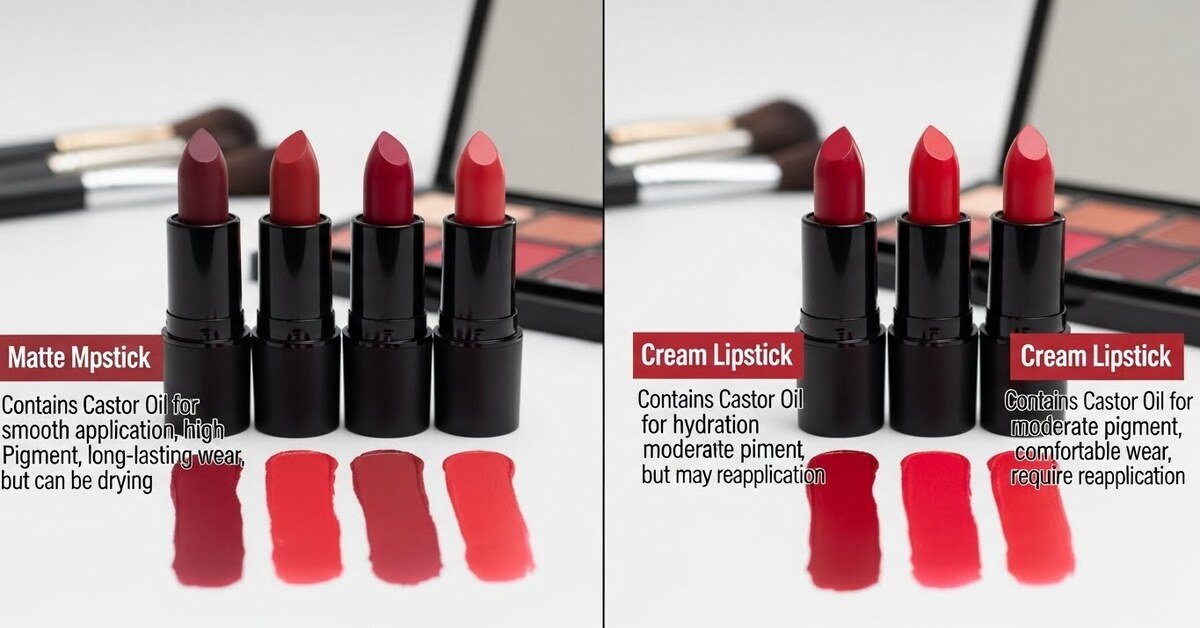
Cream lipsticks are designed to feel forgiving and flexible. In these formulas, Castor Oil in Matte vs Cream Lipstick is used more generously.
How It Performs in Cream Formulas
- Enhances glide and slip
- Improves pigment smoothness
- Reduces tugging during application
Because cream lipsticks rely less on hard waxes, castor oil has more freedom to soften the formula. This softness is often balanced with lighter oils like jojoba oil in lipstick to maintain comfort without heaviness.
Castor Oil in Cream Lipsticks: Comfort vs Performance
In cream lipsticks, castor oil is allowed to do what it does best—soften and cushion. The higher oil presence creates that smooth, buttery glide most people associate with comfort. Pigments feel more flexible on the lips, and the formula moves naturally with lip lines instead of settling into them.
However, this comfort comes with a trade-off. Because castor oil keeps the formula pliable, cream lipsticks tend to prioritize wear comfort over longevity. The finish stays smooth and forgiving, but it may require touch-ups throughout the day, especially after eating or drinking.
Castor Oil in Matte Lipsticks: Control Over Cushion
Matte lipsticks prioritize longevity and structure. In these formulas, Castor Oil in Matte vs Cream Lipstick is still essential—but carefully limited.
How It’s Used in Matte Formulas
- Added in smaller quantities
- Balanced with firm waxes
- Supports pigment adhesion without shine
Too much oil would compromise wear time, which is why matte formulas depend heavily on wax architecture, as explained again in wax in lipstick.
Castor Oil in Matte Lipsticks: Control, Wear & Stability
Matte lipsticks use castor oil very differently. Here, it’s not about softness—it’s about control. The oil is carefully measured to support pigment binding without disrupting the structure created by firm waxes.
This controlled use allows matte formulas to set more securely, improving wear time and transfer resistance. While the lip feel is firmer than creams, a well-balanced matte still avoids excessive dryness because castor oil maintains a degree of flexibility beneath the surface.
In mattes, castor oil isn’t meant to be felt—it’s meant to work quietly, stabilizing the formula so color stays put longer.
Matte vs Cream: Performance Breakdown
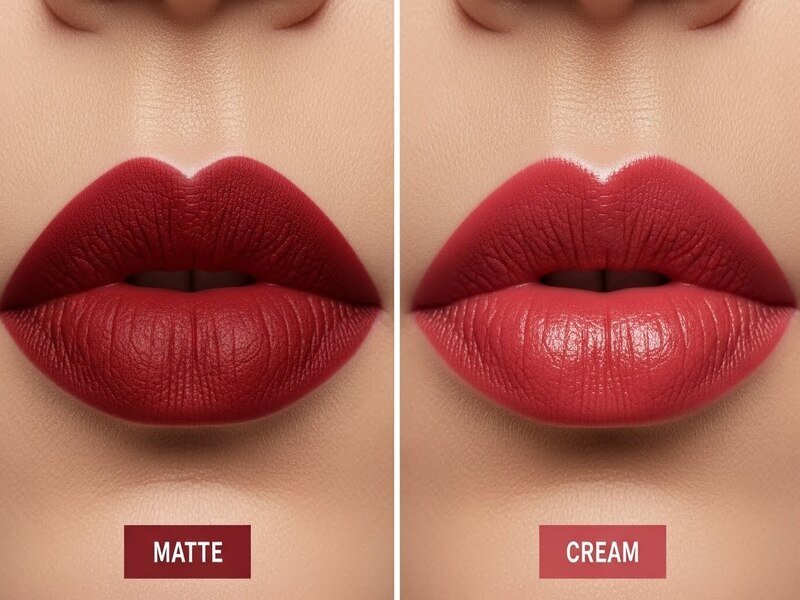
| Feature | Cream Lipstick | Matte Lipstick |
|---|---|---|
| Castor oil level | Medium–high | Low–moderate |
| Finish | Soft sheen | Low-shine |
| Lip feel | Cushiony | Firm |
| Wear focus | Comfort | Longevity |
This comparison shows that Castor Oil in Lipstick isn’t about quantity—it’s about precision.
Castor Oil Compared to Other Oils
Castor oil is rarely used alone. Its performance shifts when paired with lighter oils, especially jojoba. This balance is explained in detail in castor oil vs jojoba oil in lipstick.
Formulators fine-tune this pairing to achieve comfort without sacrificing performance, especially in hybrid finishes. You can see how professionals approach this balance in castor oil and jojoba oil in lipstick formulation tips.
Common Misconceptions About Oils in Lipstick
One common myth is that oils don’t belong in matte lipsticks. In reality,Castor Oil in Matte vs Cream Lipstick is critical even in mattes—it’s just carefully controlled. Similar misunderstandings are addressed in lipstick myths vs facts.
Another misconception is that organic formulas always perform better, which isn’t necessarily true, as explained in organic vs chemical lipsticks.
Why Formulators Treat Castor Oil With Precision
A 1–2% adjustment in Castor Oil in Matte vs Cream Lipstick can change glide, shine, and wear entirely. That’s why professional brands test multiple versions before finalizing a formula.
FAQs
Does castor oil make lipstick glossy?
In higher amounts, yes—especially in cream formulas.
Is castor oil good for dry lips?
Yes, it helps reduce moisture loss and improve comfort.
Why do some mattes feel less drying?
Because they contain carefully balanced Castor Oil in Matte vs Cream Lipstick.
Can castor oil reduce wear time?
Only if overused. Balanced formulas maintain longevity.
Is castor oil safe for daily use?
Yes, it’s widely used and lip-safe.