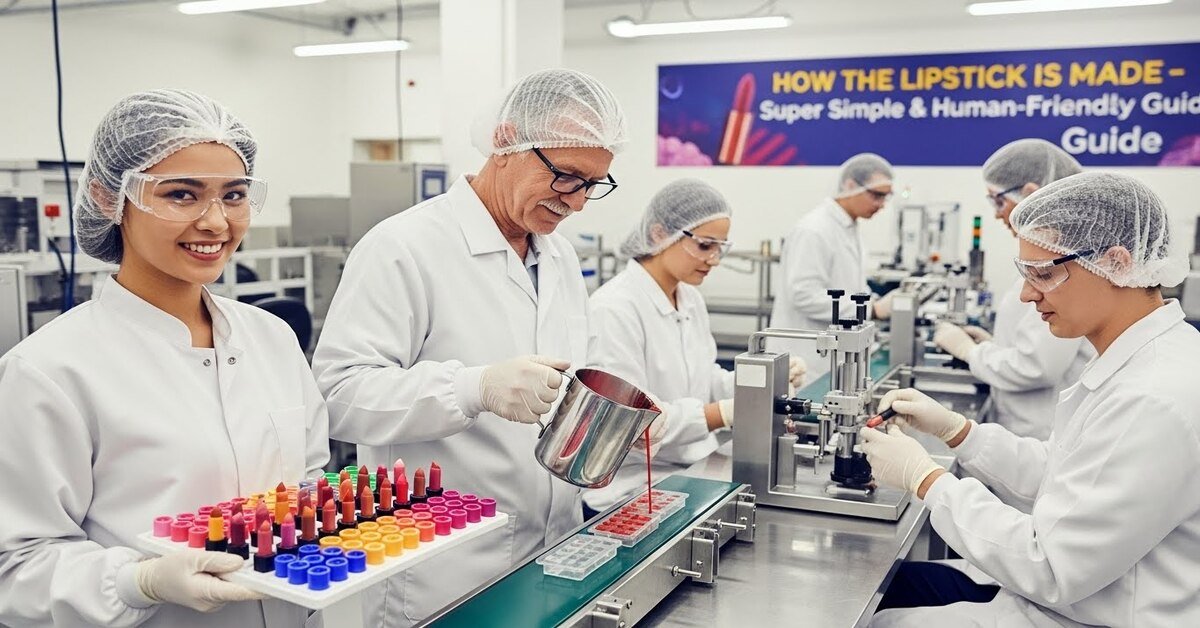
Lipstick may look small, but it has a big story behind it. Every lipstick shade—whether it’s matte lipstick, creamy lipstick, long-lasting lipstick, bold red, or soft nude—goes through a complete process before it reaches your makeup bag. If you’ve ever wondered how lipstick is made, this guide will explain it in the simplest way possible.
Most people use lipstick daily, yet very few understand how lipstick is made from raw ingredients to the final product. This guide breaks everything down in clear, beginner-friendly language, so anyone can easily follow it.
You’ll also find step-by-step explanations, real-life examples, and helpful links for deeper learning. Understanding how lipstick is made not only increases your appreciation for your favorite shade but also helps you make better choices while buying.
This beginner-friendly guide is part of our Lipstick Basics series, where we break down everything from what lipstick actually is to how it works, so you can build your knowledge step by step with confidence.
What You Will Learn in This Guide
- How lipstick ingredients are chosen
- How factories melt, mix, and color lipstick
- How lipstick gets its smooth texture
- Step-by-step lipstick manufacturing process
- How quality testing is done
- Why modern lipsticks are safer and better
- Why you can buy lipstick confidently today
1. Understanding the Basics: How lipstick is made
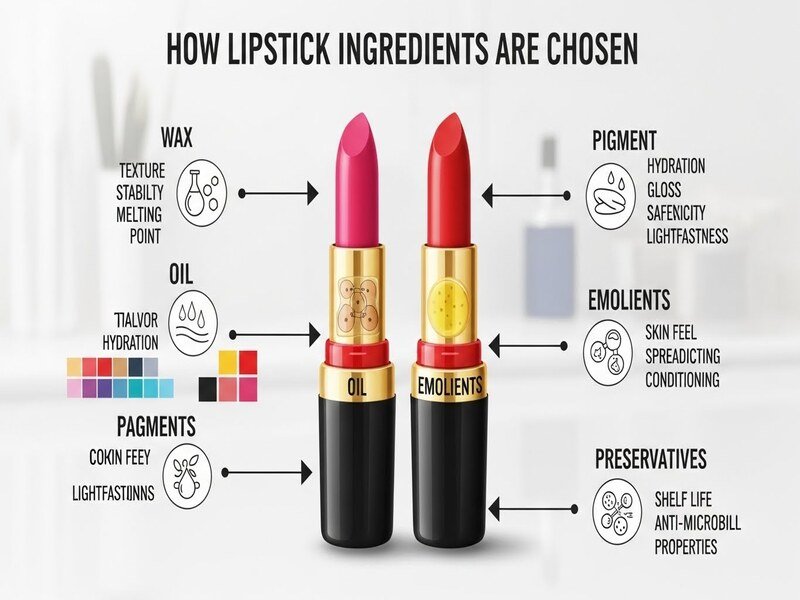
Before you learn how lipstick is made, you should know what goes inside it.
Most lipsticks contain 4 main things:
1. Waxes
Waxes help lipstick keep its shape.
Common waxes include:
- Beeswax
- Candelilla wax
- Carnauba wax (hardest natural wax)
2. Oils
Oils make lipstick smooth and easy to apply.
Popular oils include:
- Castor oil
- Mineral oil
- Olive oil
- Jojoba oil
- Shea butter
3. Pigments
Pigments are used to add color.
Examples:
- Red iron oxide
- Yellow oxide
- Blue lake pigments
4. Additives
These improve texture and quality.
Examples:
- Vitamin E (for moisture)
- Sunscreen filters
- Preservatives
- Fragrance

2. Step-by-Step: How Lipstick Is Made in Factories
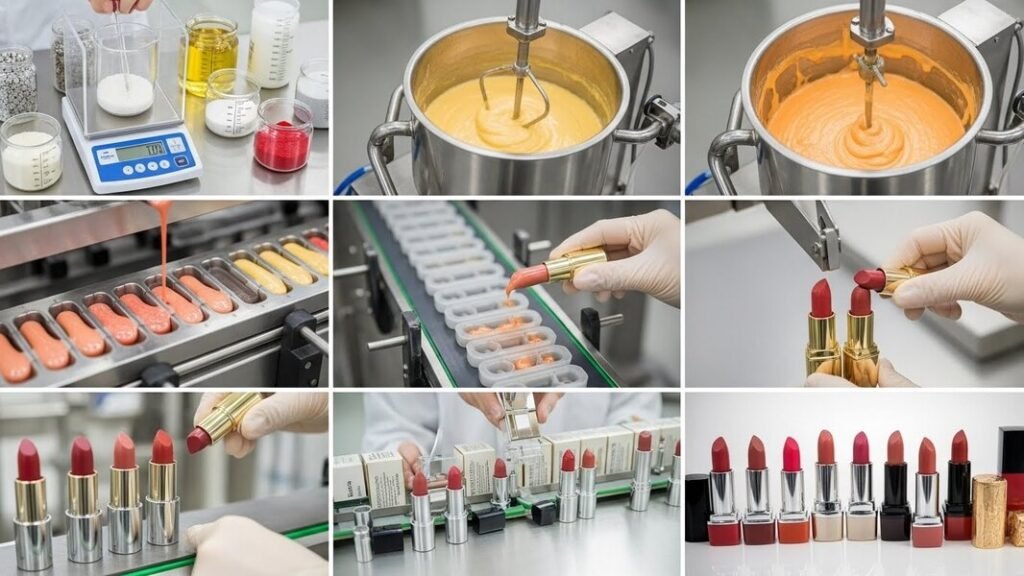
Now let’s break down the entire process into simple steps. I will explain it for you just like a factory worker would explain to a new trainee.
This section also includes an anecdote (small real-life story) so you can imagine all process very easily.
Step 1: Melting the Waxes
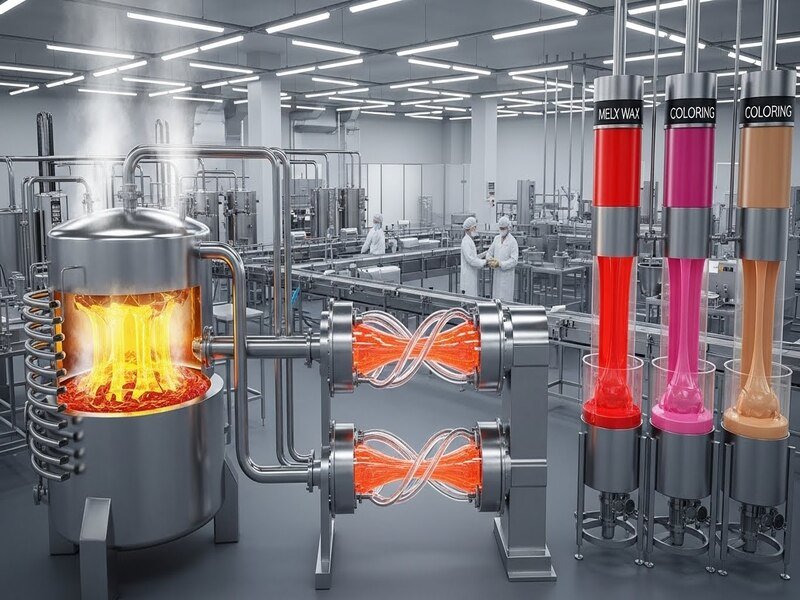
The first step is to melt waxes in large stainless steel tanks.
These tanks heat the wax gently until it becomes liquid—just like melting chocolate in a warm bowl.
Anecdote:
The first time I visited a small lipstick lab, the warm smell of beeswax filled the room. It felt like walking into a bakery, except instead of cakes, they were “baking” lipstick.
Step 2: Adding Oils to the Melted Waxes
Once the wax is melted, oils are added. Oils help adjust the smoothness and shine.
The technician blend the mixture slowly to avoid air bubbles.
Transition:
After the mixture becomes smooth like syrup, it’s time for the most exciting part to add the color.
Step 3: Mixing the Pigments (Adding Color)
This is where lipstick gets its beautiful colors.
Pigments are added to the warm wax-oil mixture.
But factories don’t simply “add” color…
They grind it using a roller grinder.
Why grinding is important:
- It makes the color even
- Prevents harsh lines
- Gives lipstick a creamy look
Anecdote:
Once a factory manager told me that making the perfect red shade takes dozens of tiny adjustments—“a little more blue, a little less orange.” It’s like creating a secret recipe.
Step 4: Heating Everything Together
All ingredients are heated again to make sure they blend perfectly.
This step ensures the lipstick does not break or melt easily later.
Think of it like reheating soup so all flavors blend.
Step 5: Pouring the Mixture into Lipstick Molds
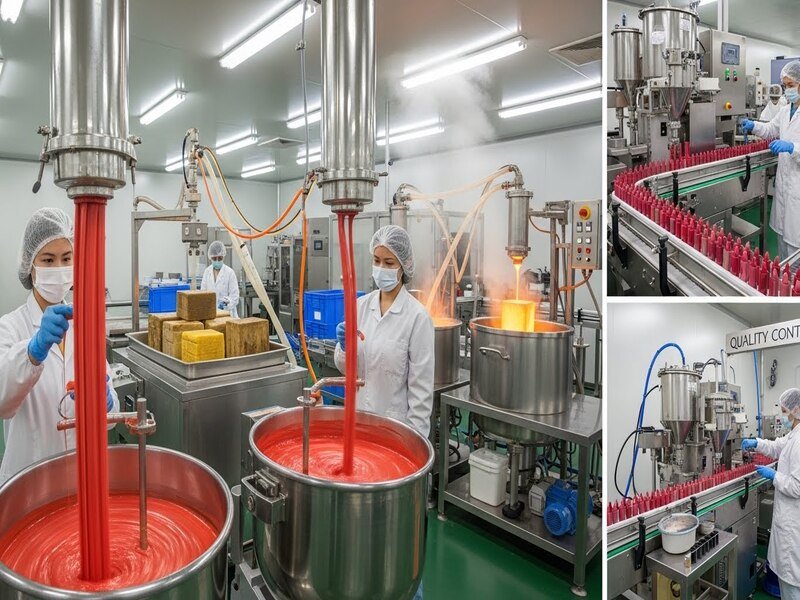
Once the mixture is ready, it’s carefully poured into lipstick molds.
- The molds are made of metal
- They are cold
- They shape the lipstick into the familiar “bullet shape”
The mixture cools and hardens inside the mold.
Anecdote:
Many workers say this is the most satisfying step—watching the hot liquid slowly turn into a beautiful lipstick bullet.
Step 6: Freezing the Molds
The molds are placed in a freezing chamber for a few minutes.
This helps the lipstick become firm and easy to remove.
Factories usually freeze lipsticks at controlled temperatures to avoid cracks.
Step 7: Removing the Lipstick Bullets
After freezing, the molds are opened, and the lipstick bullets pop out.
Each bullet is checked by hand for:
- Smooth surface
- No air bubbles
- Perfect shape
If a bullet looks imperfect, it is melted again and reused.
Step 8: Inserting Lipstick into the Tube
Now the lipstick bullet is placed inside the plastic or metal lipstick tube.
This step is usually done by machines, but luxury brands often do it manually to ensure high precision.
After insertion, the top is gently flame-heated for a second to remove sharp edges.
3. Quality Testing – Ensuring Lipstick Is Safe
Before the lipstick is packed, it goes through several tests.
1. Heat Test
Lipstick is placed in a hot room to confirm it doesn’t melt easily.
2. Drop Test
The tube is dropped from a height to ensure it doesn’t break.
3. Smell Test
Experts check for any strange smell caused by chemical reactions.
4. Color Consistency Test
A little sample is swatched on white paper to check color accuracy.
Anecdote:
A senior chemist once said, “A good lipstick should survive a hot summer wedding without melting.”
4. Packing, Labeling & Shipping
After passing all tests, lipsticks are packed in their brand boxes.
Each box includes:
- Shade name
- Batch number
- Ingredients list
- Expiry date
Then the lipsticks are shipped to stores, online warehouses, and beauty shops.
5. Why Modern Lipsticks Are Much Safer
Today’s lipsticks are safer because:
- They use dermatologist-tested formulas
- They follow international cosmetic laws
- They avoid harmful heavy metals
- They use natural oils and vitamins
- They go through strict quality checks
This means you can buy lipsticks confidently knowing they are safe for your skin.
6. Why You Should Choose High-Quality Lipstick
Good lipstick makes a huge difference:
Better for your lips
High-quality lipsticks contain:
- Shea butter
- Vitamin E
- Organic oils
These keep lips hydrated.
Smooth application
They don’t tug or feel dry.
Long-lasting
Quality formulas stay on for hours.
More beautiful shades
Top brands create perfectly balanced colors.
Safe for daily use
They don’t contain harmful chemicals.
7. Quick Step-by-Step Summary
| Step No. | What Happens |
| 1 | Waxes are melted |
| 2 | Oils are added |
| 3 | Pigments are mixed and ground |
| 4 | All materials are heated |
| 5 | Hot mixture is poured into molds |
| 6 | Molds are cooled or frozen |
| 7 | Lipstick bullets are removed |
| 8 | Bullets are placed in tubes |
| 9 | Lipsticks are tested |
| 10 | Packed and shipped |
Final Thoughts – Why Lipstick Is Worth Buying
Now you know exactly how lipstick is made, from wax melting to packing.
This entire process shows how much care, science, and skill goes into making every lipstick you see in stores.
So when you buy a good-quality lipstick, you’re not just buying color—you’re buying:
- Comfort
- Confidence
- Long-lasting beauty
- Safe ingredients
- A product made with real precision
Whether you love matte lipstick, nude lipstick, creamy lipstick, or classic red lipstick, now you can enjoy it with full confidence.
FAQs: How Lipstick Is Made
1. What ingredients are used to make lipstick?
Lipstick is made from a blend of waxes, oils, pigments, and emollients that provide color, texture, and moisture.
2. How is lipstick color created?
The color comes from pigments and dyes, which are finely ground and mixed evenly to ensure smooth and consistent shades.
3. What gives lipstick its solid shape?
Waxes like beeswax or carnauba wax help lipstick hold its shape while allowing it to glide smoothly on the lips.
4. How is lipstick manufactured in factories?
Ingredients are melted, mixed, poured into molds, cooled, and then placed into lipstick tubes before quality testing.
5. Is modern lipstick safe to use?
Yes, modern lipstick is produced under strict cosmetic safety regulations and tested for quality and skin compatibility.