Choosing the perfect lipstick often feels like guesswork. You might love the color but hate how it feels, or adore the finish but watch it fade within an hour. What if you could skip the trial-and-error and choose lipstick based on wax content from the start? The secret to a lipstick’s behavior—its texture, longevity, and comfort—lies primarily in its wax blend. Learning how to choose lipstick based on wax content is the key to becoming an informed buyer who never wastes money on a disappointing formula again.
This guide will teach you exactly how to choose lipstick based on wax content by understanding what different waxes do. We’ll move beyond marketing terms like “matte” or “creamy” and look at the foundational ingredients. By the end, you’ll know how to choose lipstick based on wax content for long wear, smooth application, or all-day comfort, turning you into a savvy cosmetic connoisseur.
Why Wax is the Decision-Making Factor
Before you can effectively choose lipstick based on wax content, you need to know why wax matters. Wax is the structural skeleton of every bullet and liquid lipstick. It:
- Sets the Texture: Determines if it’s creamy, matte, balmy, or solid.
- Controls Longevity: Influences how well pigment binds to your lips and resists heat.
- Defines Application Feel: Dictates whether it glides smoothly or tugs.
The goal is to choose lipstick based on wax content that aligns with your priority: is it all-day wear, a luxurious feel, or a natural finish?
The Primary Wax Types and Their Personalities
To smartly choose lipstick based on wax content, you must know the key players. Each wax brings a different property to the formula.
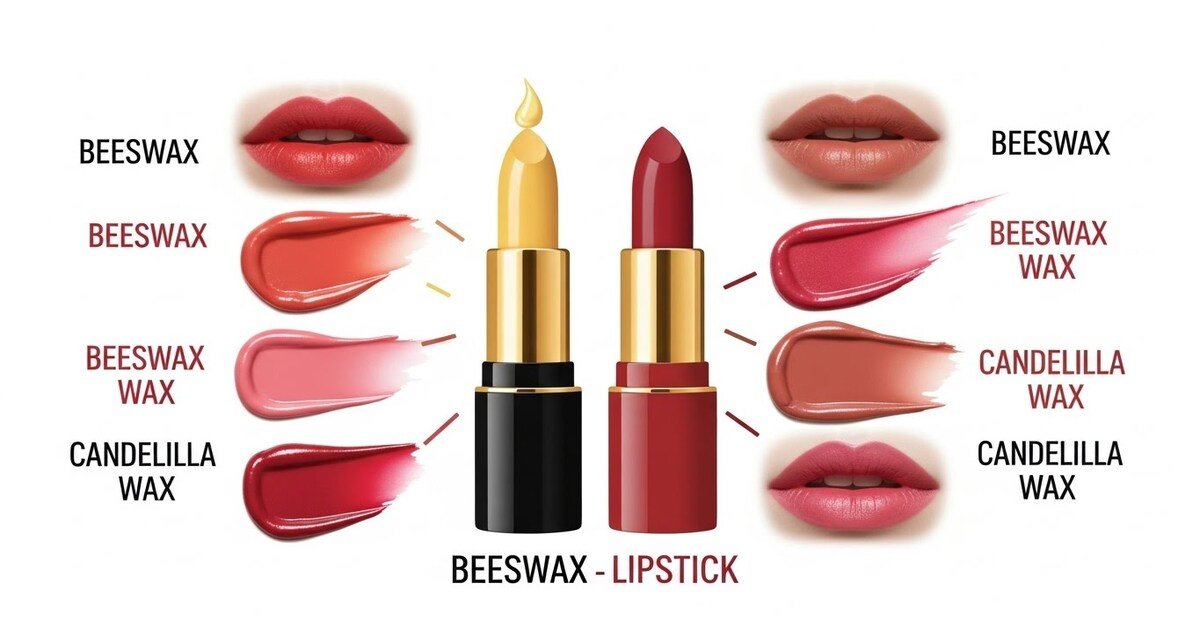
- Carnauba Wax: Sourced from palm leaves, this is one of the hardest natural waxes. Lipsticks with high carnauba content are firm, have a high melting point, and offer excellent long-lasting lipstick wear. However, if not balanced correctly, they can feel dry or tug on application. To understand its role in creating durable color, read our deep dive on Carnauba Wax in Lipstick.
- Beeswax: A classic, flexible wax that provides structure without being rigid. It helps a lipstick mold to your lips comfortably and often adds a slight emollient feel. When you choose lipstick based on wax content for comfort and shape, look for beeswax. Learn about its smoothing benefits in our guide to Beeswax in Lipstick.
- Candelilla Wax: A common vegan alternative to beeswax. It’s harder than beeswax but softer than carnauba, offering a good balance of structure and application. It’s a key wax to note when you choose lipstick based on wax content for a vegan lifestyle.
- Synthetic Waxes (e.g., Ozokerite, Microcrystalline): These are engineered for specific performance traits, like exceptional flexibility or stabilization. They allow for very precise texture tuning, from ultra-thin liquids to transfer-proof films.
The interplay between these waxes is a science. Discover how chemists balance them in our article on Wax Ratios in Lipstick Formulation.
How to Choose Lipstick Based on Wax Content: A Practical Guide
You don’t need a chemistry degree. Use these actionable steps to choose lipstick based on wax content on your next shopping trip.
Step 1: Decode the Ingredient List
The ingredients are listed in descending order of concentration. The first 5-7 ingredients are most important.
- For Long, Long Wear: Look for Carnauba Wax or synthetic polymers listed high up. These create a rigid, color-locking film.
- For Creamy, Comfortable Wear: Look for Beeswax or Candelilla Wax positioned before stiffening agents. This indicates a focus on bend and comfort.
- For a Balmy, Sheer Wash: Look for oils and butters first, with waxes like soft synthetic waxes or Beeswax further down.
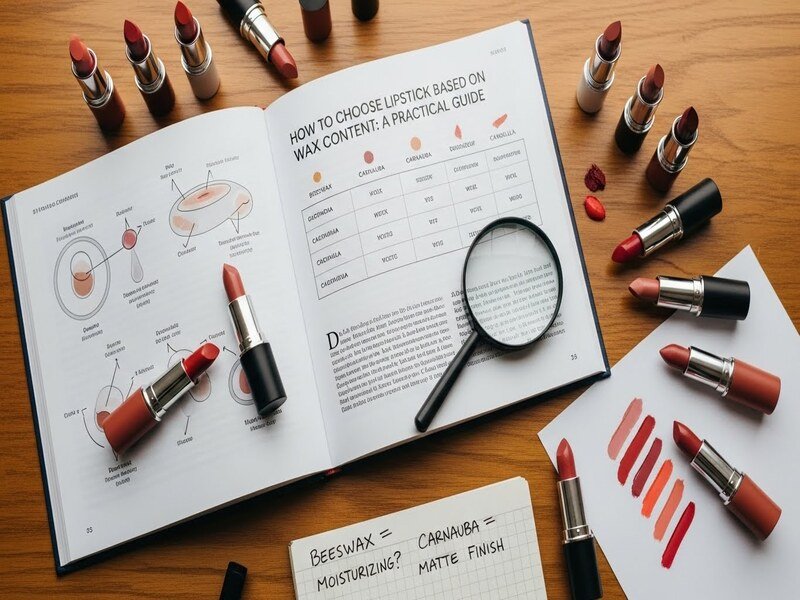
Step 2: The In-Store “Test” for Texture
This is the fastest way to choose lipstick based on wax content by feel.
- Swatch on Your Hand: Does it glide with zero resistance? It likely has a higher ratio of soft/plasticizing waxes and oils.
- Feel the Bullet: Gently press your thumb against the bullet in the tube. Does it give slightly (indicating beeswax/candelilla) or feel unyieldingly hard (indicating high carnauba)?
- Observe the Finish: A true, flat matte often relies on high carnauba and silica. A creamy satin or demi-matte uses more beeswax and oils.
Step 3: Match the Wax Profile to Your Need
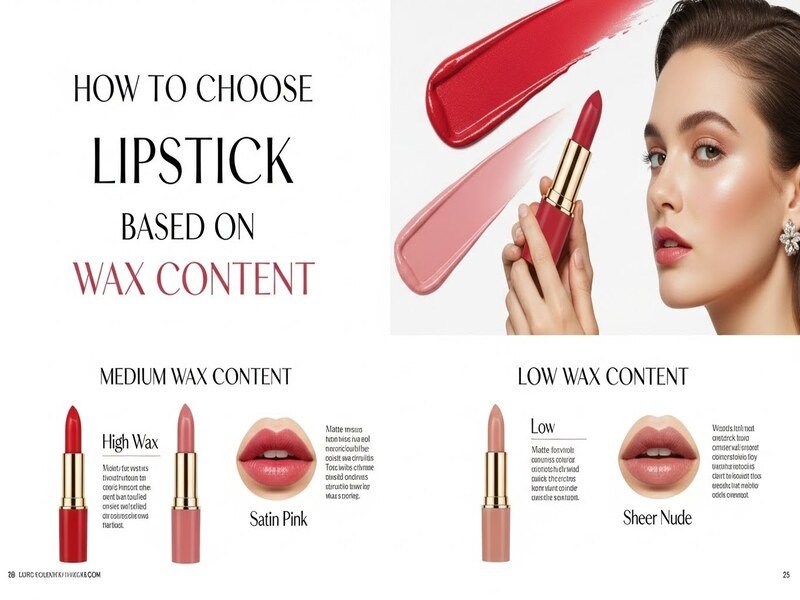
Let’s apply this knowledge. Here’s how to choose lipstick based on wax content for common desires:
- “I need lipstick that lasts through a workday and lunch”: Prioritize formulas where Carnauba Wax or specific synthetic waxes are top-listed. These have higher melting points. Understand their stability in our explanation of Why Lipsticks Crack or Melt.
- “I have dry lips and need something hydrating that doesn’t feather”: Look for Beeswax high in the list, followed by emollient oils and butters. Beeswax provides structure to prevent bleeding while offering comfort.
- “I want the comfortable, blotted lip look”: Seek out formulas that use a blend of Candelilla and soft synthetic waxes. This gives a soft, malleable texture that sheers out beautifully.
For a complete breakdown of all ingredients, see our Lipstick Ingredients Explained guide.
Pro Tips: Applying Your Wax-Knowledge
Once you choose lipstick based on wax content, these tips will maximize its performance:
- For High-Carnauba (Hard) Lipsticks: Always prep lips with light hydration. Warm the bullet slightly on your hand first for a smoother glide.
- For High-Beeswax (Softer) Lipsticks: Store them in a cool place. Their lower melting point makes them more prone to softening in heat.
- Check the Blend: The best-performing lipsticks use a strategic mix. Our comparison of Beeswax vs Carnauba Wax explains how they work together.
FAQs: Choosing Lipstick Based on Wax Content
Can I really tell the difference just by the wax?
Absolutely. The wax blend is the single biggest factor in texture and wear. Oils and pigments are suspended within the wax network, so its character defines the experience.
Is one type of wax better than another?
No wax is universally “better.” It depends on your goal. Carnauba Wax in Lipstick is “better” for longevity. Beeswax in Lipstick is “better” for comfort and flexibility. The art is in the blend.
How does wax content relate to lipstick finish (matte, cream, etc.)?
Directly. A matte finish requires more hard, absorbing waxes (like carnauba) to create a flat, non-reflective surface. A cream finish uses more soft, emollient waxes (like beeswax) and oils for shine and slip.
Where can I learn more about specific waxes?
Explore our dedicated guides to understand each component:
- Wax in Lipstick: The foundational role.
- Wax Types in Lipstick: A complete overview.
- Natural vs Synthetic Wax in Lipstick: Making an informed choice.
- Wax vs Oils in Lipstick: How the balance creates texture.
By learning to choose lipstick based on wax content, you take control of your beauty routine. You move from hoping a lipstick works to knowing why it will. Start looking at those ingredient lists—your perfect lipstick match is waiting to be decoded.