Choosing the right foundation shade can feel like trying to solve a puzzle without the picture on the box. You pick a shade that looks perfect in the store, but the moment you step outside, it suddenly becomes too orange, too pink, or simply too dull. If this sounds familiar, you’re not alone. Many people struggle with matching their makeup because they don’t fully understand how to find your skin undertone, the color beneath the surface of the skin that affects everything from foundation and concealer to jewelry and clothing choices.
In this guide, we’ll walk through how to find out your skin undertone using easy, foolproof tests, real-life stories, and tips that anyone can follow at home. We’ll also cover how to find your undertone for dark skin so everyone can shop for makeup with confidence. Understanding your undertone will help you make smarter choices and feel confident in every beauty purchase. Let’s dive in.
What Is a Skin Undertone?
Your skin undertone isn’t the same as your skin tone. Skin tone refers to how light or dark your surface skin is, while undertone is the subtle hue beneath that surface. It stays the same regardless of how tanned or pale you become. Understanding your undertone is key to choosing makeup, clothes, and even hair colors that naturally enhance your look.
To put it simply:
- Skin tone = surface shade
- Skin undertone = underlying hue
Types of Skin Undertones
There are three main types of skin undertones:
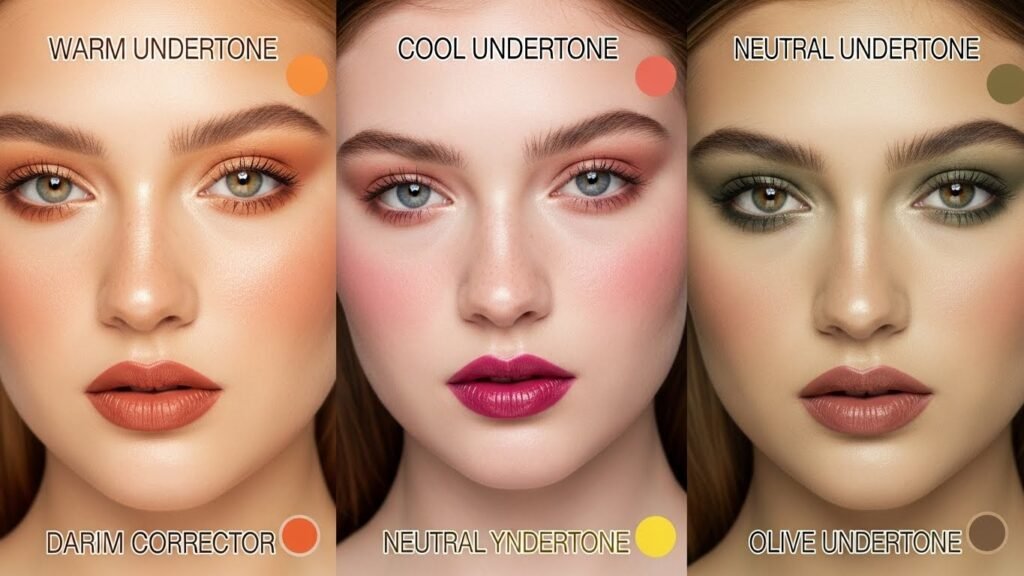
1. Cool Undertone
A cool undertone typically shows hints of pink, red, or blue beneath the skin. People with cool undertones often burn easily in the sun, although that is not always the case.
2. Warm Undertone
A warm undertone has a subtle glow of yellow, peach, or golden hues. Many people with warm undertones tan easily.
3. Neutral Undertone
If you have a balance of both cool and warm hues — or neither stands out obviously — you likely have a neutral undertone.
⭐ A Personal Anecdote You Can Relate To
A friend of mine, Emma, struggled with her makeup for years. She always asked, “Why does my foundation look gray in photos?” Even though she bought popular high-end products, the results always disappointed her. One afternoon, while we were swatching lipsticks, I noticed she naturally pulled toward rosy shades yet often wore yellow-based foundations.
After running a few simple undertone tests, we discovered she had a cool undertone, but she had been buying warm-toned products her whole life. Once she switched to cool shades, everything changed — her skin looked brighter, her makeup blended effortlessly, and she finally felt confident in her routine.
If you’ve ever felt like your makeup “just doesn’t look right,” chances are you’re experiencing the same mismatch. Let’s fix that today.
✅ How to Find Your Skin Undertone (Step-by-Step Guide)
Below are the easiest and most accurate ways to determine your skin undertone. You can try one method or combine several for a more precise answer.
1. The Vein Test
One of the most common and reliable ways to determine your undertone is by examining the veins on your wrist.
How to Do It:
- Stand near a window or natural light source.
- Look at the veins on the inside of your wrist.
- Compare the color of your veins.
What the Colors Mean:
- Blue or purple veins → Cool undertone
- Green or olive veins → Warm undertone
- A mix of both → Neutral undertone
2. The Jewelry Test
This test is fun, simple, and surprisingly accurate.
How to Do It:
- Try on gold jewelry and observe your reflection in natural light.
- Then try on silver jewelry.
- Pay attention to which metal adds brightness to your face.
What Your Preference Says:
- Silver looks better → Cool undertone
- Gold looks better → Warm undertone
- Both look equally flattering → Neutral undertone
3. The White T-Shirt Test
A plain white T-shirt can reveal a lot about your undertone.
How to Try It:
- Put on a pure white T-shirt or hold a white cloth near your face.
- Stand in natural lighting (no yellow bulbs!).
- Notice how your skin looks next to the white.
Interpretation:
- If your skin looks rosy or pink, you have a cool undertone.
- If it looks golden or warm, you have a warm undertone.
- If you notice no obvious color shift, you’re likely neutral.
4. The Sun Reaction Test
Sun exposure can offer clues about your undertone.
What to Pay Attention To:
- Do you burn quickly? You may lean cool.
- Do you tan easily without burning? You may be warm.
- Do you burn occasionally but tan after? Possibly neutral.
5. The Color Test (Clothing Shade Test)
Different clothing colors can highlight your undertone.
Try These Colors:
- Cool undertone: jewel tones like emerald, sapphire, icy blue
- Warm undertone: earthy tones like mustard, olive, rust
- Neutral undertone: nearly any shade works well
6. The Foundation Swatch Test (Most Accurate)
Nothing beats actually swatching foundation on your jawline.
How to Do It Properly:
- Swipe three shades: one with cool undertone, one with warm, one neutral.
- Blend gently into your jawline.
- Step into natural sunlight.
- The shade that disappears seamlessly is your match
⭐ Why Knowing Your Undertone Matters So Much
Understanding your skin undertone makes shopping easier in several ways:
✔ Foundation matches become effortless
No more orange or chalky makeup.
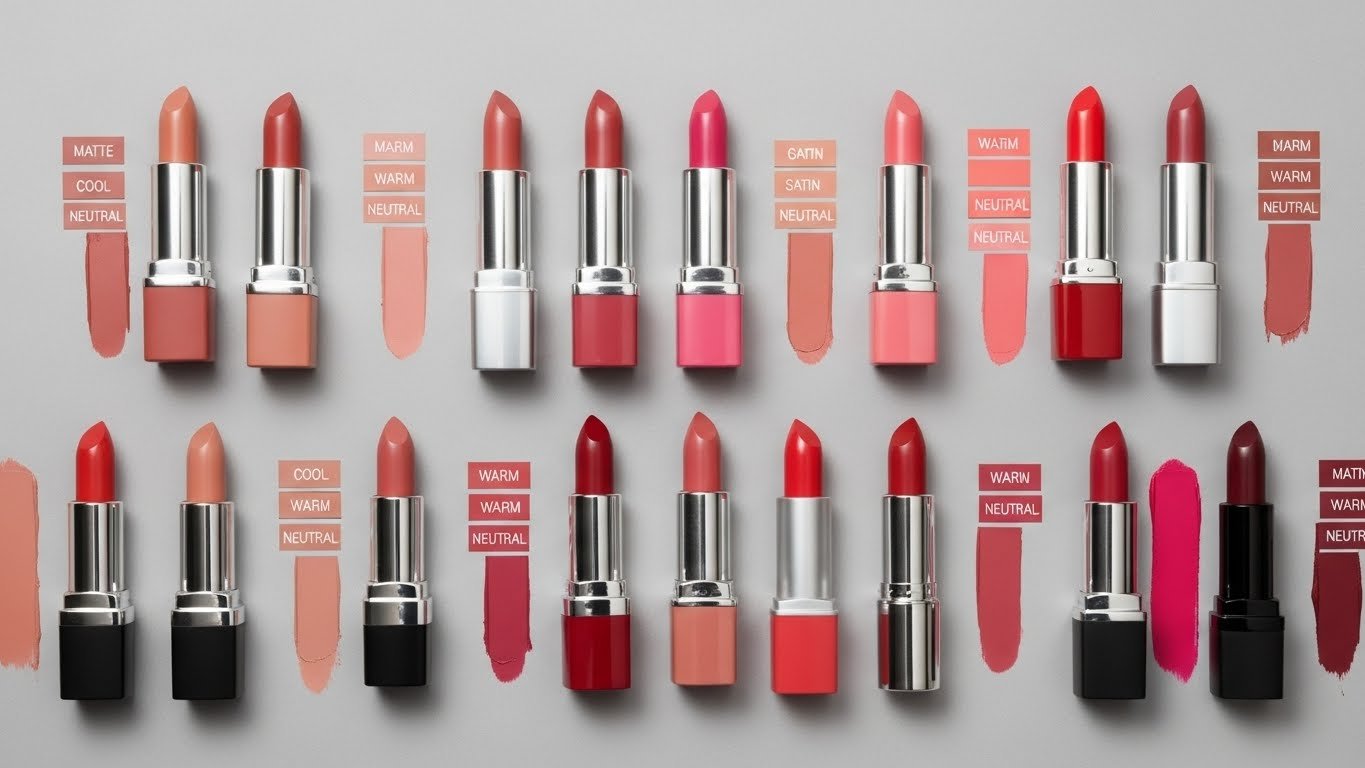
✔ Lipstick shades look instantly flattering
Warm undertones glow in corals, peaches, and terracotta.
Cool undertones shine in berry, mauve, and plum.
✔ Clothing colors look more vibrant on you
You’ll stop wasting money on clothes that “wash you out.”
✔ Jewelry & accessories elevate your look
Knowing whether you’re a gold or silver person boosts confidence instantly.
⭐ Foundation Recommendations Based on Your Undertone
To help you shop comfortably and confidently, here’s a simple guide to choosing foundation shades based on your undertone.
For Cool Undertones
Look for labels such as:
- C (Cool)
- P (Pink)
- R (Rosy)
Example product ranges:
- NARS Sheer Glow – Cool Shades
- Fenty Pro Filt’r – C options
For Warm Undertones
Look for labels like:
- W (Warm)
- Y (Yellow)
- G (Golden)
Examples include:
- Estée Lauder Double Wear – Warm series
- Maybelline Fit Me – Warm shades
For Neutral Undertones
Look for:
- N (Neutral)
- Balanced blends
Try:
- MAC Studio Fix – Neutral options
- Dior Backstage Face & Body – N series
These lines have broad shade ranges that make matching smoother and more enjoyable.
⭐ How to Choose Makeup Colors by Undertone
Best Lipsticks for Cool Undertones
- Berry
- Plum
- Rose
- Blue-red tones
Best Lipsticks for Warm Undertones
- Coral
- Peach
- Brick red
- Warm browns
Best Lipsticks for Neutral Undertones
- Nude pinks
- Soft berries
- Balanced browns
⭐ How to Confidently Shop for Makeup Using Your Skin Undertone
Now that you know your undertone, here’s a simple shopping strategy:
1. Always check the undertone code first
Most brands label their foundations clearly: W, C, N, Y, G, etc.
2. Swatch before buying
If possible, test in natural light.
3. Stick to your undertone for complexion products
Foundation, concealer, bronzer — these depend heavily on undertone accuracy.
4. Mix undertones only when needed
Some people are cool in winter and warm in summer. In that case, adjusting seasonally works well.
5. Use online shade finder tools
Most beauty websites now offer virtual shade matchers. These can guide you close enough before you finalize your purchase.
⭐ Common Mistakes When Determining Your Undertone
❌ Using indoor yellow lighting
Warm bulbs distort colors — always test in natural daylight.
❌ Confusing skin tone with undertone
You can be dark-skinned with a cool undertone or light-skinned with a warm undertone.
❌ Assuming warm undertones = tan easily
Not always accurate.
❌ Wearing bright makeup while testing
Bold colors can cast reflections on your skin.
⭐ Final Thoughts: Buy Beauty Products With Full Confidence
Finding your skin undertone doesn’t have to be complicated. Once you understand your natural hues, everything becomes easier — from picking foundation to choosing lipstick or even deciding whether gold or silver suits you best. When you know what works for your undertone, you don’t just buy makeup; you invest in products that will genuinely enhance your beauty.
And remember: the goal is confidence. When your makeup blends effortlessly and your colors compliment your natural glow, you’ll not only look better — you’ll feel better.
Now that you understand your skin undertone, you’re fully equipped to shop with clarity, excitement, and certainty.
FAQs for “How to Find Your Skin Undertone”
1. What is a skin undertone?
A skin undertone is the subtle hue underneath your skin’s surface that affects how colors look on you. Unlike skin tone, which can change with sun exposure, undertone remains consistent. Common undertones are cool, warm, and neutral.
2. How can I tell if I have a cool, warm, or neutral undertone?
- Cool undertones: Your skin has pink, red, or blue hues. Veins on your wrist appear blue. Silver jewelry looks better on you.
- Warm undertones: Your skin has yellow, golden, or peachy hues. Veins appear green. Gold jewelry complements your skin.
- Neutral undertones: Your skin shows a mix of warm and cool hues. Both silver and gold jewelry suit you.
3. Does skin tone affect undertone?
No. Your skin tone (light, medium, dark) is different from your undertone. People with any skin tone can have cool, warm, or neutral undertones.
4. What is the easiest way to find your undertone?
Try these simple tests:
- Vein test: Check your wrist veins—blue/purple indicates cool, green indicates warm, and a mix indicates neutral.
- Jewelry test: See if gold or silver suits you better.
- White paper test: Hold a white paper next to your face; pink/red means cool, yellow/golden means warm.
5. Can undertones change over time?
No. Your undertone is natural and usually stays the same throughout your life, though tanning may temporarily change your skin tone.