You’ve prepped your lips, picked a shade you love, and still—something feels off. The lipstick fades too fast, looks uneven, or turns oddly pale. So you try concealer on the lips. It helps… a little. Then someone says, “Use a lip primer instead.” Now you’re stuck wondering which one actually works.
Understanding Lip Concealer & Lip Primer Differences is one of those makeup basics that quietly changes everything. These two products are often treated as interchangeable, but they serve very different purposes. Choosing the wrong one—or using them in the wrong order—is exactly why lipstick results feel inconsistent.
Let’s break it down clearly, without hype, so you know what to use before lipstick—and why.
This comparison is part of our Lipstick Comparisons series, designed to help you choose the right prep methods before applying lipstick.
Why Lipstick Needs a Base at All
Lips are not like the rest of your face. They move constantly, have thinner skin, and don’t produce oil. When lipstick is applied directly onto bare lips, pigment has nothing stable to cling to. That’s when you see fading, feathering, or patchiness.
This is where the debate around Lip Concealer & Lip Primer Differences begins. Both can act as a base—but they don’t behave the same once lipstick is applied.
Lip Primer vs Concealer on Lips: The Core Difference
At a glance, primer and concealer may look similar on the lips. In reality, they’re designed for very different jobs.
Lip primer
A lip primer is formulated specifically for the lips. It’s flexible, lightweight, and designed to move with your mouth.
It helps by:
- Smoothing fine lines
- Creating a slightly grippy surface
- Helping lipstick apply evenly
- Making color fade more gracefully
Concealer
Concealer is designed for facial skin, not lips. It’s thicker and more opaque, and its main role is color correction.
On lips, concealer:
- Neutralizes natural lip color
- Can make bright shades appear truer
- Often feels drier or stiffer over time
This fundamental difference is why Lip Concealer & Lip Primer Differences isn’t a fair “either/or” comparison—they solve different problems.
Should I Put Concealer on My Lips Before Lipstick?
Yes, you can—but only in specific situations.
Using concealer on lips makes sense when:
- Your lips are naturally dark or uneven
- You’re wearing very bright, pastel, or neon shades
- You want precise, editorial-style color
However, concealer is not designed for comfort or long wear on lips. If you’ve ever noticed lipstick looking chalky or washed out, the reason is often explained in why lipstick looks pale or patchy with concealer on lips—too much coverage, not enough flexibility.
Which Is Better: Primer or Concealer?
This depends entirely on your goal.
- For longevity and smooth wear: primer
- For color correction: concealer
- For everyday lipstick comfort: primer
In most real-life situations, primer performs more consistently. That’s why, in the Lip Primer vs Concealer on Lips debate, primer is usually the better default choice.
Does Lip Primer Help Lipstick Stay On?
Yes—and this is where primer clearly wins.
A lip primer:
- Fills micro-lines
- Reduces oil interference
- Helps pigment grip evenly
- Prevents lipstick from breaking apart
This is why lipstick applied over primer tends to fade evenly instead of disappearing in patches.
Can I Use Primer Without Concealer?
Absolutely. In fact, most people don’t need concealer at all.
If your lipstick:
- Looks true to color
- Applies evenly
- Just doesn’t last long
Then primer alone is enough. You only need concealer if color correction is your main concern.
What Should I Put on My Lips Before Lipstick?
The answer depends on what problem you’re trying to solve.
- Lipstick fades fast? → Use primer
- Lipstick looks too dark or uneven? → Use concealer sparingly
- Lips feel dry? → Hydrate earlier, then prime
Confusing these steps is whyLip Concealer & Lip Primer Differences feels complicated when it doesn’t need to be.
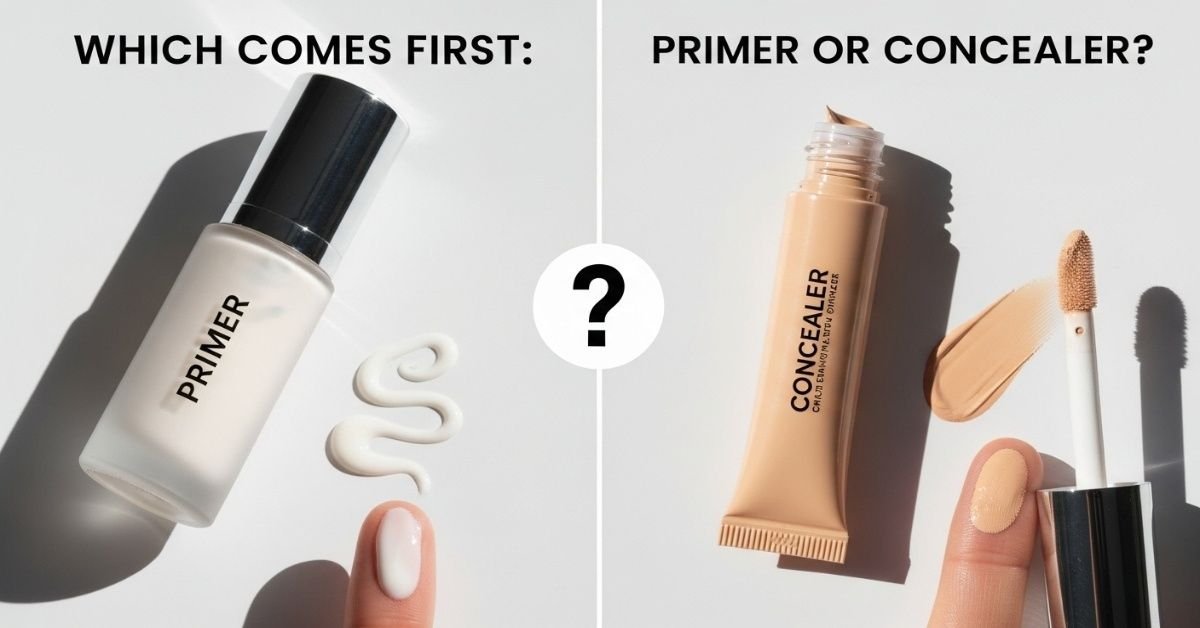
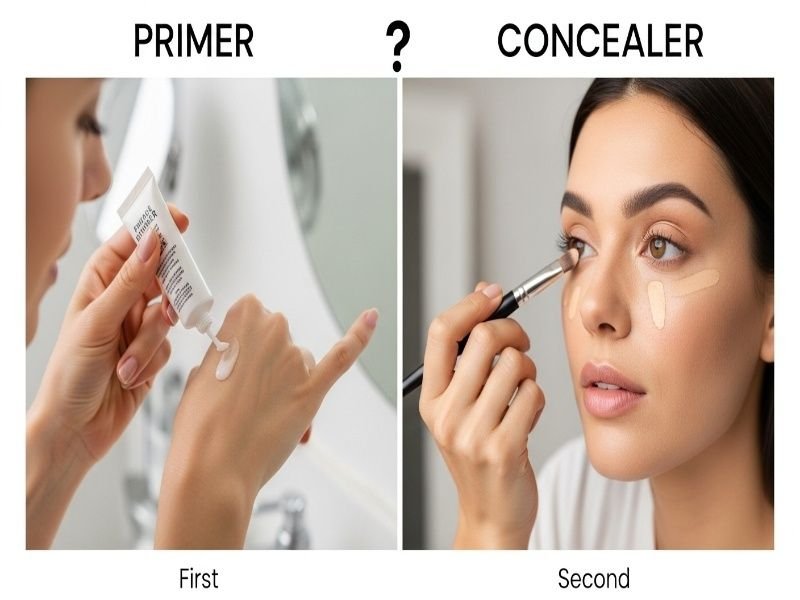
Which Comes First: Primer or Concealer?
Order matters—especially if you’re using both (which isn’t always necessary).
Correct order:
- Apply lip primer
- Let it set briefly
- Apply a very thin layer of concealer (only if needed)
- Apply lipstick
Reversing this order often leads to slipping, cracking, or uneven texture.
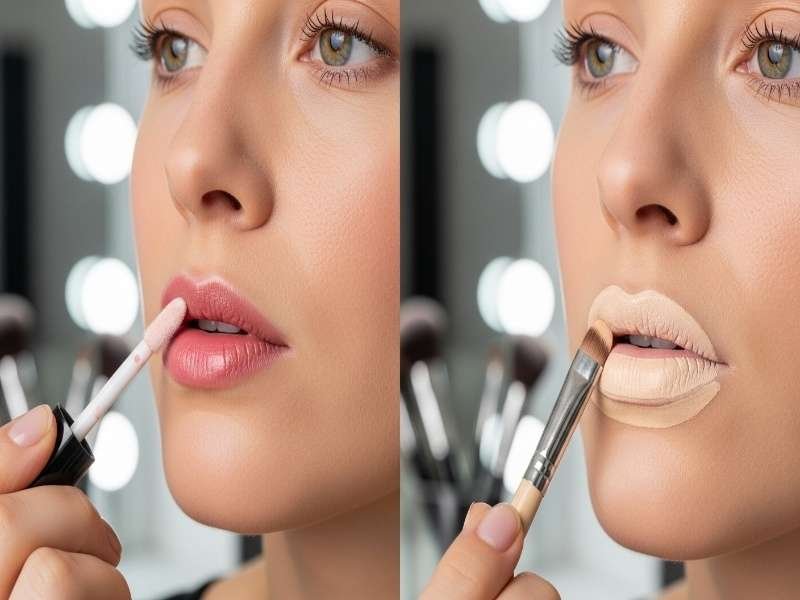
Do I Need Primer If I Only Use Concealer?
If lipstick feels dry, fades unevenly, or cracks—yes.
Concealer can neutralize color, but it doesn’t improve flexibility or wear. That’s why many people start with concealer on lips before lipstick and eventually switch to primer when they notice comfort issues. A detailed breakdown in concealer on lips before lipstick explains when concealer helps and when it works against you.
Common Mistakes in the Lip Primer vs Concealer Debate
Most disappointing results come from the same mistakes:
- Using full-coverage or matte concealer on lips
- Applying too much product
- Skipping hydration
- Expecting concealer to act like primer
These mistakes don’t mean the technique is wrong—they mean the product choice is mismatched.
Can Concealer Prevent Lipstick Bleed?
Concealer can help slightly around the lip edges, especially if applied carefully. But it’s not the most effective solution.
Primer smooths the entire lip surface, reducing feathering everywhere—not just at the edges. That’s another reason primer tends to outperform concealer for everyday wear.
When Concealer Actually Makes Sense on Lips
Despite its limits, concealer can be useful when:
- You’re neutralizing strong lip pigmentation
- You’re creating high-contrast or editorial looks
- You need a clean, blank canvas for color
In these cases, concealer is a color tool, not a wear-extending solution.
When Lip Primer Is the Better Choice
Lip primer is the better option when:
- Lipstick fades quickly
- Color applies unevenly
- Matte formulas feel uncomfortable
- You want longer, smoother wear
These are the most common concerns behind the Lip Concealer & Lip Primer Differences question—and primer addresses them directly.
Can You Skip Both Primer and Concealer?
Yes. Sheer, glossy, or balm-style lipsticks often don’t need a base. Not every look requires primer or concealer.
But for bold, matte, or long-wear formulas, skipping a base usually leads to frustration.
Final Verdict: Lip Primer vs Concealer on Lips
If you’re choosing betweenLip Concealer & Lip Primer Differences, here’s the simple truth:
- Use lip primer for smoothness, comfort, and longevity
- Use concealer only when you need color correction
They’re not interchangeable—and treating them as if they are is why lipstick performance feels unpredictable.
Fix the base, and lipstick finally behaves the way it should.
❓ FAQs – Lip Primer vs Concealer on Lips
1. Should I put concealer on my lips before lipstick?
Only if you need color correction. For wear and comfort, primer works better.
2. Which is better, primer or concealer?
Primer is better for longevity and smooth application.
3. Does lip primer help lipstick stay on?
Yes, it improves pigment grip and even fading.
4. Can I use primer without concealer?
Yes—most people only need primer.
5. Do I need primer if I use concealer?
If lipstick cracks or fades unevenly, primer will perform better.