You do everything right—or at least you think you do. You apply balm, wait a bit, swipe on lipstick… and still end up with uneven color or dry patches. That’s when the big question hits: am I supposed to use a lip scrub or a lip mask before lipstick?
The truth is, both matter—but not in the same way, and not at the same time. Understanding lip scrub vs lip mask helps you prep smarter instead of piling on products that cancel each other out.
This guide breaks it down simply, so you can choose the right method for your lips before lipstick application—not after things go wrong.
This comparison is part of our Lipstick Comparisons series, designed to help you choose the right prep methods before lipstick application.
Why Lip Prep Determines How Lipstick Looks
Lipstick doesn’t create smoothness—it reveals what’s already there. If lips are flaky, dehydrated, or irritated, pigment will cling to texture and crack quickly.
That’s why lip prep is the real foundation. And if you’ve struggled with dryness or uneven color before, it’s worth understanding why lipstick looks patchy or cracked on dry lips—because the fix always starts earlier in the routine.
Lip Scrub vs Lip Mask: What’s the Difference?
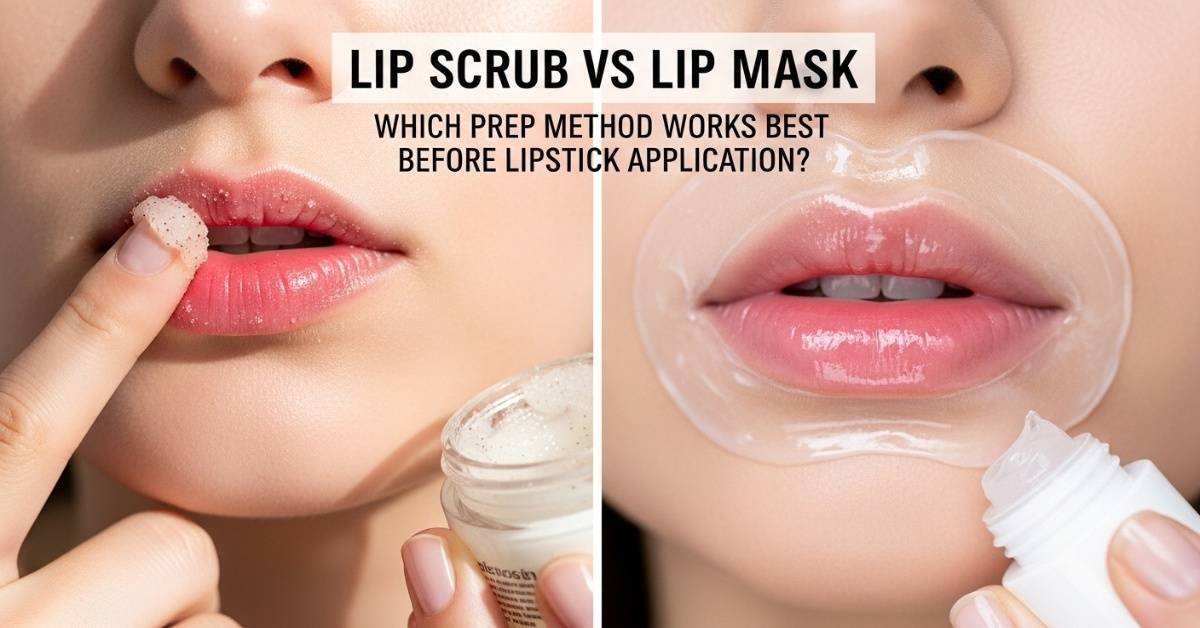
Although they’re often grouped together, lip scrubs and lip masks do very different jobs.
Lip scrub
- Removes dead skin
- Smooths surface texture
- Prepares lips for even color
Lip mask
- Deeply hydrates and repairs
- Restores softness and flexibility
- Prevents future dryness
If you’re choosing between them without knowing your lip condition, that’s where prep mistakes happen.
How Do I Prep My Lips Before Applying Lipstick?
If you’re wondering how do I prep my lips before applying lipstick, the answer depends on what your lips need right now.
- Flaky or peeling? → You need a scrub
- Dry but smooth? → You need a mask
- Rough and dry? → You need both (but not together)
This is where lip scrub vs lip mask becomes less about preference and more about timing.
Should You Use a Lip Scrub or Lip Mask First?
This is one of the most common questions—and the answer is clear.
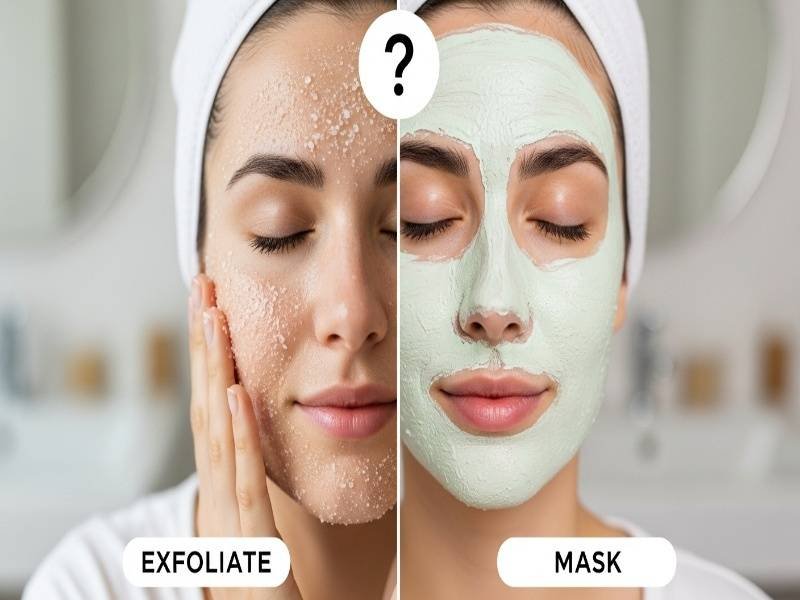
Exfoliate first. Mask second. Never the other way around.
Exfoliation removes barriers so hydration can actually penetrate. Applying a mask over flakes just seals in texture instead of fixing it.
A deeper look at lip exfoliation before lipstick explains why exfoliation should always come before hydration when texture is involved.
Which Is Better: Lip Scrub or Lip Mask?
Neither is “better” universally. They solve different problems.
- Lip scrub is better when lipstick looks patchy or clings to flakes
- Lip mask is better when lips feel tight, dry, or uncomfortable
If your lipstick cracks even after prep, revisit the balance—too much scrubbing or not enough hydration often causes the issue.
How to Make Lips Smooth Before Applying Lipstick
To make lips smooth before applying lipstick, follow this simple rule:
Smoothness = exfoliation + hydration + rest time
Ideal routine:
- Gently exfoliate (2–3 times per week)
- Apply a hydrating mask
- Let lips rest at least 10–15 minutes
- Blot excess product before lipstick
This routine prevents pigment from settling into lines and helps color glide evenly.
How to Use Lip Mask and Scrub (Without Overdoing It)
Using both products incorrectly can do more harm than good.
Correct usage:
- Lip scrub: light pressure, short duration
- Lip mask: generous layer, leave on (preferably overnight)
Never scrub daily. Over-exfoliation causes sensitivity, redness, and worse lipstick wear.
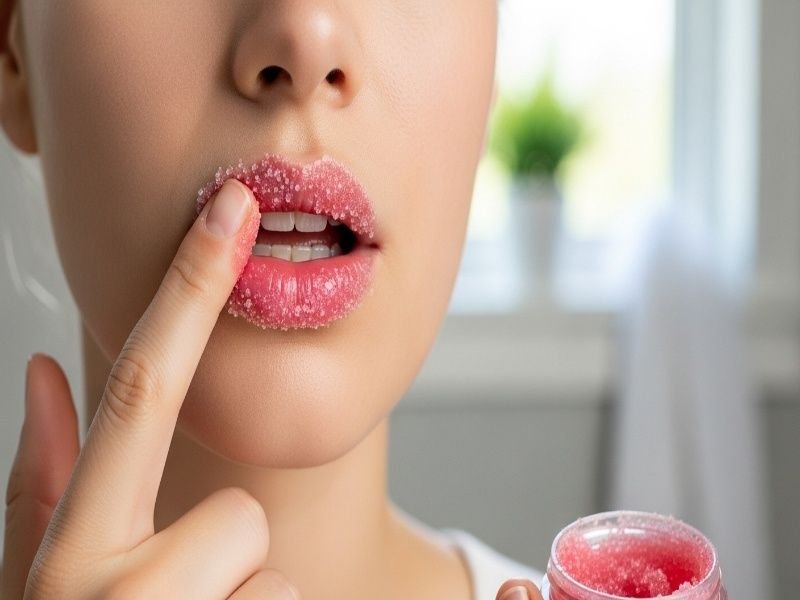
Do Lip Scrubs Make Your Lips Pinker?
Lip scrubs don’t permanently change lip color. What they do is remove dull, dead skin so your natural tone shows through more clearly.
Temporary pinkness after scrubbing is usually increased circulation—not a color change.
What Comes First: Exfoliate or Mask?
Always exfoliate first. Mask second.
If lips aren’t flaky, skip the scrub entirely and go straight to a mask. Knowing when not to exfoliate is just as important in the lip scrub vs lip mask debate.
What to Apply After a Lip Scrub
After scrubbing:
- Apply a lip mask or nourishing balm
- Avoid matte lipstick immediately
- Let lips calm and rehydrate
Skipping this step is one reason lipstick feels dry even after exfoliation.
What’s the Best Time to Use a Lip Mask?
Nighttime is ideal. While you sleep, lips repair themselves faster, and hydration has time to sink in.
Morning masks work too—just allow enough time before applying lipstick so the surface isn’t slippery.
What Ingredients Are Best in a Lip Mask?
Look for:
- Shea butter
- Ceramides
- Hyaluronic acid
- Panthenol
Avoid heavy fragrance or menthol if your lips are sensitive.
Do Lip Scrubs Make Lips Bigger?
No. Any “plumping” effect is temporary and caused by increased blood flow. Scrubs don’t increase lip volume long-term.
What Are the Side Effects of Lip Scrub?
Overuse or harsh scrubs can cause:
- Sensitivity
- Micro-tears
- Increased dryness
If lipstick starts looking worse after scrubbing, you’re likely exfoliating too often.
Lip Scrub vs Lip Mask: Which One Do You Need?
Ask yourself:
- Are my lips flaky? → Scrub
- Are my lips dry but smooth? → Mask
- Are they both? → Scrub first, mask after
This decision alone can completely change how your lipstick applies.
Final Verdict: Scrub or Mask Before Lipstick?
When it comes to lip scrub vs lip mask, the winner depends on timing, not trend. Scrubs smooth. Masks restore. Used correctly, they work together—not against each other.
If lipstick keeps cracking or looking uneven, the problem isn’t your shade or formula. It’s your prep order.
Fix the base, and lipstick finally behaves the way it should.
❓ FAQs – Lip Scrub vs Lip Mask
1. How do I prep my lips before applying lipstick?
Assess texture first, exfoliate if needed, then hydrate and blot before lipstick.
2. Should you use a lip scrub or lip mask first?
Always scrub first, then apply a mask.
3. Which is better, lip scrub or lip mask?
Neither is better universally—they serve different purposes.
4. What should I apply after a lip scrub?
A hydrating lip mask or nourishing balm.
5. Do lip scrubs have side effects?
Yes, if overused—they can cause dryness and sensitivity.