Choosing the right lipstick colors often feels like trying to find the perfect melody in a room full of instruments—everything looks beautiful, but not everything fits your personal rhythm. That’s exactly why understanding lipstick color theory can completely change the way you shop for makeup. Instead of guessing and hoping for the best, you’ll learn how certain shades, like great lipstick colors for fair skin, nude color lipstick, Color My World lipstick, or Dose of Colors lipstick, work naturally with your skin’s undertone, your facial features, your mood, and even the message you want your look to send.
Whether you’re building your first makeup kit or searching for your signature shade, this guide will help you pick lipstick colors with confidence and enjoy the process, too.
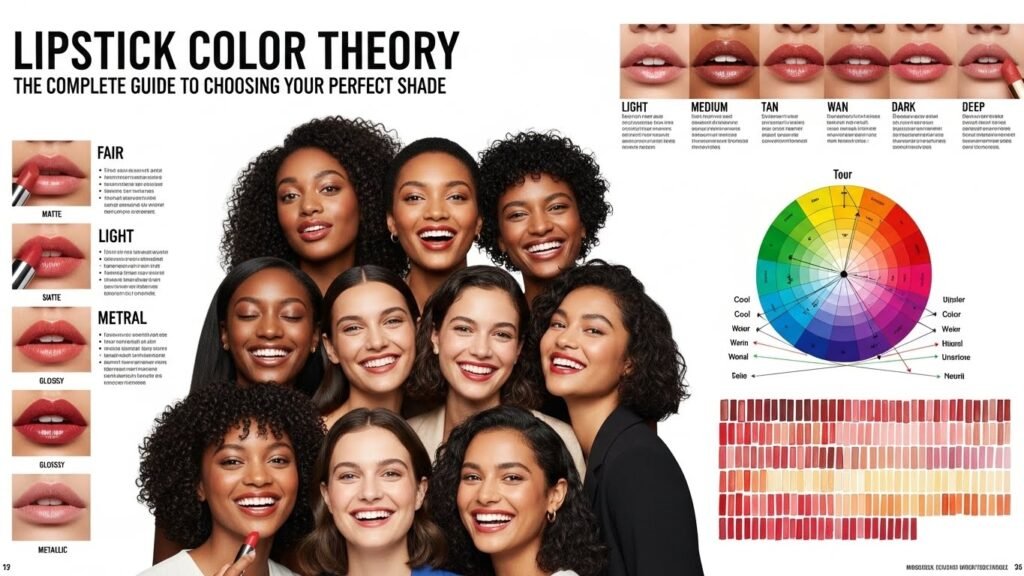
What Is Lipstick Color Theory?
Lipstick color theory is the art of choosing colors that flatter your natural features and create harmony between your skin tone, undertone, and the lipstick shade. It’s built on the same principles that painters and designers use to balance colors so everything looks intentionally put together.
Think of it like choosing the right lighting for a photo when the color is right, your whole face brightens. When it’s wrong, something feels “off,” even if you can’t quite explain why.
Many makeup artists use this theory to decide:
- Which shades create contrast (great for bold looks)
- Which shades look most natural
- Which shades complement your undertones
- Which finishes enhance or soften your features
This theory isn’t about rules it’s about understanding why certain shades feel like magic on your lips and others end up untouched in your drawer.
Why Lipstick Color Theory Matters
Most of us have bought a lipstick that looked gorgeous in the store but disappointing at home. This usually happens because the lipstick didn’t match our undertone or the look wasn’t balanced.
Understanding lipstick color theory helps you:
- Save money by buying shades you’ll actually use
- Create looks that feel polished and put-together
- Highlight your natural beauty effortlessly
- Choose the perfect lipstick for any outfit or event
Once you learn these principles, you’ll start recognizing your “instant yes” shades and you’ll finally understand why some colors suit you more than others.

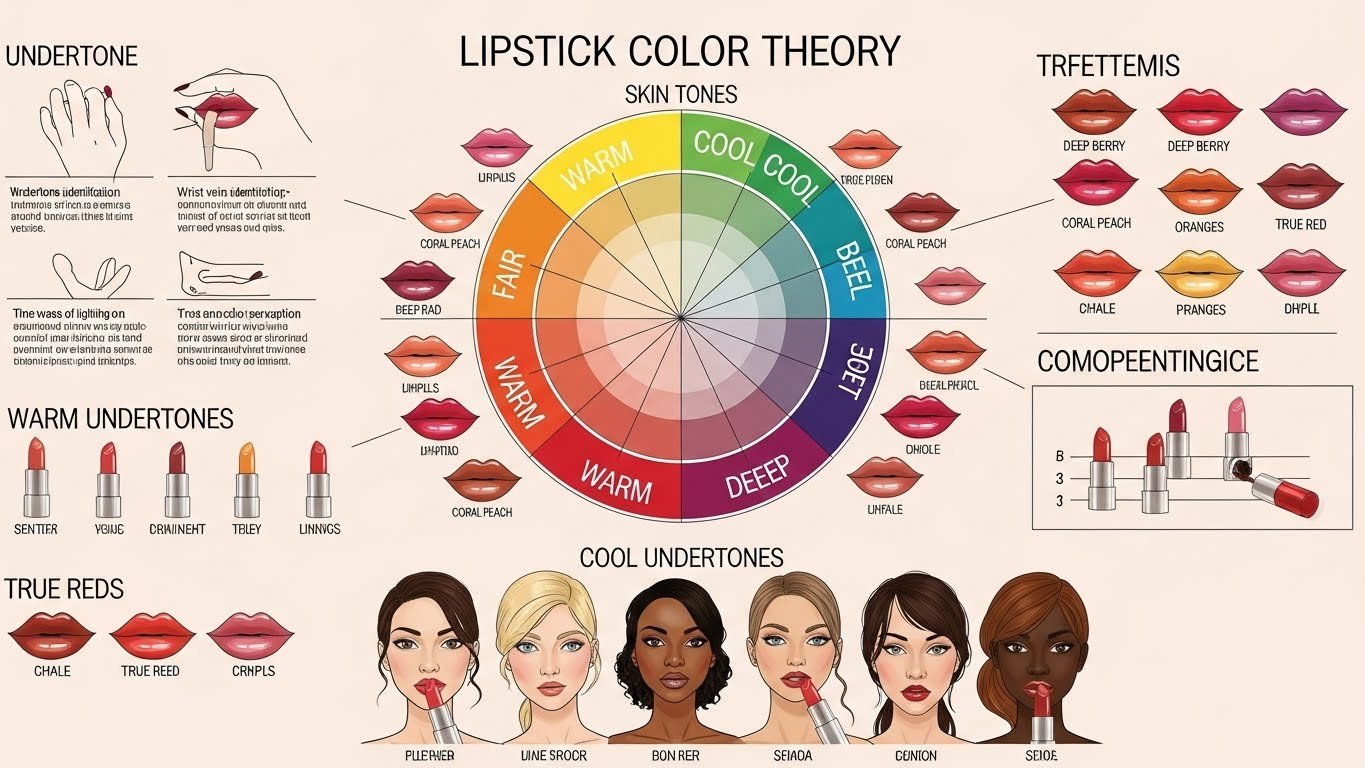
Your undertone is the fine color beneath your skin’s surface. It’s not about how light or dark your skin is any skin tone can have warm, cool, or neutral undertones.
Here’s a simple step-by-step guide:
Step 1: Look at Your Veins
Hold your wrist under natural light.
- If your veins look blue or purple, you’re cool-toned.
- If they look greenish, you’re warm-toned.
- If you see both, you’re neutral.
Step 2: The Jewelry Test
Compare gold and silver jewelry:
- If silver brightens your skin → cool undertone
- If gold looks better → warm undertone
- If both look great → neutral undertone
Step 3: The White Paper Test
Hold a pure white sheet next to your face:
- If your skin looks rosy or pink, you’re cool-toned
- If it looks yellow, peachy, or golden, you’re warm-toned
- If you see a mix, or your skin doesn’t lean strongly one way → neutral
Once you know your undertone, choosing lipstick colors becomes much easier.
Best Lipstick Colors for Each Undertone
Now let’s match undertones to the most flattering lipstick shades.
For Cool Undertones
Cool undertones look stunning with shades that have blue, purple, or pink bases.
Try:
- Cool reds (blue-red, berry-red)
- Rose pink
- Mauve
- Plum
- Berry shades
These colors brighten the face beautifully and bring out natural coolness in your complexion.
Anecdote:
A makeup artist once shared that she used a cool-toned berry lipstick on a bride who always avoided dark shades. But when she saw herself in it, she burst into tears happy ones because it made her feel elegant and confident without overwhelming her soft features.
For Warm Undertones
Warm undertones pair perfectly with earthy, golden, or orange-based shades.
Try:
- Coral red
- Brick red
- Terracotta
- Peach
- Warm nude
These shades bring warmth to your cheeks and give you a naturally sun-kissed glow.
For Neutral Undertones
Lucky you—neutral undertones can wear almost anything!
Still, the most flattering shades usually include:
- Soft rose
- Balanced nude (neither too warm nor too cool)
- True red
- Raspberry
If you like experimenting, neutral undertones give you the most freedom. Almost every lipstick family has a shade that will look amazing on you.
Understanding Lipstick Color Families
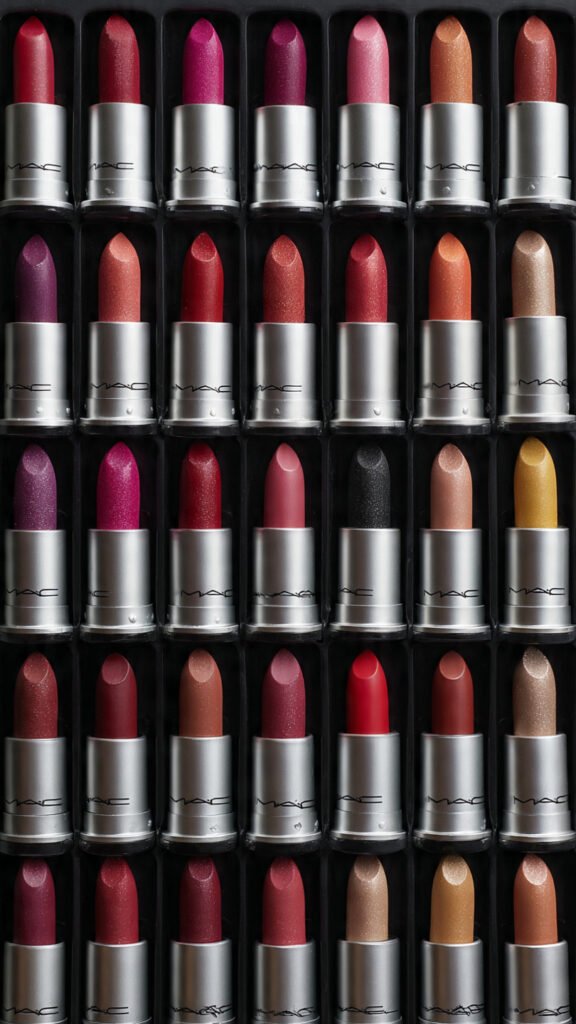
Just like clothing has categories (casual, evening, formal), lipsticks are grouped into color families. This helps you narrow your choices even more.
1. Nudes
Nude lipstick is meant to look natural like your lips, but better.
Choose:
- Warm undertone → caramel, warm beige
- Cool undertone → pink beige, soft taupe
- Neutral → true beige, rosy nude
Great for: workplace looks, clean-girl makeup, and soft glam.
2. Pinks
Pink lipstick adds freshness and youthfulness.
Choose:
- Warm undertone → peach-pink, watermelon
- Cool undertone → cool rose, bubblegum pink
- Neutral → soft rose, blush pink
3. Reds
Red lipstick is timeless and surprisingly easy once you know your undertone.
Choose:
- Warm undertone → tomato red, brick
- Cool undertone → cherry red, wine
- Neutral → true red (the universal shade that suits almost everyone)
Anecdote:
My college friend swore she “couldn’t wear red lipstick.” Then one night before a dinner party, we tried a blue-red shade on her just for fun. She ended up wearing it the entire evening and strangers kept stopping her to compliment her smile. She’s been wearing red ever since.
4. Berries & Plums
Perfect for fall, evening events, or anyone who loves a dramatic lip.
Choose:
- Warm undertone → warm plum
- Cool undertone → deep berry, grape
- Neutral → raspberry
5. Browns
Brown lipstick came back thanks to ’90s beauty, but now it’s richer and more flattering.
Choose:
- Warm undertone → cinnamon, terracotta
- Cool undertone → cocoa, brown with mauve tones
- Neutral → milk chocolate brown
How Lipstick Finish Affects Your Look
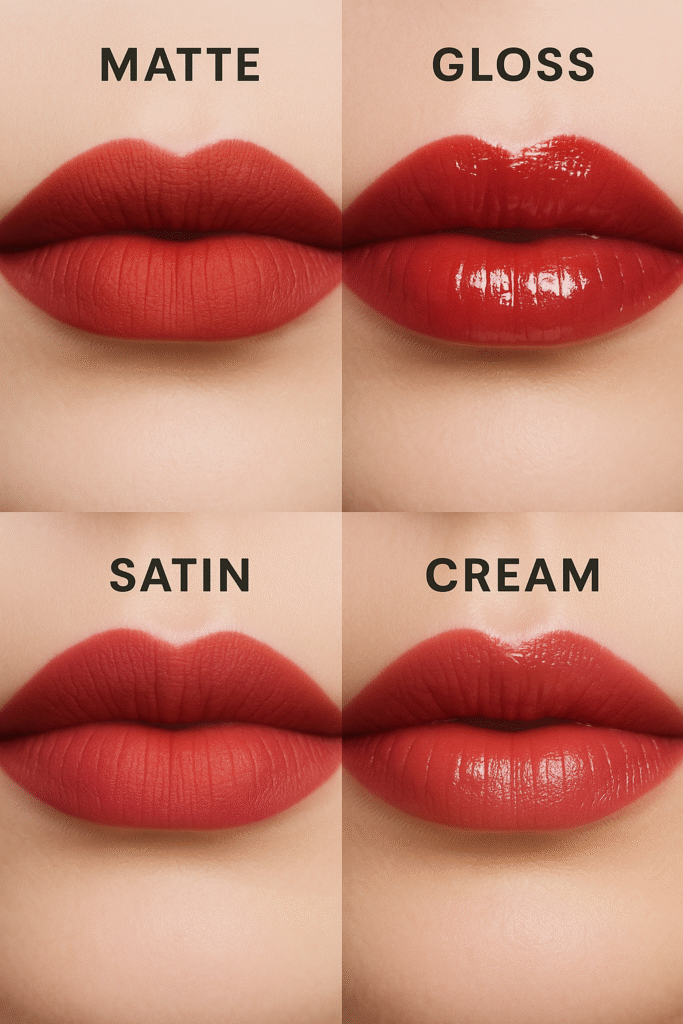
Even if the color is perfect, the finish can totally change the vibe.
Matte Lipstick
- Bold, pigmented, sophisticated
- Ideal for nights out or statement looks
Satin Lipstick
- Soft sheen, comfortable, everyday-friendly
- Great for dry lips
Gloss
- Youthful, fresh, adds fullness
- Beautiful for natural makeup days
Cream Finish
- Classic and hydrating
- Suitable for office or casual wear
How to Choose Lipstick for Different Occasions
Lipstick can be a powerful way to express your mood.
Work/Office
Go for:
- Neutral nudes
- Soft pinks
- Muted mauves
These look polished without being distracting.
Date Night
Choose:
- Glossy reds
- Berry tones
- Romantic rose shades
These add charm and allure effortlessly.
Formal Events
Choose:
- Bold matte reds
- Luxurious berry shades
- Plum tones
These shades photograph beautifully and create a powerful presence.
Step-by-Step Guide: How to Apply Lipstick Like a Pro
Step 1: Prep Your Lips
Exfoliate with a gentle scrub and apply lip balm.
Step 2: Outline the Shape
Use a lip liner close to your natural shade to keep everything neat.
Step 3: Apply Lipstick
Start at the center and work outward.
Step 4: Blot and Set
Blot with tissue to remove excess, then reapply for long wear.
Step 5: Add Gloss (Optional)
Great for extra dimension.
How to Build Your Own Lipstick Wardrobe
To feel prepared for any event, keep at least:
- One perfect nude
- One everyday pink
- One signature red
- One deep shade
- One gloss
With these, you’ll never struggle to complete a look again.
Final Thoughts: Confidence Starts with the Right Shade
Understanding lipstick color theory is truly empowering. It helps you shop smarter, feel more confident, and express yourself beautifully. When you know how shades interact with your undertones, you stop guessing and start choosing what makes you shine.
Your perfect shade isn’t just about color. It’s about how you feel when you wear it. If a lipstick makes you smile at your reflection, that’s your shade.
FAQ,S: Lipstick Colors Theory: The Complete Guide to Choosing Your Perfect Shade
1. What is lipstick color theory?
Lipstick color theory explains how different shades interact with your skin tone, undertones, and overall makeup look. It helps you choose shades that complement your natural features.
2. How do skin undertones affect lipstick color choice?
- Cool undertones: Look best with blue-based reds, berry, and plum shades.
- Warm undertones: Suit coral, peach, and orange-red shades.
- Neutral undertones: Can wear most shades, including nude, rose, and brick red.
3. Can color theory help match lipstick with outfits?
Yes. Understanding color theory ensures your lipstick complements your wardrobe, creating a harmonious and polished look. Contrasting or complementary shades can also create intentional style statements.
4. Does lipstick color impact perception or mood?
Absolutely. Dark reds and deep shades convey power and confidence. Soft nudes and pinks create a gentle, approachable look. Bright shades can energize your style and mood.
5. Can beginners apply lipstick using color theory effectively?
Yes. Even beginners can use simple rules like matching undertones and testing shades in natural light. Starting with versatile shades makes experimentation easy and safe.