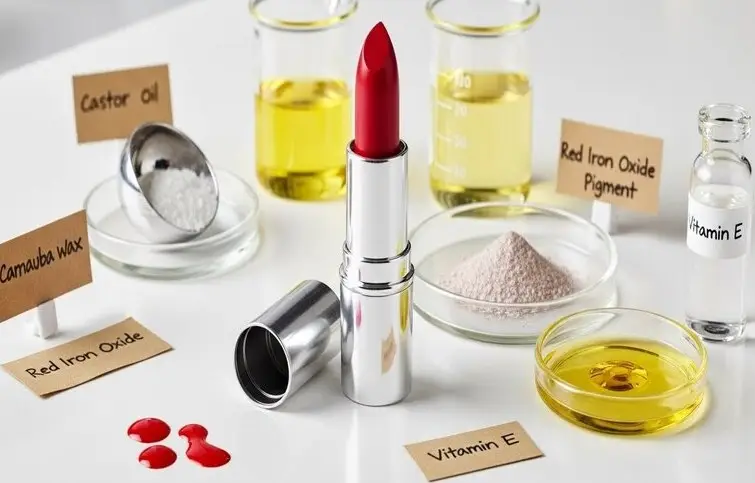
Lipstick Ingredients play a major role in how a lipstick looks, feels, and performs, yet many people have no idea what goes into making that perfect swipe of color. Understanding the ingredients in a lipstick not only helps you choose healthier formulas but also allows you to make smarter decisions based on your skin type and comfort. Whether you prefer matte, creamy, satin, or glossy textures, the magic behind every finish lies in the carefully selected ingredients of a lipstick. From Huda Beauty liquid lipstick ingredients to popular Huda lipstick ingredients found in trending formulas, each component serves a purpose.
This guide also highlights natural ingredients for lipstick and explains how choosing the right natural lipstick ingredients can create cleaner, safer, and more nourishing lip products. Everything is explained in simple and relatable language so every reader can connect, learn, and enjoy reading till the last line.
Why Knowing Lipstick Ingredients Matters More Than You Realize
Most of us buy lipstick based on shade or finish, but what truly makes a lipstick safe, smooth, and long wearing is hidden inside the ingredient list. Since lipstick touches the lips directly, you should know what you are actually applying. Many people with sensitive lips, dryness issues, or recurring irritation often discover that a single ingredient was causing the problem all along. Once you understand the basics, picking the right product becomes easier, safer, and even more enjoyable.
I still remember a friend who struggled with lip dryness for years. No matter what she applied, her lips cracked within hours. One day she decided to check the ingredients and realized her lipstick contained a fragrance compound that her skin did not like. After switching to a simpler formula, the problem disappeared instantly. That small moment changed the way she shops forever. This is why a little ingredient awareness makes a big difference.
The Main Building Blocks of Lipstick Formulas
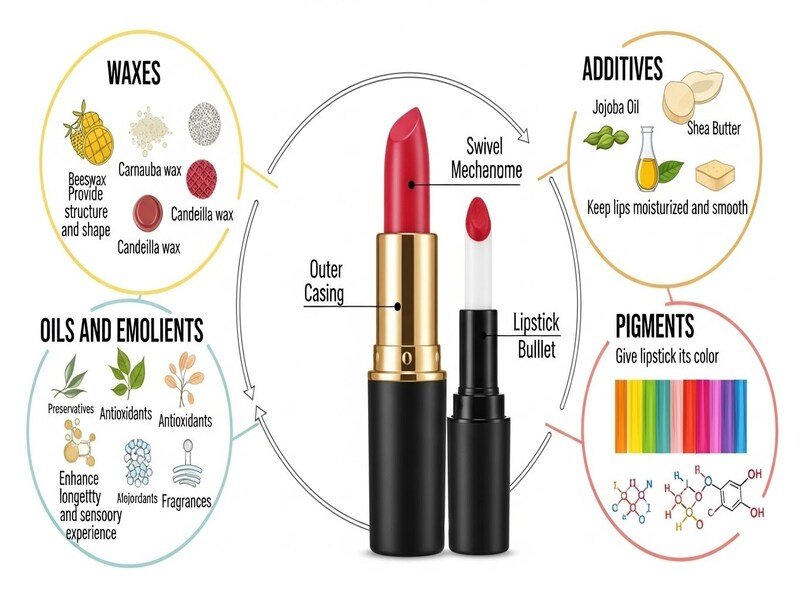
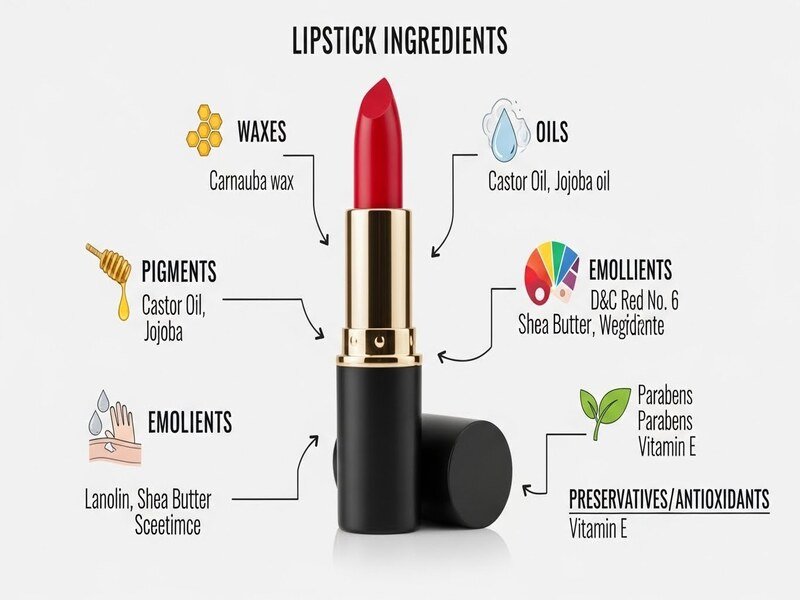
Every lipstick, from high end to affordable, uses three primary components. These are waxes, oils, and Pigments. These main elements work together to create color, texture, stability, and glide. Once these are set, brands add supportive ingredients like preservatives, antioxidants, emollients, and flavoring to improve performance. Let us explore each category in detail, keeping your comfort and clarity in focus.
Waxes Give Lipstick Its Shape and Strength
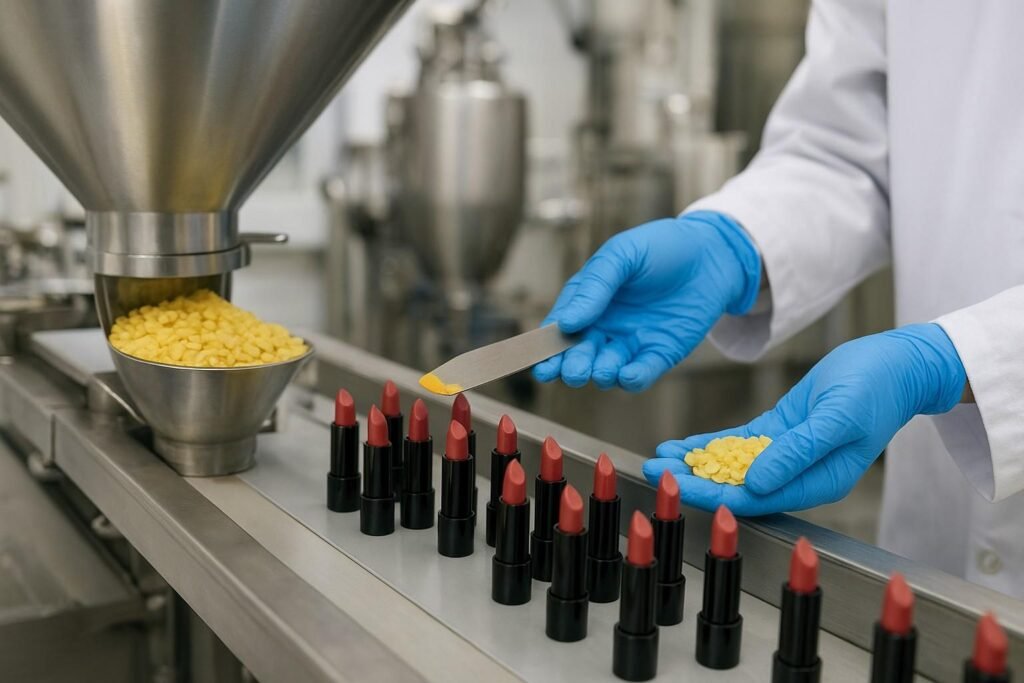
Waxes are the backbone of any lipstick. They help the product maintain its structure and stay solid even in warm conditions. Without waxes, your lipstick would simply melt or collapse. Common waxes include beeswax, candelilla wax, and carnauba wax. Each type serves a specific purpose in the final performance of the product.
Beeswax creates a smooth texture and adds a comforting barrier to the lips. Candelilla wax is plant based and ideal for vegan formulas, offering a firm yet glossy finish. Carnauba wax, known as the hardest natural wax, helps improve staying power and boosts the lipstick’s durability. Together, these waxes ensure that each swipe is smooth and controlled.
When you apply lipstick that glides easily, does not break, and stays put, you are experiencing the perfect balance of these waxes working quietly behind the scenes.
Oils Add Softness, Moisture, and Smooth Application
Oils play an important role in making lipstick feel comfortable. They soften the formula, add hydration, and help the color apply evenly. If a lipstick feels creamy or nourishing, it is because of its oil blend. Common oils include castor oil, jojoba oil, mineral oil, lanolin oil, and various butter oils like shea and cocoa.
Castor oil gives richness and shine. Jojoba oil closely resembles the skin’s natural moisture and keeps lips soft. Mineral oil prevents dryness and works beautifully in long lasting formulas. Shea and cocoa butter oils offer deep hydration and a cushion like feel.
I personally tried a matte lipstick that claimed to be moisturizing, but it left my lips dry within minutes. Later, I noticed it barely had any nourishing oils. When I switched to a formula that contained jojoba and shea butter oils, my experience improved dramatically. This small realization helps you choose better every time.
Pigments Create Color, Depth, and Beauty
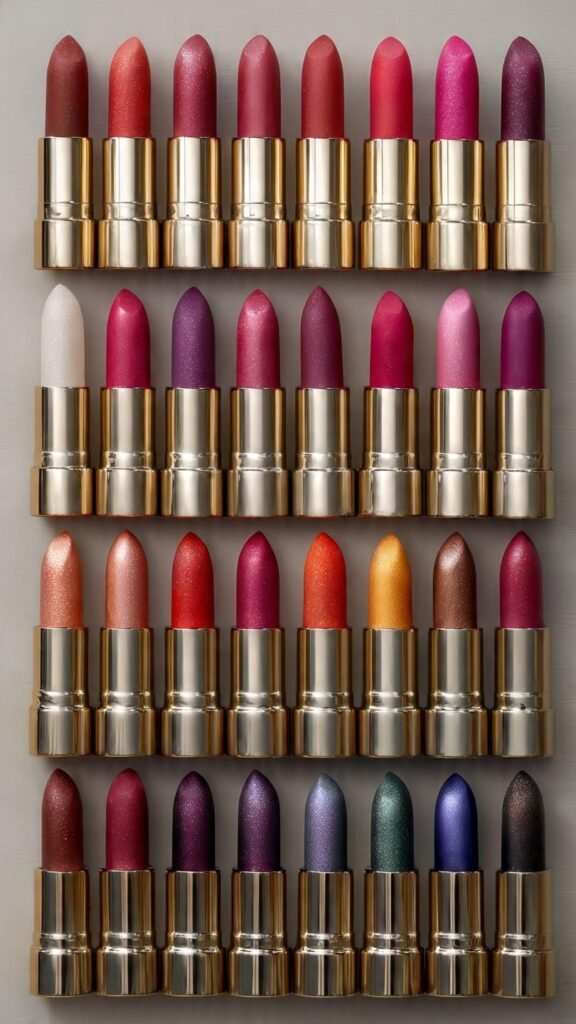
Pigments are the soul of lipstick. They bring the color that makes every shade unique. Without pigments, lipsticks would be colorless balms. These pigments can be natural, mineral based, or synthetic. Popular types include iron oxides, titanium dioxide, carmine, and modern synthetic colorants.
Iron oxides are used for earthy tones such as reds, browns, and neutrals. Titanium dioxide lightens shades and adds opacity. Carmine provides rich reds but is avoided in vegan formulas, which often use plant based pigments instead. Synthetic pigments help create bold, vibrant, long lasting shades.
Brands carefully blend pigments to achieve undertones, intensity, and color payoff. This is why two similar looking shades can feel totally different when applied.
Emollients Keep Lips Soft and Comfortable
Emollients are lip loving ingredients that make your lipstick feel pleasant all day. They soften the lips, reduce cracks, and maintain smoothness. Popular emollients include shea butter, cocoa butter, aloe vera, and vitamin E.
If your lipstick feels buttery or soothing, it probably contains strong emollients. Today’s formulas often combine makeup with skincare to provide comfort without compromising color.
Preservatives Keep Your Lipstick Safe and Fresh
Preservatives sometimes sound scary, but they are essential for product safety. Since lipstick comes into contact with the mouth, it needs protection from bacteria and mold. Common preservatives include parabens in very low amounts, phenoxyethanol, BHT, or plant based alternatives.
Without preservatives, lipstick would spoil quickly, especially in warm climates where moisture and bacteria thrive. Safe preservatives ensure the formula stays fresh and stable.
Antioxidants Prevent Rancidity and Color Change
Antioxidants protect the oils in lipstick from breaking down when exposed to heat, light, or air. Ingredients like vitamin E and vitamin C derivatives help maintain freshness, stability, and scent. They keep your lipstick from developing odd smells or changes in texture over time.
Fragrance and Flavor Add a Finishing Touch
Many lipsticks contain a mild fragrance to create a pleasant cosmetic scent. Some formulas also include sweet or fruity flavors, especially in lip glosses. However, if you have sensitive skin, fragrance free formulas may be a better choice. Always test first if you are unsure.
Fillers and Texture Enhancers Define the Finish
Fillers help determine whether a lipstick will be matte, satin, creamy, or glossy. Ingredients like mica add shine and glow. Silica helps achieve a matte effect. Kaolin clay improves smoothness and oil control.
These supporting ingredients ensure the lipstick has the exact finish you expect from the shade you choose.
Step by Step Guide to Reading Lipstick Ingredient Labels
Most people feel confused when they look at a long list of ingredients, but following a simple method can help you understand what you are buying.
Step 1
Look at the first few ingredients. These make up most of the formula and usually include waxes and oils.
Step 2
Identify the pigments. They appear as CI numbers and tell you about the color family and undertone.
Step 3
Check for emollients. If you see shea butter or jojoba oil, the lipstick will likely feel moisturizing.
Step 4
Notice preservatives. These ensure the product stays safe and fresh.
Step 5
Check for fragrance or flavor additives if you have sensitive lips.
Once you follow this approach a few times, you will easily understand any lipstick formula.
How to Choose the Right Lipstick Based on Ingredients
Choosing the perfect lipstick becomes easier when you match ingredients to your lip needs.
For Dry Lips
Look for formulas rich in shea butter, jojoba oil, and other emollients.
For Long Lasting Wear
Carnauba wax, silica, and silicone based ingredients improve staying power.
For Sensitive Lips
Fragrance free and simpler ingredient lists work best.
For Glossy Lovers
High oil content such as castor or mineral oil adds shine and moisture.
By focusing on ingredients, you avoid disappointment and buy only what suits you.
A Short Anecdote to Inspire Smarter Choices
A customer once shared how she always wondered why one particular nude lipstick made her feel more confident than any other shade. After checking the ingredients, she discovered that it had more natural waxes and nourishing oils. The formula felt like a warm hug on her lips. This small detail made her realize that lipstick is more than color. It is comfort, care, and confidence in one simple swipe.
Final Thoughts on Lipstick Ingredients and Smart Beauty Choices
Understanding lipstick ingredients is the first step toward mindful beauty. It helps you shop wisely, avoid irritation, and enjoy formulas that feel good from morning till night. Instead of depending on marketing claims, you now have the power to evaluate a lipstick based on what truly matters. The next time you pick up a new shade, take a moment to read the ingredient list. You might discover something interesting that changes your decision for the better.
Beautiful makeup starts with informed choices. Now that you know what each ingredient does, choosing the perfect lipstick will feel easier, smarter, and more enjoyable.