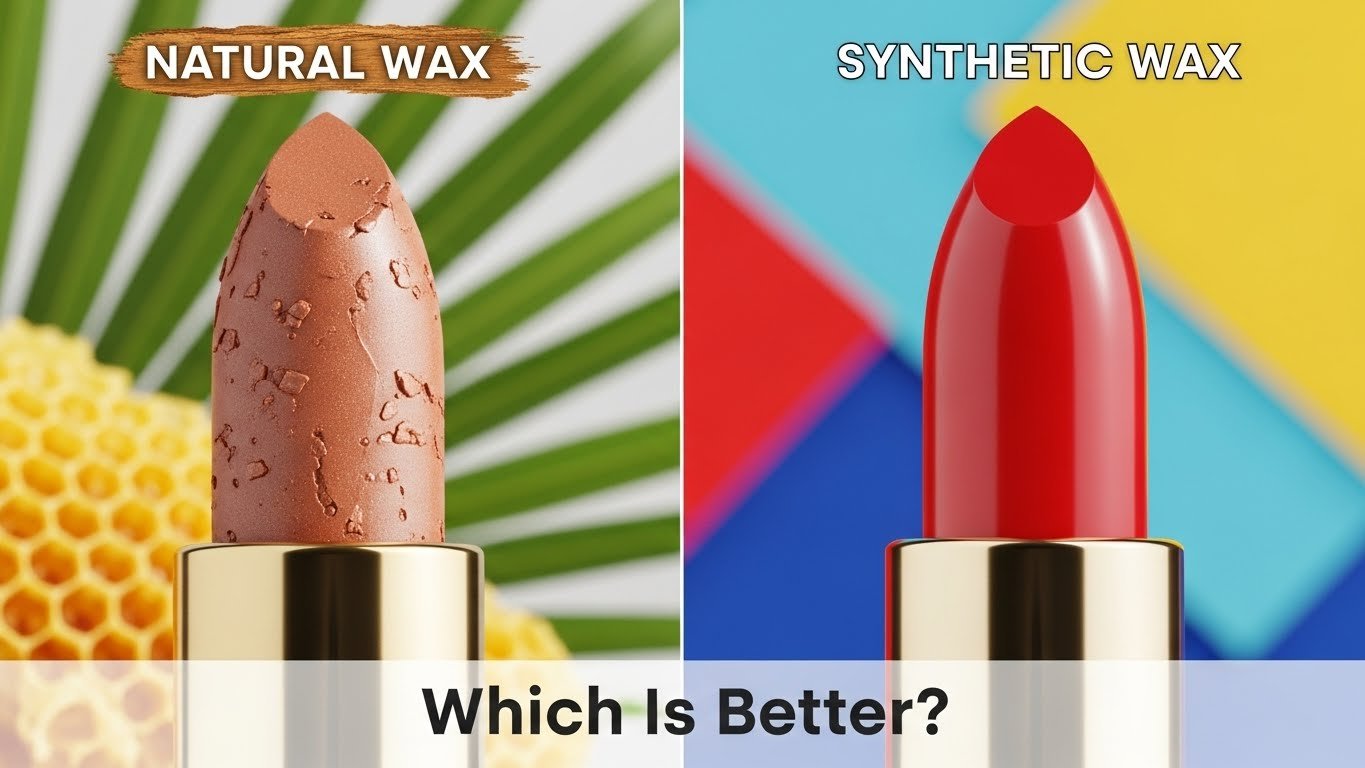
The moment of truth often comes in the drugstore aisle. You pick up two nearly identical lipsticks—one touting “100% Natural Wax!” on its sleek packaging, the other a classic favorite with a flawless finish you’ve trusted for years. Which one do you choose? For years, I chased the “all-natural” label, only to be disappointed by lipsticks that melted in summer or lacked staying power.
The turning point came when a cosmetic chemist friend explained: “Natural wax in lipstick gives you the story, but synthetic wax in lipstick often gives you the performance. The best formulas use both.” That conversation reframed my entire understanding. The debate between natural vs synthetic wax in lipstick isn’t about good versus evil; it’s about understanding what each brings to the table so you can make an informed choice that aligns with your values and your desire for a great product.
Whether you’re drawn to the earthy appeal of plant-based Candelilla Wax in Lipstick or rely on the consistent performance of a laboratory creation, knowing the core differences empowers you. What is the difference between natural wax and synthetic wax? More importantly, is synthetic wax safe in makeup, and what truly defines the healthiest wax to use? This guide cuts through the marketing haze to examine the science, safety, and practical reality of both, helping you decide what “better” really means for your lips. Natural vs Synthetic Wax in Lipstick.
Defining the Divide: Natural vs Synthetic Wax?
At its core, the main difference between natural and synthetic materials is their origin.
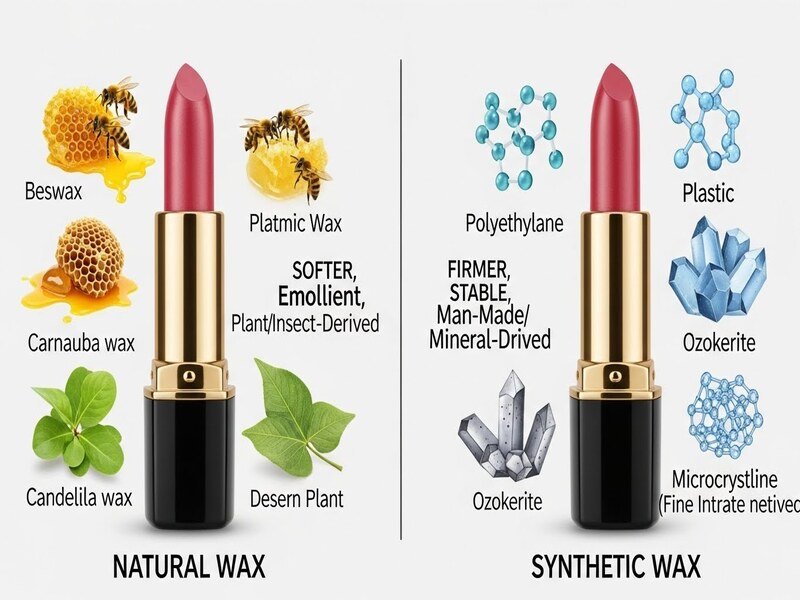
- Natural Waxes: Derived directly from plants, animals, or minerals with minimal processing. Examples include beeswax (from honeycombs), carnauba wax (from palm leaves), candelilla wax (from shrubs), and soy wax. Is natural wax non-toxic? Generally, yes—they are biocompatible and have long histories of safe use. Natural vs Synthetic Wax in Lipstick.
- Synthetic Waxes: Chemically engineered in laboratories, often from petroleum derivatives (like paraffin or microcrystalline wax) or other synthesized compounds. They are designed to have specific, consistent properties. Natural vs Synthetic Wax in Lipstick.
Is synthetic wax the same as beeswax? Absolutely not. Beeswax is a complex, naturally occurring substance with variable composition, while synthetic waxes are uniform chemical creations.
The Contenders: A Detailed Breakdown
Natural Waxes in Lipstick
Natural waxes are celebrated for their origin story and skin-compatible feel. Natural vs Synthetic Wax in Lipstick.
Common Types & Benefits:
- Beeswax: A classic emollient that provides structure and a creamy consistency. It’s the traditional base in many balms.
- Carnauba Wax: The “queen of waxes,” known for its exceptional hardness and high-gloss finish. It’s a key component in Beeswax vs Carnauba Wax in Lipstick comparisons.
- Candelilla Wax: A popular vegan alternative to beeswax, offering a high melting point for stability.
- Soy Wax: A soft, creamy wax derived from soybeans. (Are Yankee Candles 100% soy wax? Not usually; most are blends, similar to lipstick formulas).
Pros: Biodegradable, renewable (when sourced ethically), perceived as “cleaner” or safer, often have additional skin-conditioning benefits.
Cons: Variable consistency (a batch of beeswax can differ from the next), lower melting points (can lead to melting), often more expensive, and not always vegan (e.g., beeswax).

Synthetic Waxes in Lipstick
Synthetic waxes are the workhorses of cosmetic chemistry, prized for their precision and performance.
Common Types & Benefits:
- Paraffin Wax: Inexpensive, odorless, colorless, and creates an excellent barrier.
- Microcrystalline Wax: More flexible and adhesive than paraffin, great for smooth application and preventing “bleeding.”
- Polyethylene: Used to create glossy, flexible films and enhance texture.
Pros: Extremely consistent and stable, high melting points (better heat resistance), often more affordable, can be designed for specific functions (e.g., extra long-wear), and are typically vegan.
Cons: Derived from non-renewable petroleum, perceived as less “clean” by some consumers, and lack the natural emollient properties of some plant/animal waxes.

Health, Safety, and Performance: Your Top Questions Answered
Is Synthetic Wax Good for Lips? Is It Safe?
Is synthetic wax safe in makeup? Regulated synthetic waxes used in cosmetics are extensively tested and considered safe for topical use by global health authorities. Is synthetic wax good for lips? From a performance standpoint, yes. It excels at creating long-lasting, stable color that doesn’t feather. However, it doesn’t moisturize; it forms a barrier. For chapped lips, a formula with natural emollient waxes or butters may feel more comfortable.
What is the Healthiest Wax to Use?
Which wax is best for your skin? “Healthiest” is subjective. If you prioritize purity and natural origin, a well-sourced natural wax is your choice. If you prioritize hypoallergenic consistency and performance, a purified synthetic wax may be “healthier” for your routine. The healthiest choice is a well-formulated product from a reputable brand, regardless of wax origin.
Natural vs. Synthetic: A Performance Comparison
| Aspect | Natural Waxes | Synthetic Waxes |
|---|---|---|
| Melting Point | Generally lower. | Generally higher (better heat resistance). |
| Consistency | Can vary by batch. | Perfectly uniform every time. |
| Longevity | May require reapplication. | Often longer-wearing. How long does synthetic wax last? In a formula, it helps color last for hours without breaking down. |
| Finish & Feel | Often creamier, more emollient. | Can create sharper matte or slick glossy finishes. |
| Stability | Can oxidize or go rancid over time. | Highly stable, long shelf life. |
The Expert Verdict: So, Which Is Better?
What is the best wax for lipstick? The honest answer from cosmetic chemists is: a blend. Modern lipsticks are marvels of formulation that use both to maximize benefits and minimize drawbacks.
- A formula might use beeswax for its skin-friendly emollience, carnauba wax for hardness and shine, and a touch of synthetic microcrystalline wax to lock everything in place, prevent bleeding, and ensure the bullet doesn’t break.
- A vegan lipstick might blend candelilla wax and synthetic polymers to achieve a similar, animal-free result.
The Final Takeaway: Don’t get caught in the “all-natural” trap. A synthetic ingredient isn’t inherently bad, and a natural one isn’t automatically superior. Look for a formula that performs well, feels good, and comes from a brand you trust. Read the ingredient list not with fear, but with understanding. The best lipstick for you balances ethics, performance, and personal preference in a way that makes you feel confident and beautiful.
FAQs: Natural vs Synthetic Wax
What is 100% natural wax?
It means all the waxes in the formula are derived from natural sources like plants, minerals, or bees. However, the entire lipstick may still contain synthetic pigments, preservatives, or other ingredients.
Is natural wax always non-toxic?
While generally very safe, “natural” doesn’t equal “non-toxic.” Some people may have allergies (e.g., to beeswax). Always patch-test new products.
Which is more sustainable?
It’s complex. Natural waxes are renewable but can involve agricultural land use. Synthetic waxes come from petroleum (non-renewable) but are often by-products of fuel refining, and their production can be highly efficient. The most sustainable choice is a high-quality product you’ll use completely.
Can I find lipsticks without synthetic wax?
Yes, many “clean” or “natural” beauty brands formulate without petroleum-derived synthetics. Be prepared for differences in texture, longevity, and price.
What should I avoid if I have sensitive lips?
Avoid known irritants first—fragrances, certain pigments, and drying alcohols. Both high-quality natural and synthetic waxes are typically well-tolerated. Focus on simple, moisturizing formulas.
Deepen Your Ingredient Knowledge:
- Wax in Lipstick – Learn why wax is the essential foundation of every bullet.
- Beeswax in Lipstick – Discover the properties of this classic animal-derived wax.
- Carnauba Wax in Lipstick – Explore the hardest natural wax and its uses.
- Candelilla Wax in Lipstick – Read about this popular vegan wax alternative.
- Lipstick Ingredients Explained – Get a comprehensive overview of what goes into your lipstick.
- Synthetic Lipstick Ingredients – A factual look at manufactured components in makeup.