Choosing between Organic and Chemical Lipstick can feel confusing, especially with so many brands promising clean formulas, long-lasting wear, and bold shades. Many people today want healthier beauty options but don’t know what truly separates natural formulas from synthetic ones. Whether you’re looking for organic red lipstick, coconut oil organic lipstick, or modern organic liquid lipstick options, this guide breaks everything down in a simple, practical, and deeply engaging way. You’ll clearly understand the chemical structure of lipstick, what makes lipstick without chemicals different, and how chemical lipstick compares to cleaner alternatives—helping you make a choice that truly fits your lifestyle.
To make things clearer, let me start with a small story.
I remember meeting a friend who loved bold lipstick shades but often complained about dry, cracked lips. After switching from her regular chemical-based lipstick to an organic one, she found her lips staying soft even after long days. That was the first time she realized that lipstick ingredients matter just as much as the shade itself. This is the exact kind of clarity you will get from this article too—especially if you’re searching for the best natural organic lipstick options.
What Are Organic Lipsticks?
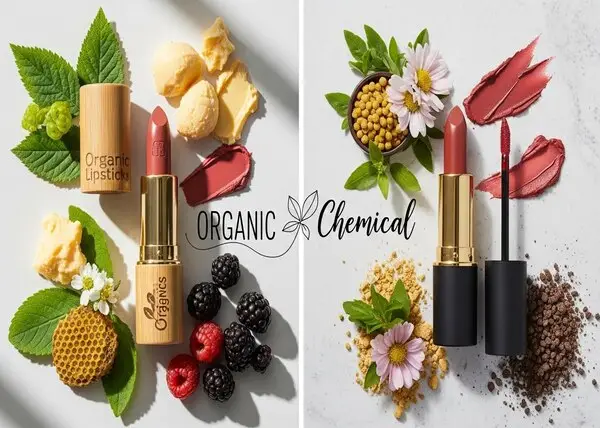
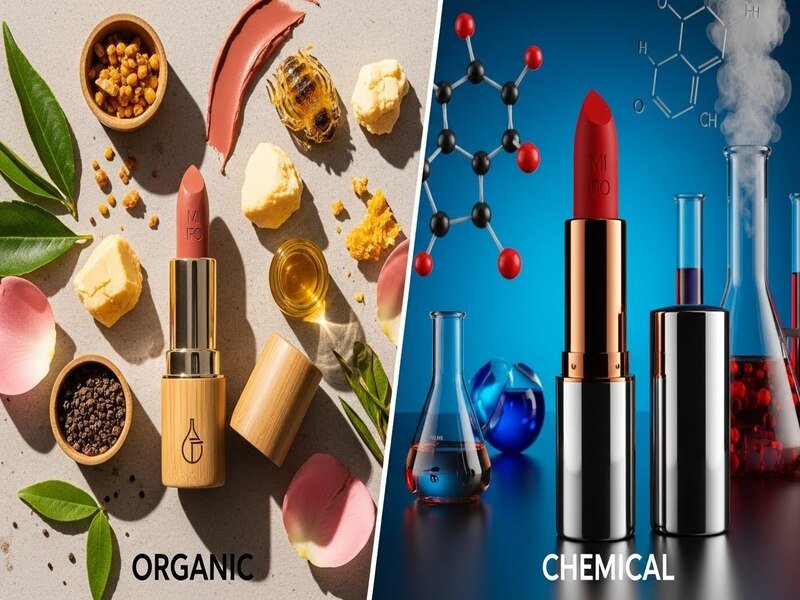
Organic lipstick are made with ingredients that come from natural sources such as plants, seeds, herbs, and fruit extracts. These lipsticks focus on nourishment rather than just color. They avoid harmful compounds that may irritate the skin, making them a great pick for people with sensitive lips.
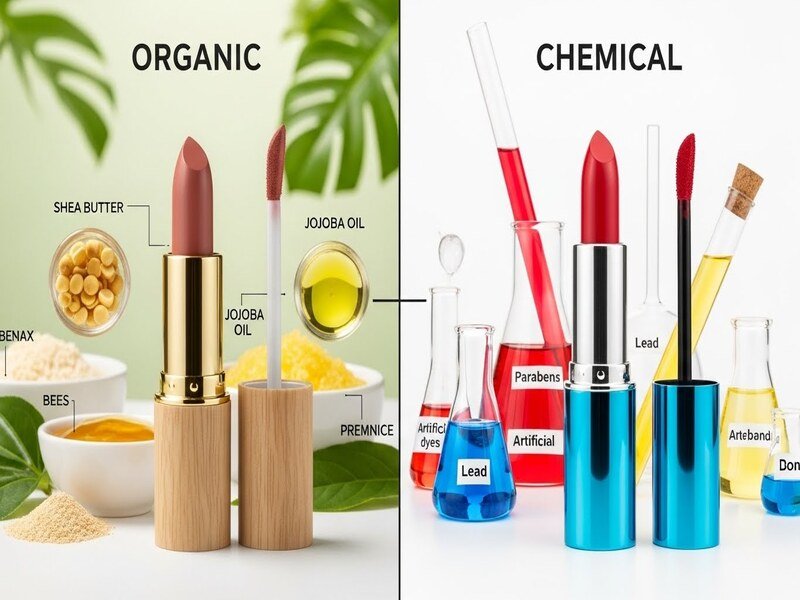
Most organic formulas include ingredients like shea butter, jojoba oil, cocoa butter, aloe vera, and naturally sourced pigments. These rich elements create smooth textures that glide comfortably on the lips. You will also notice that organic lipsticks often feel more moisturizing because they are packed with natural oils and waxes.
Another major benefit is that organic lipsticks minimize exposure to synthetic preservatives and chemicals. They offer a clean, skin-friendly formula that focuses on comfort and long-term lip health.
What Are Chemical Lipsticks?
Chemical lipsticks are made with synthetic ingredients, dyes, preservatives, and artificial fragrances. These formulas are created for performance—long-lasting color, smudge-proof finishes, and high pigmentation. Many of the vibrant shades we see today in glossy ads are the result of advanced chemical formulations.
Chemical lipsticks often include ingredients like parabens, synthetic dyes, petroleum derivatives, and lab-made waxes. While these elements help provide intense color and durability, they may cause dryness or irritation for some users.
Companies that use chemical formulations usually focus on a makeup-first approach, where appearance and longevity matter more than natural nourishment. While they deliver strong results, many buyers today prefer cleaner alternatives due to growing awareness of personal care ingredients.
Difference Between Organic and Chemical Lipsticks
The best way to understand the difference is through a simple comparison. Organic lipsticks rely on Mother Nature, while chemical lipsticks rely on lab-formulated ingredients. Neither is completely “wrong.” It all depends on what you prioritize.
Organic lipsticks:
- Good for sensitive skin
- Made with natural oils and butters
- Free from harsh chemicals
- Provide gentle nourishment
- Usually softer and more hydrating
Chemical lipsticks:
- Long-lasting color
- Wide shade range
- Budget-friendly options available
- Strong pigments
- Better durability
One focuses on wellness; the other focuses on performance.
Benefits of Organic Lipsticks
Using organic lipstick gives you a more natural, lip-friendly beauty experience. Here’s why many people are switching:
1. Gentle on the Lips
Organic lipsticks suit almost every skin type, especially sensitive lips. Their natural oils help keep your lips soft throughout the day.
2. Made from Clean Ingredients
Most organic formulas avoid heavy metals, parabens, and preservatives. This reduces the risk of irritation or allergic reactions.
3. Nourishing & Moisturizing
With ingredients like jojoba oil, coconut oil, and shea butter, organic lipsticks work like lip balms and lip color in one product.
4. Eco-Friendly Choice
Organic lipsticks are often sustainably sourced and biodegradable, making them friendly for the planet.
5. Better for Everyday Use
Since they focus on purity and comfort, organic lipsticks are ideal for daily wear, especially for people who have to reapply several times.
Benefits of Chemical Lipsticks
Chemical formulas continue to dominate the beauty industry because they offer results that natural lipsticks sometimes cannot match.
1. Longer Staying Power
Most chemical lipsticks last for 6–12 hours without needing multiple touch-ups.
2. Intense & Wide Color Range
Chemical pigments allow brands to create bright reds, deep berries, nudes, metallics, and every shade you can imagine.
3. More Finish Options
From matte to gloss, stain to liquid, chemical lipsticks give you endless variety.
4. Budget-Friendly
Since synthetic ingredients are cheaper to produce, chemical lipsticks often cost less than organic ones.
5. Highly Transfer-Resistant
Chemical lipsticks can stay put during meals, drinks, and long days out—something natural formulas struggle with.
Are Organic Lipsticks Safer?
Many people choose organic lipsticks because they want safer beauty choices. While both types are approved for use, organic formulas avoid ingredients like lead traces, parabens, and fragrances that may irritate the lips.
If your lips often feel dry, cracked, or sensitive after using makeup, switching to an organic option might help. Your lips absorb everything you apply, so choosing a cleaner formula makes a real difference.
Are Chemical Lipsticks Harmful?
Chemical lipsticks are safe within regulated limits, but certain ingredients may not suit everyone. People with sensitive lips may react to synthetic dyes or fragrances. Petroleum-based ingredients can also feel heavy or drying with regular use.
Not every chemical ingredient is harmful, but being aware of what you apply on your mouth is always wise.
How to Choose Between Organic and Chemical Lipsticks
Here is a simple step-by-step method to help you choose the right type:
Step 1: Check Your Lip Sensitivity
If your lips get dry or irritated easily, go for organic lipsticks.
Step 2: Consider How Long You Need It to Last
For parties or long events, chemical lipsticks may work better.
Step 3: Look at Your Makeup Routine
If you need everyday comfort, choose organic.
If you prefer strong colors, choose chemical.
Step 4: Check Ingredient Labels
Always read ingredients, especially if you have allergies.
Step 5: Match Your Purpose
Daily wear → Organic
Special events → Chemical
A Personal Touch: Real-Life Experience
Let me share another short moment that explains this comparison perfectly.
A client once told me she used chemical lipsticks for years because she loved bold shades. But during winter, her lips would crack badly. When she finally tried an organic lipstick with shea butter and almond oil, she felt the softness instantly. However, she still kept one long-lasting chemical lipstick for weddings and parties.
This proves one thing:
You don’t have to choose only one. Many women use both depending on their needs.
Conclusion
Both organic lipsticks and chemical lipsticks have their own place in the beauty world. If you want natural comfort, choose organic. If you want bold color and all-day wear, choose chemical. What matters is understanding the ingredients and choosing a product that makes your lips look good and feel good.
Make your choice wisely your lips deserve the best.
FAQs: organic and chemical lipsticks
1. What is the difference between organic and chemical lipsticks?
Organic lipsticks are made from natural ingredients like plant oils, waxes, and pigments, while chemical lipsticks contain synthetic dyes, preservatives, and other artificial compounds.
2. Are organic lipsticks safer for my lips?
Yes, organic lipsticks are generally gentler, less likely to cause irritation, and free from harmful chemicals like parabens or heavy metals.
3. Do chemical lipsticks last longer than organic ones?
Often, yes. Chemical lipsticks may have better staying power and pigmentation, but some high-quality organic lipsticks also offer good longevity with proper application.
4. Can I use organic lipstick every day?
Absolutely. Organic lipsticks are usually nourishing and hydrating, making them suitable for daily use without damaging the lips.
5. How can I tell if a lipstick is truly organic?
Check the ingredient list for natural oils, waxes, and plant-based pigments. Look for certifications like USDA Organic or EcoCert, which verify organic content.