I remember my wedding day back in 2022. I was so terrified of my lipstick disappearing before the “first kiss” that I spent nearly twenty minutes in the bridal suite performing a ritual of Lipstick Layering. I applied a coat, powdered it through a tissue, applied another, blotted again, and finished with a third. By the time I reached the altar, my lips felt like they were covered in a heavy, dry shell. Yes, the color stayed, but every time I smiled, I could feel the product “cracking.”
Fast forward to 2026, and my makeup bag looks very different. The industry has evolved, and the debate between the Single Swipe Lipstick Method and traditional layering has taken a surprising turn. If you’ve been piling on product in hopes of Long-wear Results, you might actually be doing more harm than good.
Let’s dive deep into the science of staying power and find out which method truly wins for the modern USA woman who needs her look to last from a morning board meeting to a late-night gala.
The Old Guard: Why We Used to Layer
For decades, the gold standard for longevity was layering. The logic was simple: more product equals a longer fade time. We were taught to “build a foundation” on the lips much like we do on the skin. This involved a lip liner base, a primary coat, a blotting phase, and a final seal.
While this worked for the wax-heavy, low-pigment formulas of the past, 2026’s technology has changed the game. Heavy layering often creates a “suspended” layer of wax that never truly grips the skin. This is why you’ll often see your lipstick on your coffee cup or your sandwich—the top layers are simply sliding off the base.
The 2026 Champion: The Single Swipe Lipstick Method
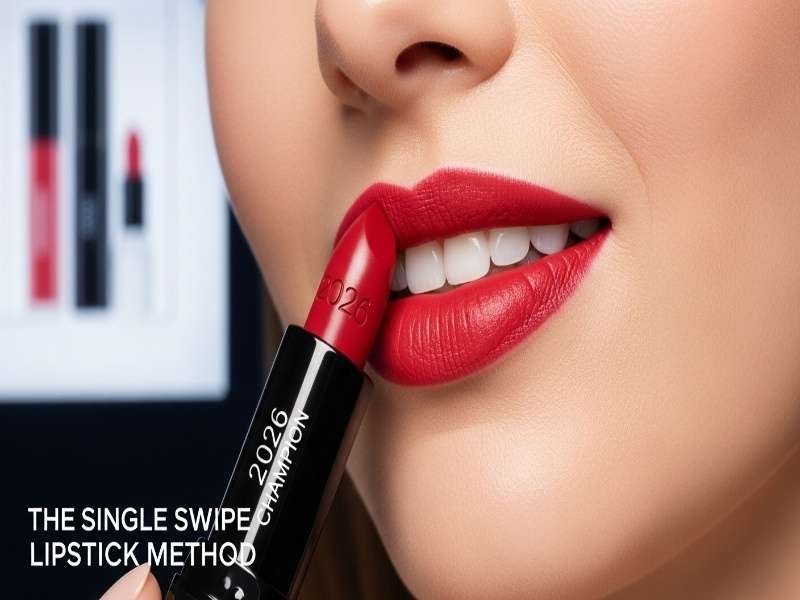
Today’s high-end lipsticks are formulated with “film-forming” polymers. These are designed to create a thin, flexible, and incredibly pigmented bond with your lips in just one pass. When you use the Single Swipe Lipstick Method, you are allowing these polymers to do their job without being blocked by excess layers.
The result isn’t just a Lightweight Lip Finish; it’s actually superior longevity. Because there is less “bulk” on the lips, there is less product to move, smudge, or crumble. It’s a more efficient way to achieve Long-wear Results without the physical discomfort of a heavy “lip mask.”
If you haven’t tried it yet, I highly recommend reading our guide on how to stop over-applying the single swipe lipstick method to avoid the dreaded cakey look.
Performance Review: Eating, Drinking, and Talking
When women ask, “which lipstick stays even after eating?”, they are usually looking for a formula that won’t leave them with a “donut ring” (color on the edges, bare in the middle).
The Layering Outcome:
When you layer, the oils in your food (like a salad dressing or a burger) act as a solvent. They break down the top layers of your lipstick first. Because you have so much product on, it turns into a “sludge” that easily wipes away, often taking the bottom layers with it.
The Single Swipe Outcome:
Because the Single Swipe Lipstick Method bonds so closely to the lip texture, it is much more resistant to oils. The color may fade slightly, but it tends to fade evenly, leaving behind a beautiful stain rather than a messy, peeling texture. This is why it’s become the preferred choice for effortless 2026 glam.
Which Method Lasts Over 8 Hours?
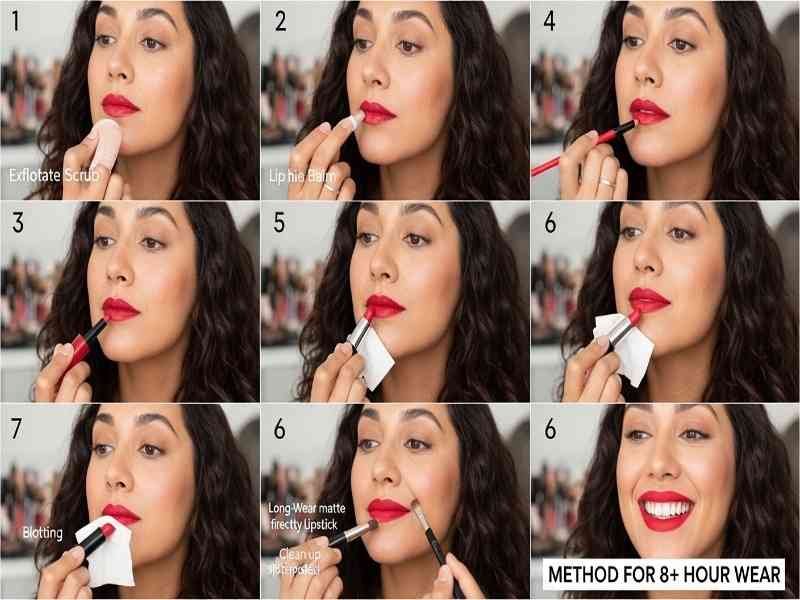
If you need a look to last over 8 hours without reapplying, the secret isn’t in how many times you swipe—it’s in how you prepare. I used to think I could just “swipe and go” for a long day at a beauty convention in NYC. By lunch, I looked exhausted.
What helps lipstick stay on longer is a clean, hydrated canvas.
- Exfoliate: Remove the barrier of dead skin cells.
- Hydrate & Blot: Give the lips a drink, but remove the “slip.”
- The Single Swipe: One firm, high-pigment pass.
By using the Single Swipe Lipstick Method on a properly prepared lip, you are creating a “stain-bond” that can easily cross the 8-hour mark. Layering, by contrast, usually starts to feel uncomfortable and “tight” around hour four, tempting you to lick your lips or apply balm—both of which destroy the color.
Common Myths: Does More Mean More?
One of the biggest misconceptions in the USA beauty community is that layering “fills in” lip lines for a smoother look. In reality, Lipstick Layering often highlights texture. As the day goes on and your lips naturally lose moisture, those multiple layers of wax begin to separate, falling into the fine lines and making them look deeper.
The single swipe keeps the look “plump” because it doesn’t weigh the skin down. It allows your natural lip volume to show through, which is a key part of the youthful, fresh aesthetic trending this year.
Final Verdict: Which Lasts Longer?
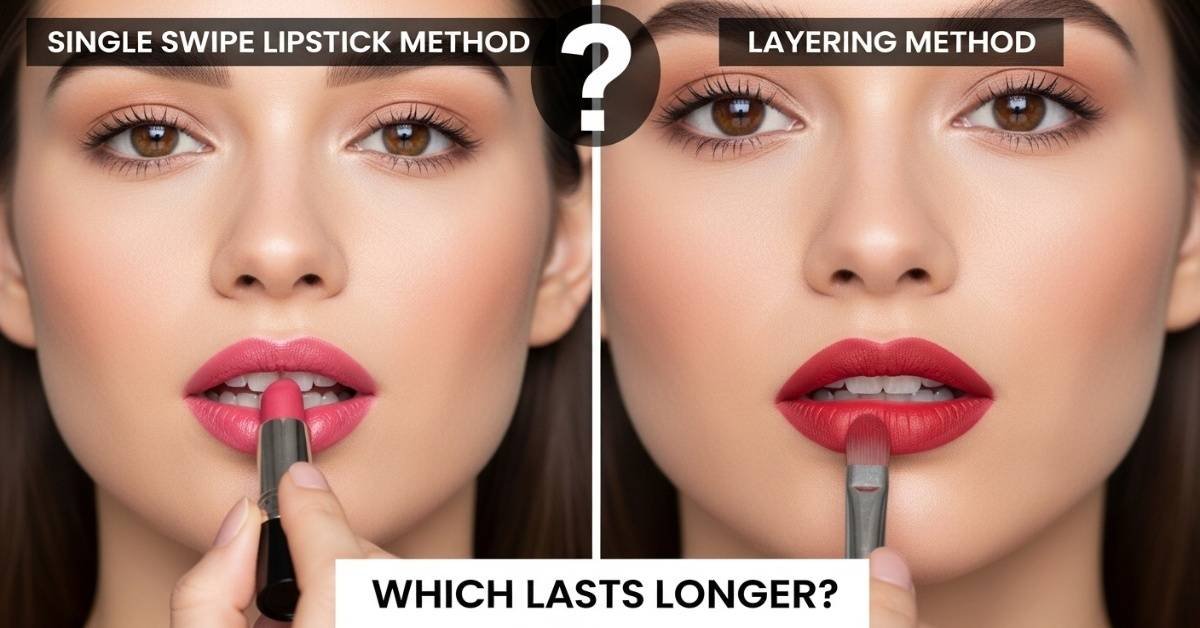
In the battle of Single Swipe Lipstick Method vs. Layering, the winner for 2026 is clearly the Single Swipe.
While layering might give you a more “theatrical” and opaque look for thirty minutes, the single swipe offers the structural integrity needed for real life. It’s more resistant to friction, more comfortable for long-term wear, and much easier to touch up if a tiny bit does wear away.
If you are a “layering addict” like I was, try the switch for one week. You’ll be shocked at how much product you save and how many compliments you get on your “natural-looking” bold lip.
❓ Frequently Asked Questions (PAA Style)
1. How do you make lipstick last longer? The most effective way is to prepare the lips by exfoliating and blotting away excess oils. Apply a single, firm layer of a high-pigment lipstick. This allows the formula to bond directly to the skin, which is much more durable than stacking multiple layers that can slide off.
2. Which lipsticks last over 8 hours without reapplying? In 2026, “Power-Pigment” bullets and long-wear stains are the best performers. Look for formulas that mention “film-forming technology.” These are designed to be applied with the Single Swipe Lipstick Method for maximum endurance.
3. How to apply lipstick perfectly for long-lasting results? Start with a clean, dry lip. Anchor your lipstick bullet at the Cupid’s bow and glide it to the corner in one smooth motion. Do the same for the bottom lip. This prevents “piling” (product buildup) which is the number one cause of lipstick fading or smudging.
4. What helps lipstick stay on longer through eating? A thin, bonded layer is much harder for food oils to break down than a thick, layered application. By using a single swipe, you minimize the amount of wax on the lips, making the pigment much more resistant to “slipping” during a meal.
5. Is layering or a single swipe better for dry lips? The Single Swipe Lipstick Method is significantly better for dry lips. Layering adds a heavy weight that can pull moisture out of the skin, causing cracking. A single layer of a hydrating, high-pigment formula keeps the lips flexible and prevents the color from settling into dry patches.