When you think about lipstick, what comes to mind? Beautiful colors, long-lasting wear, and smooth application? While all of these qualities are essential, one ingredient plays a pivotal role in creating the perfect lipstick: wax. Wax in lipstick is often overlooked, but it is a key element that makes lipstick not only functional but also comfortable to wear. Whether it’s creating that glossy finish or providing the structure to keep the product solid, wax in lipstick is integral to the formulation of a high-quality product. In this article, we’ll explore why wax is essential in lipstick formulation, the types of wax used, and how each wax impacts your lipstick experience.
What is Wax in Lipstick?
Wax in lipstick is primarily used to give the lipstick its form and consistency. Without it, the lipstick wouldn’t maintain its solid structure, nor would it have the smooth glide that we all love during application. Wax in lipstick helps the product stay intact, providing both stability and ease of application.
There are two primary types of wax used in lipstick: natural wax and synthetic wax. Each has its own unique properties, contributing to the texture, durability, and performance of the lipstick. But why is wax used in lipstick at all?
The Importance of Wax in Lipstick
The inclusion of wax in lipstick serves multiple purposes, making it essential for the product’s functionality. Below, we’ll break down the key roles wax plays in lipstick:
1. Providing Structure and Firmness
The most obvious function of wax in lipstick is its ability to hold the product together in a solid form. It provides the necessary structure, ensuring that the lipstick doesn’t melt or collapse. Without wax, lipstick would have a much softer consistency and would be harder to apply smoothly.
2. Smooth Application and Texture
Thanks to the presence of wax in lipstick, the product glides effortlessly over the lips. Wax ensures the lipstick has a smooth and consistent texture, allowing for easy, even application. This smooth glide prevents the lipstick from feeling cakey or clumpy on the lips, offering a comfortable experience.
3. Long-Lasting Wear
Wax in lipstick helps enhance the wear time of the product. It creates a barrier on the lips, preventing the lipstick from fading or smudging throughout the day. It’s especially crucial for creating long-lasting lipstick formulas that withstand eating, drinking, and general wear.
4. Hydration and Comfort
Certain types of wax, such as beeswax, are known for their moisturizing properties. These waxes help lock in moisture and prevent the lipstick from feeling dry or uncomfortable. This is why many high-quality lipsticks have a hydrating feel, providing not only a vibrant color but also comfort during wear.
5. Finish and Appearance
The type of wax used in lipstick affects the finish of the product. For example, synthetic wax in lipstick can contribute to a glossier finish, while natural wax may lead to a matte finish. Wax helps control the overall appearance and feel of the lipstick.
Different Types of Wax in Lipstick
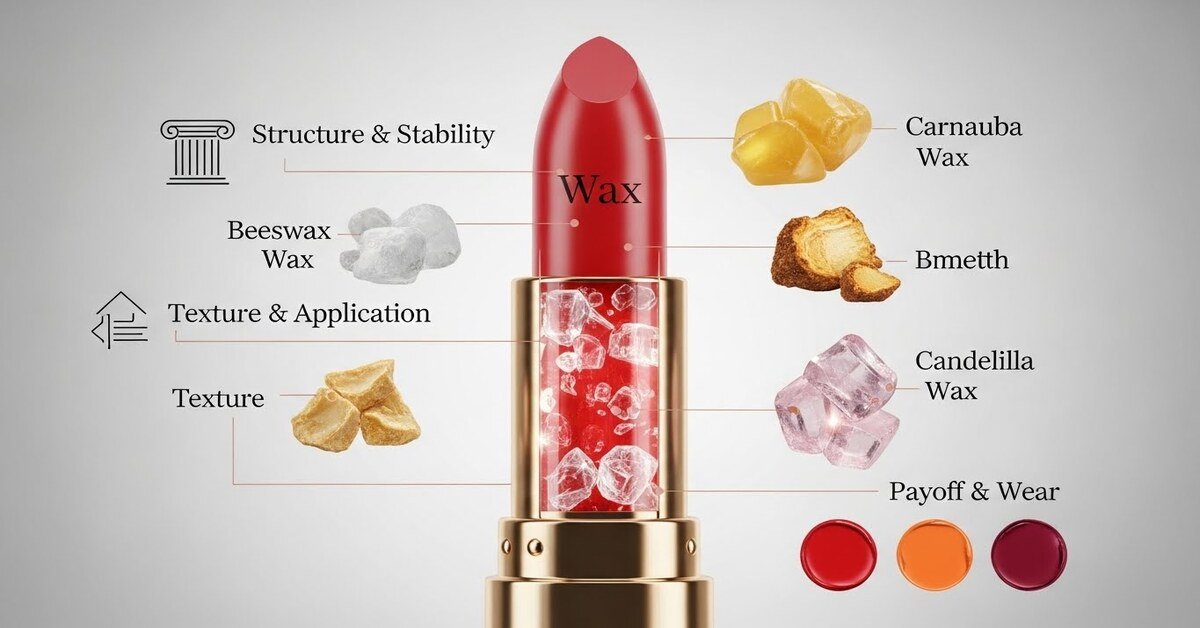
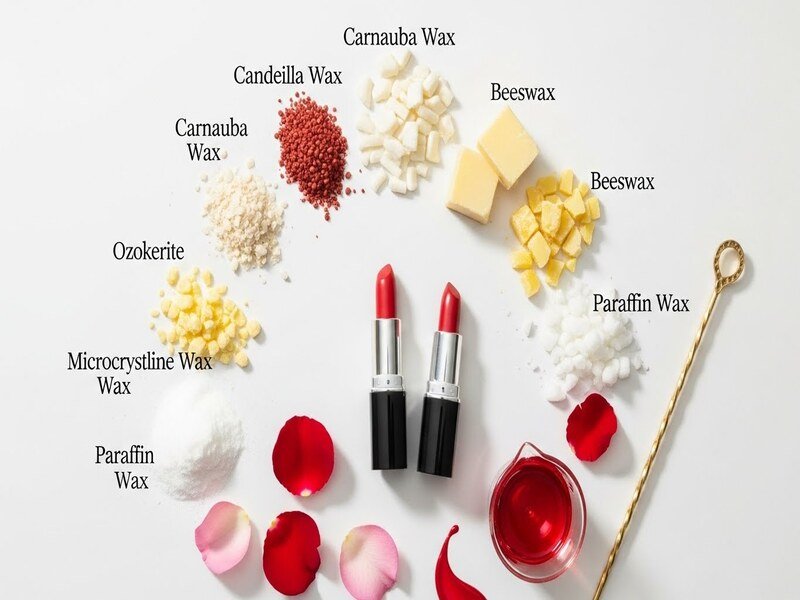
There are several different types of wax in lipstick, both natural and synthetic, each contributing unique characteristics to the formula. Let’s explore some of the most common waxes used in lipstick formulations:
1. Beeswax in Lipstick
One of the most well-known natural waxes, beeswax in lipstick is commonly used for its smooth texture and hydrating properties. Beeswax acts as a natural emulsifier, helping bind oils and pigments together while providing a rich, creamy texture. It’s perfect for creating lipsticks that are both moisturizing and long-lasting, as it helps the product adhere to the lips without feeling heavy or greasy.
Beeswax also provides the lipstick texture many users love—creamy and smooth while helping it last longer. This makes it an ideal choice for creating natural and organic lipsticks.
2. Carnauba Wax in Lipstick
Carnauba wax in lipstick comes from the leaves of the Brazilian palm tree and is often referred to as the “queen of waxes.” This wax is known for its ability to add rigidity to lipstick formulations, which is why it is frequently used in long-lasting and matte lipsticks. Carnauba wax provides a smooth, non-greasy texture and helps the lipstick stay in place for longer periods.
It also plays a role in achieving a matte or satin finish. As one of the harder waxes, carnauba wax helps the lipstick hold its shape while giving it a long-lasting effect.
3. Candelilla Wax in Lipstick
Like carnauba wax, candelilla wax in lipstick is a plant-based wax used in lipstick formulations. It’s derived from the leaves of the candelilla shrub and is often used as a substitute for beeswax in vegan lipsticks. Candelilla wax adds firmness to the lipstick while also contributing to a glossy or satin finish, making it ideal for creating lipsticks with a more lustrous appearance.
Candelilla wax also acts as a stabilizer, ensuring the lipstick maintains its form while providing flexibility and ease during application.
4. Synthetic Wax in Lipstick
Synthetic wax in lipstick is man-made and is used to mimic the properties of natural waxes. This wax is often used in high-performance lipsticks because it can provide superior texture and smoother application. Synthetic wax helps increase the durability of the lipstick while also offering a glossy or matte finish, depending on the formulation. It can also be more stable in extreme temperatures compared to natural waxes.
5. Natural Wax in Lipstick
Natural waxes, such as beeswax, candelilla wax, and carnauba wax, are used in lipsticks to create a smooth texture and provide moisturizing benefits. They also ensure the lipstick holds its form and applies evenly. Natural waxes are often used by those who prefer organic or chemical-free beauty products.
Why Wax is Essential in Lipstick
The primary reason wax is used in lipstick is to give it its form and stability. Without wax, the lipstick would be too soft or liquid to apply. Wax is responsible for creating the desired texture, keeping the lipstick in place for longer periods, and providing a smooth finish. Without wax, your favorite lipstick wouldn’t glide on smoothly, last as long, or feel as comfortable on the lips.
Wax also affects the overall feel and appearance of the lipstick. Whether you want a matte, satin, or glossy finish, the waxes used will influence how the lipstick looks and feels on your lips.
Lipstick Texture and Wax
The texture of your lipstick is largely determined by the type and ratio of waxes used. Beeswax and candelilla wax are softer, providing a creamy texture, while carnauba wax and synthetic wax add more structure, making the lipstick firmer and more long-lasting. The balance of waxes used will determine whether the lipstick is smooth and hydrating, or matte and durable.
Some lipsticks use a combination of natural and synthetic waxes to balance texture, longevity, and comfort. The wax ratios in lipstick formulation play a key role in determining how the lipstick performs on your lips.
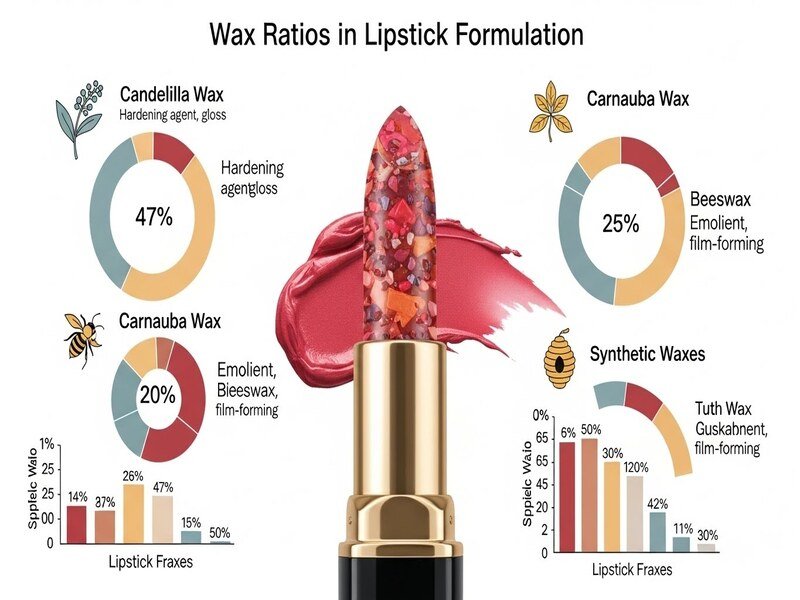
Wax Ratios in Lipstick Formulation
The amount of each type of wax used in lipstick plays a significant role in its overall performance. Too much of one wax can make the lipstick either too hard or too soft, while the right balance results in a smooth, well-performing product.
For example:
- If a lipstick contains more beeswax, it will likely have a creamier texture and better moisturizing properties.
- If a lipstick contains more carnauba wax, it will be firmer, leading to longer-lasting wear and a matte finish.
- A combination of beeswax and synthetic wax will often create a lipstick with smooth application and durability, perfect for a long-lasting, comfortable wear.
Conclusion: The Essential Role of Wax in Lipstick
Wax in lipstick is a vital ingredient that ensures lipstick is structured, smooth, and long-lasting. Whether you’re looking for a creamy, moisturizing lipstick or a durable, matte formula, wax plays a central role in delivering the desired texture, finish, and comfort. By understanding the types of wax used in lipstick formulations, you can make more informed choices when selecting the perfect lipstick for your needs.
With the right balance of beeswax, carnauba wax, and synthetic wax, you can achieve a smooth, hydrating, and long-lasting lipstick that enhances your beauty routine. The unsung hero of lipstick formulations, wax in lipstick ensures that every swipe of color is comfortable, durable, and just the right texture.
FAQs About Wax in Lipstick
1. What types of wax in lipstick are used?
The most common types of wax used in lipstick include beeswax, carnauba wax, candelilla wax, and synthetic wax. Each provides unique properties that contribute to texture, finish, and longevity.
2. Why is synthetic wax in lipstick used?
Synthetic wax in lipstick is used because it can mimic the properties of natural waxes while offering smoother application, superior texture, and longer-lasting results.
3. How does wax in lipstick affect its finish?
The type of wax used determines the finish of the lipstick. For example, synthetic wax creates a glossy finish, while carnauba wax results in a more matte or satin finish.
4. Is wax in lipstick safe for my lips?
Yes, wax in lipstick is safe for the lips. Natural waxes like beeswax and carnauba wax are moisturizing and skin-friendly, while synthetic waxes are specifically formulated to be non-irritating.
5. Can I make my own lipstick using wax in lipstick?
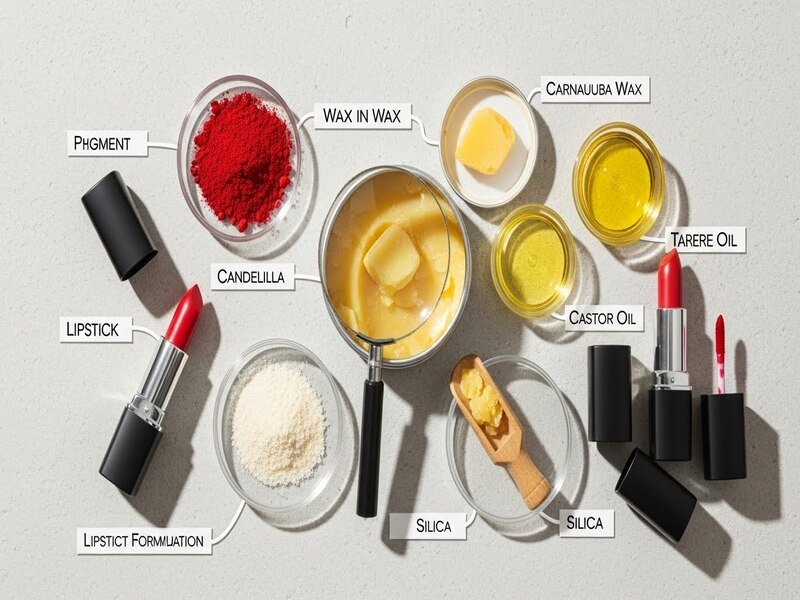
Yes, you can create your own lipstick by mixing various waxes, oils, and pigments. Many DIY enthusiasts use beeswax or candelilla wax to craft natural lipsticks at home.