Have you ever wondered why your favorite creamy lipstick feels like a buttery dream, while a retro matte formula stands firm, almost defiant, in its bullet? The secret isn’t just in the color or brand—it’s in a precise, almost scientific calculation: wax ratios in lipstick formulation. I learned this firsthand while watching a cosmetic chemist tweak a prototype. She added a mere 3% more Carnauba Wax to a vat and said, “This turns a satin into a matte.” That tiny percentage shifted the entire character of the product.
This invisible architecture of wax ratios in lipstick is what dictates whether a lipstick will be a soft, blurring stain or a hard, long-wearing statement. It’s the formulator’s primary tool for engineering texture, wear, and feel.
Understanding wax ratios in lipstick is key to decoding product behavior. What makes lipstick hard? A high ratio of hard structuring waxes. What is soft blur lipstick? A modern formula with a lower overall wax content and a higher ratio of oils, allowing it to diffuse effortlessly. This guide will break down the specific wax to oil ratios, the function of different waxes, and how these calculations translate directly to the product in your hand, answering your practical questions about making and choosing lipsticks.
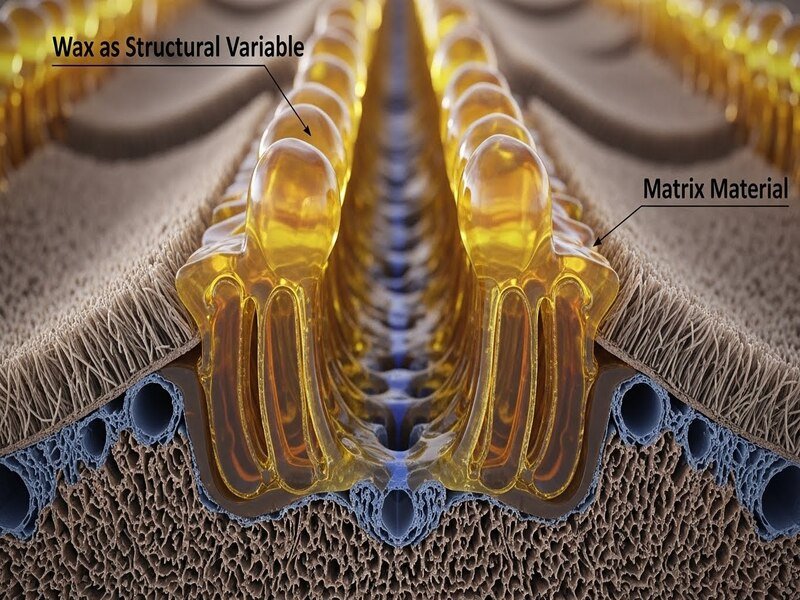
The Core Principle: Wax as the Structural Variable
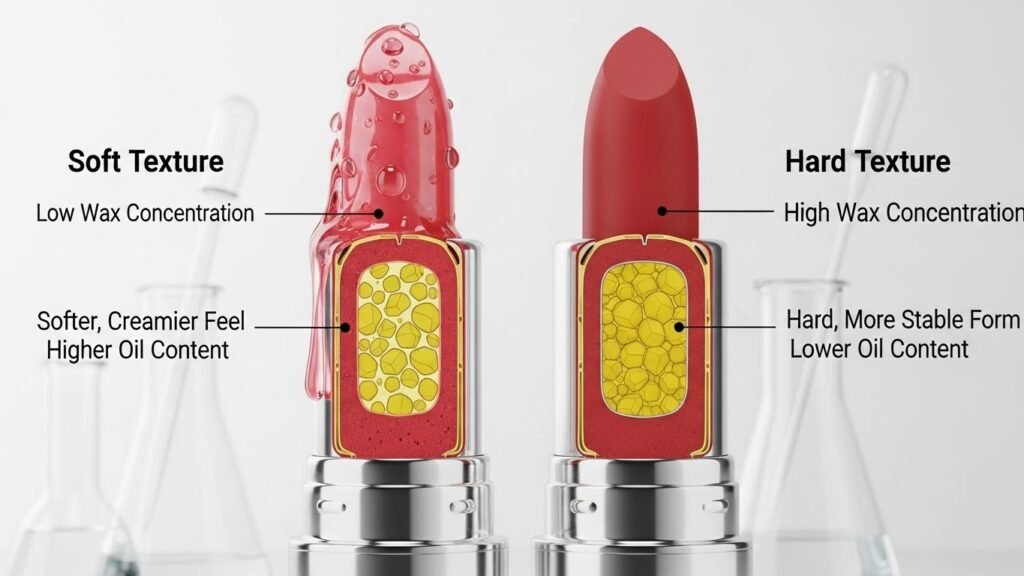
At its heart, wax in lipstick is the building material. The wax ratio in lipstick—its proportion relative to oils, butters, and pigments—is the blueprint. Think of it as the recipe for concrete: more cement (hard wax) makes a harder structure; more sand (soft wax/oil) makes it more pliable.
The single most asked question is: How much wax to oil ratio is used? There’s no universal answer, but general frameworks exist:
- Hard, Matte, Long-Wear Lipsticks: Higher wax ratio. The blend may be 15-25% wax, with a significant portion being hard waxes like Carnauba Wax or specific synthetics. Oil content is lower and may include volatile oils that evaporate to leave a pigment film.
- Creamy, Satin, & Soft Lipsticks: Balanced to lower wax ratio. Typically 8-15% wax, with more emphasis on emollient waxes like Beeswax in Lipstick and a higher ratio of nourishing oils.
- Lip Balms & Glossy Tints: Lower wax, higher oil. Often 5-10% wax, primarily for basic structure, with oils and butters making up most of the formula.
What is the ratio of oil to wax in lip balm? It can range from 4:1 to as high as 9:1 (oil to wax), which is why balms are so soft and emollient.
The Wax Toolkit: Choosing the Right Ingredients for the Ratio
Not all waxes are equal. The best wax for lipstick depends entirely on the desired texture within your chosen wax ratio.
| Wax Type | Hardness | Role in Controlling Texture | Ideal For This Ratio |
|---|---|---|---|
| Carnauba Wax | Very Hard | Increases hardness, adds shine, boosts longevity. | High-ratio formulas for matte/bullet strength. |
| Microcrystalline Wax | Medium-Hard | Provides flexibility, prevents cracking, improves pay-off. | Balanced ratios to add durability without brittleness. |
| Beeswax in Lipstick | Medium-Soft | Adds plasticity, creaminess, and emollience. | Lower-ratio, creamy formulas for comfort. |
| Candelilla Wax | Hard | Vegan hardening agent, adds structure. | Vegan high-ratio or balanced formulas. |
| Ozokerite/Ceresin | Hard | Excellent for gel-like structure and high-shine finishes. | Ratios for glossy, “solid gloss” textures. |
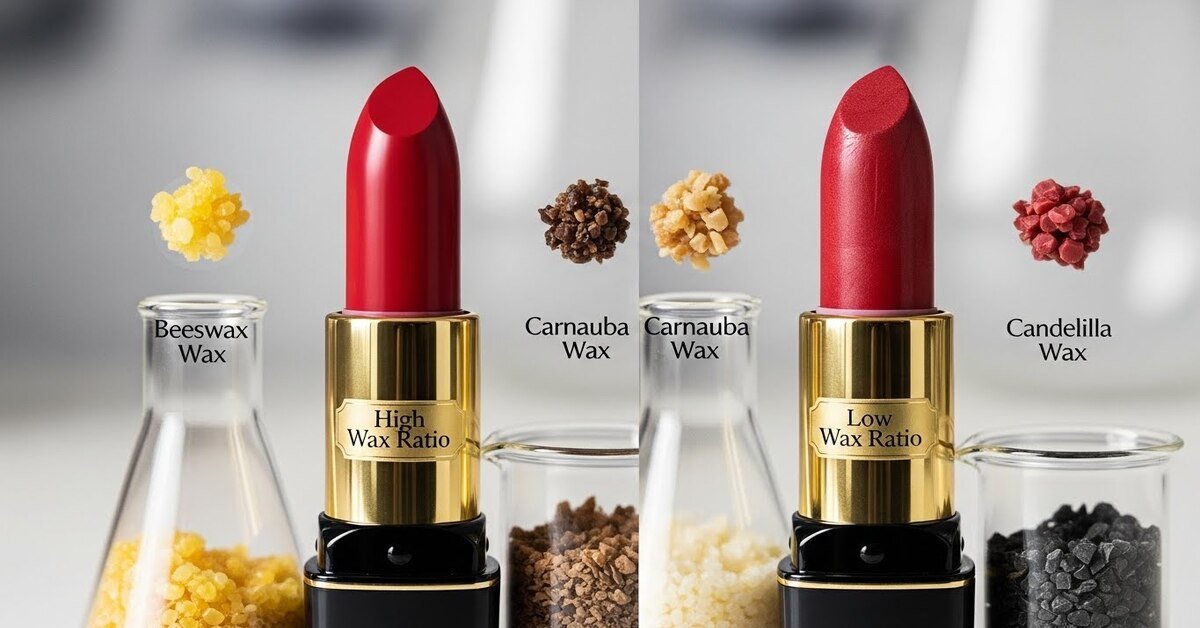
Formulators rarely use one wax alone. They create blends. For instance, what is the ratio of beeswax to carnauba wax? A common starting point for a firm but not hard bullet might be 2:1 or 3:1 (beeswax to carnauba). A very hard matte might invert that ratio or use more carnauba. The choice between using natural or synthetic materials in these blends is a key decision, explored in our guide Natural vs Synthetic Wax in Lipstick.
From Ratio to Reality: How Formulas Create Different Lipsticks
The wax ratio in lipstick directly manifests as the product’s physical form and performance.
- What is solid lipstick called? It’s simply a bullet lipstick, defined by its molded, solid form achieved through a high enough wax ratio to hold its shape.
- What is the difference between solid and liquid lipstick? While both contain wax, a liquid lipstick has a much lower wax ratio and uses film-forming polymers and volatile solvents. When the solvents evaporate, they leave behind a thin, flexible film of wax, pigment, and polymer.
- What is soft blur lipstick? This trendy texture uses a moderate to low wax ratio with soft, diffuseable pigments. It’s designed to be applied and then blotted or blurred with a finger, relying on the oils to spread the color while the wax provides just enough hold to prevent mess.
How to make lipstick using wax? The basic process involves:
- Choosing your target wax ratio and selecting waxes (e.g., 70% oils/butters, 15% wax blend, 15% pigments/additives).
- Carefully melting the waxes and oils together.
- Adding colorants and fragrance to wax (typically at less than 1% of the total formula).
- Pouring into molds to solidify.
What ingredients should not be in a lip balm (or lipstick)? For a quality product, avoid overly drying alcohols (like SD alcohol 40), sensitizing fragrances, and allergens specific to you. Always prioritize stable, skin-friendly ingredients.

FAQs About Wax Ratios in Lipstick
What is the best wax for lip balm?
For a traditional, protective balm, Beeswax is excellent due to its natural emollience. For a vegan option, a blend of Candelilla Wax and softer plant butters works well. The wax ratio here is low to maintain extreme softness.
Can I change a lipstick’s texture by adjusting the wax?
Absolutely. Adding a small amount of a hard wax like carnauba to a creamy DIY lipstick will make it more long-wearing and matte. Adding more oil or a soft butter will make it creamier and sheerer. This is the essence of controlling wax ratios in lipstick.
Why does my lipstick break in the tube?
This is often a failure of the wax ratio and blend. It may have too high a percentage of hard, brittle waxes without enough plasticizing oils or flexible waxes (like microcrystalline) to provide bend strength.
Do luxury brands use different wax ratios?
Often, yes. They may use more expensive, refined waxes and unique blends to achieve a specific, luxurious feel—like a “high-slip” creamy application that still sets down with longevity—which requires very precise wax ratio engineering.
How does temperature affect the wax ratio?
A formula must be tested for its melting point. A lipstick with a wax ratio that’s too low (too much oil) will melt easily in summer. Formulators in hotter climates may use a slightly higher ratio of harder waxes for stability.
Master the Science of Lipstick Formulation:
- Wax in Lipstick – The complete guide to the foundational ingredient.
- Beeswax vs Carnauba Wax in Lipstick – A deep dive into two key waxes for ratio control.
- Natural vs Synthetic Wax in Lipstick – Choose your materials for the blend.
- Wax vs Oils in Lipstick – Understand the critical partnership defined by ratios.
- Candelilla Wax in Lipstick – Learn about a key vegan hardening wax.
- Lipstick Ingredients Explained – Contextualize wax ratios within the full formula.