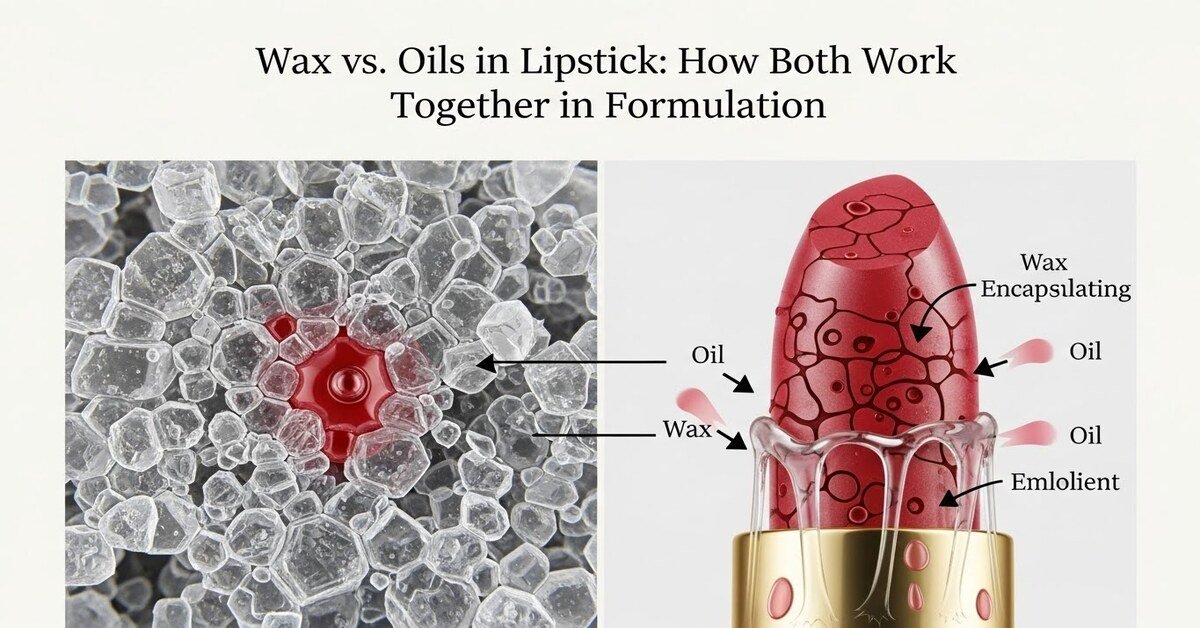
I once watched a cosmetic chemist craft a lipstick from scratch. She didn’t start with color, but with two clear jars: one holding hard, brittle Carnauba Wax, the other containing rich, golden Castor Oil. “This,” she said, weighing each on a scale, “is where every lipstick begins. The battle—and the partnership—between Wax vs Oils in Lipstick.” Too much wax, and the bullet would be unyielding, tugging at the lips. Too much oil, and it would be a soft, melting mess. Her goal wasn’t for one to win, but for them to reach a perfect truce. This fundamental dance defines everything about a lipstick, from its feel in the tube to its performance on your lips. Understanding this core relationship is the secret to knowing why your favorite lipstick behaves the way it does.
The conversation around lipstick ingredients explained often pits components against each other. However, wax and oil are not opponents; they are essential partners. Their synergy is the unsung hero of every successful formula. So, what is the role of wax in lipstick, and what does oil do in lipstick? Let’s dissolve the confusion and explore how these two foundational ingredients work in concert to create the textures we love, answering your key questions about longevity, formulation, and the myths in between.

The Foundational Partnership: Defining Their Roles
Think of creating lipstick like building a house. The waxes are the structural framework—they provide shape, stability, and definition. The oils are the mortar and interior finish—they fill the spaces, provide flow, and deliver comfort. Pigments, while crucial for color, are simply guests that this stable structure carries and displays.
- What is the main purpose of waxes? Waxes are the architects of structure. They solidify the formula, giving the lipstick its moldable bullet form and ensuring it doesn’t bend or melt at room temperature. They create the “drag” or “slip” during application and are critical for long-lasting lipstick by forming a cohesive film on the lips. The specific wax used dramatically alters the outcome—learn about the extremes in our guide Beeswax vs Carnauba Wax in Lipstick.
- What does oil do in lipstick? Oils are the masters of texture and delivery. They dissolve or suspend pigments evenly, carry them onto the lips smoothly, and determine the finish (glossy, satin, or matte). They provide emollience, conditioning the lips and preventing the wax from feeling dry or uncomfortable. Common oils include castor oil for rich gloss and pigment suspension, and Jojoba Oil in Lipstick for its lightweight, skin-similar moisture.
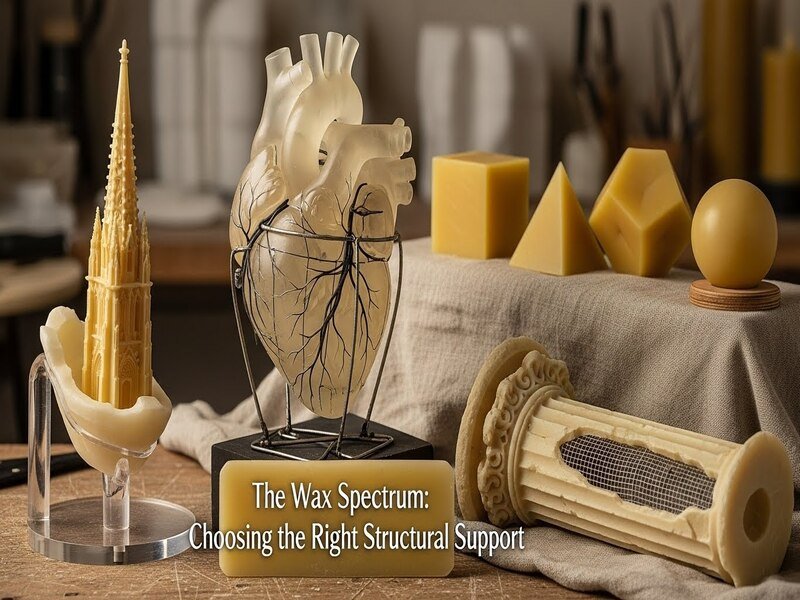
The Wax Spectrum: Choosing the Right Structural Support
Not all waxes are the same, and the choice directly impacts the formulation aspects of lipstick. Formulators select from a palette to achieve precise results, as detailed in our overview of Wax Types in Lipstick.
| Wax Type | Key Property | Role in the Wax vs Oil Balance |
|---|---|---|
| Beeswax | Plastic, emollient, medium hardness. | Adds structure while contributing some conditioning. Allows for more oil in the blend. |
| Carnauba Wax | Very hard, high-gloss finish. | What is the function of carnauba wax in lipstick? It provides extreme strength and a shiny film. Requires sufficient oil to prevent a brittle, dragging feel. |
| Candelilla Wax | Hard, brittle, vegan. | Similar to carnauba but with a slightly lower melt point. A key player in vegan formulas. |
| Synthetic Waxes | Highly consistent, versatile hardness. | Offer predictable performance and can be engineered for specific traits like flexibility. Explore the debate in Natural vs Synthetic Wax in Lipstick. |
What is the best wax for lipstick? There is no single winner. The “best” is a strategic blend chosen for the target finish—a creamy lipstick uses more pliable waxes, while a matte liquid lipstick leans on harder waxes and polymers. The foundational role of all waxes is explored in our article, Wax in Lipstick.
The Oil Component: Texture, Finish, and Care
Oils are selected for their feel, absorption, and stability.
- Which oil is used to make lipstick? Castor Oil is a classic for its thick viscosity and superb pigment-wetting ability. Jojoba Oil is prized for its similarity to skin’s sebum. The choice between oils can be nuanced, as discussed in our comparison of Castor Oil vs Jojoba Oil in Lipstick.
- What is lip oil made of? Lip oils are a testament to the power of oils, often containing a blend of nourishing plant oils (like jojoba, rosehip, or coconut) with minimal wax, resulting in a sheer, glossy, treatment-like product.
- How do you add oil to lip gloss? In glosses, the oil-to-wax ratio is very high. Oils make up the bulk of the formula, with just enough wax (or polymer) to provide a slight body and prevent excessive runoff.

The Magic Ratio: What Makes Lipstick Last Longer?
What ingredients make lipstick long-lasting? Longevity is a team effort born from the wax-oil-pigment balance.
- Wax Film: Harder waxes like carnauba form a more tenacious, water-resistant film on the lips that locks pigment in place.
- Oil Evaporation: Some formulas use volatile silicones or lighter oils that evaporate after application, leaving behind a concentrated layer of wax and pigment—the core of many “transfer-proof” liquid lipsticks.
- Pigment Load: Higher pigment concentration, properly dispersed by oils, means more color adheres to the lip surface.
What is the ratio of oil to wax in lip balm? While lipstick ratios are trade secrets, a basic lip balm often starts around a 1:1 to 4:1 oil-to-wax ratio. Lipstick typically uses more wax for greater structure and color payoff. How to make lipstick using wax? The process involves carefully heating and blending chosen waxes and oils, adding pigment, and pouring into molds—a science where precision is key. For specific blending advice, our Formulation Tips for Castor and Jojoba Oil can be helpful.
Demystifying Common Lipstick Questions
Do most lipsticks contain fish scales?
Historically, a pearlescent substance called guanine (from fish scales) was used for shimmer. Today, most brands use synthetic or mineral-based pearls (like mica). It’s always best to check the ingredient list if this is a concern.
Does Burt’s Bees have wax?
Yes, absolutely. As a brand built on Beeswax, it’s a core ingredient in their lip products, providing the signature structure and natural emollience.
Which ingredients should I avoid in lipstick?
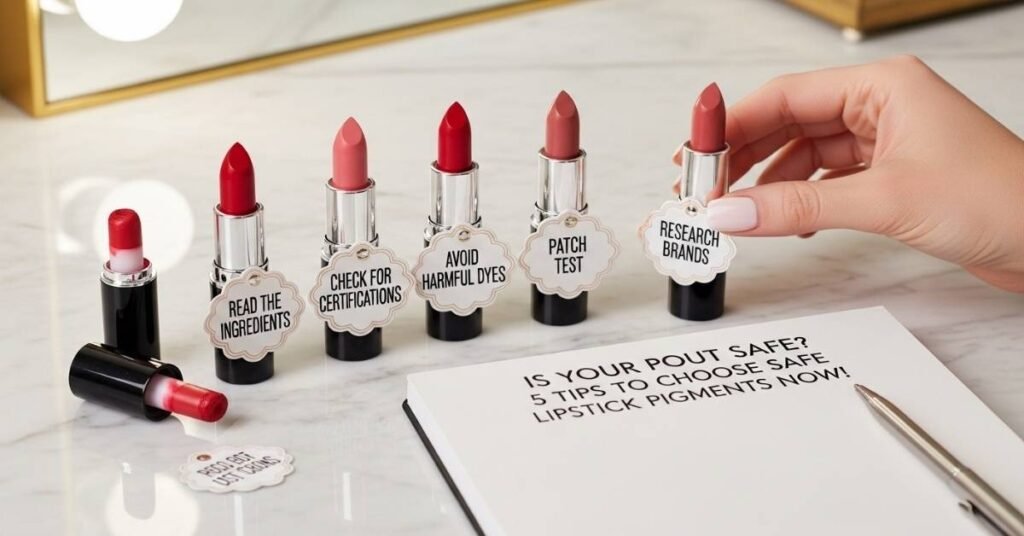
This is personal. Some prefer to avoid Synthetic Lipstick Ingredients, heavy fragrances, or specific allergens. Others seek out Natural Lipstick Ingredients. The most important thing is to be an informed reader of ingredient lists and understand the role of pigments, waxes and oils in the composition of lipsticks to make choices that align with your values and skin’s needs.
FAQs About Wax vs Oils in Lipstick
Can a lipstick have too much oil?
Yes. Excessive oil can make the bullet too soft, cause it to “sweat” (oil separation on the surface), and reduce its longevity and color intensity.
Why do some matte lipsticks feel drying?
They often use a higher ratio of hard, absorbing waxes and powders, with fewer emollient oils. While they lock color in place, they can draw moisture from the lips if not formulated with balancing conditioning agents.
Is beeswax or oil more moisturizing?
Oil is generally more directly moisturizing as it can penetrate and condition. Beeswax is an occlusive agent, meaning it forms a protective barrier over the lips to seal in existing moisture. Together, they are a powerful hydrating team.
What’s the difference between a lipstick and a lip stain?
Lip stains are primarily dye/pigment with very little wax or oil structure, designed to absorb into the lip skin. Lipsticks rely on their wax-oil matrix to sit on top of the lips, providing opaque color and texture.
How does temperature affect the wax-oil balance?
Heat can soften the wax and make oils more mobile, which is why lipsticks can melt in a hot car. A well-formulated blend has a melting point high enough to remain stable through normal use.
Related Articles
- Wax in Lipstick – The complete guide to the structural backbone.
- Beeswax vs Carnauba Wax in Lipstick – A deep dive into two key structural waxes.
- Natural vs Synthetic Wax in Lipstick – Understanding your material choices.
- Candelilla Wax in Lipstick – Explore a popular vegan wax alternative.
- Lipstick Ingredients Explained – Contextualize how waxes and oils fit into the full picture.
- Castor Oil and Jojoba Oil in Lipstick Formulation Tips – Practical advice for using key oils.
- What is Lipstick? – A foundational look at the product’s history and composition.