You swipe on a lipstick expecting a soft nude or a true red—and then look in the mirror to find something completely different. The shade looks darker, warmer, or oddly orange. If this keeps happening, it’s not your imagination. Why Lipstick Changes Color on Pigmented Lips comes down to how pigment interacts with your natural lip tone.
Lip pigmentation acts like a filter. When lipstick sits on top, the two colors mix. Understanding this interaction—and how to neutralize it properly—helps you get closer to the shade you actually chose.
This concern is covered in our Lipstick Care & Tips section, where we explain common lipstick problems and how simple prep steps can prevent them.
Why Lipstick Changes Color on Pigmented Lips
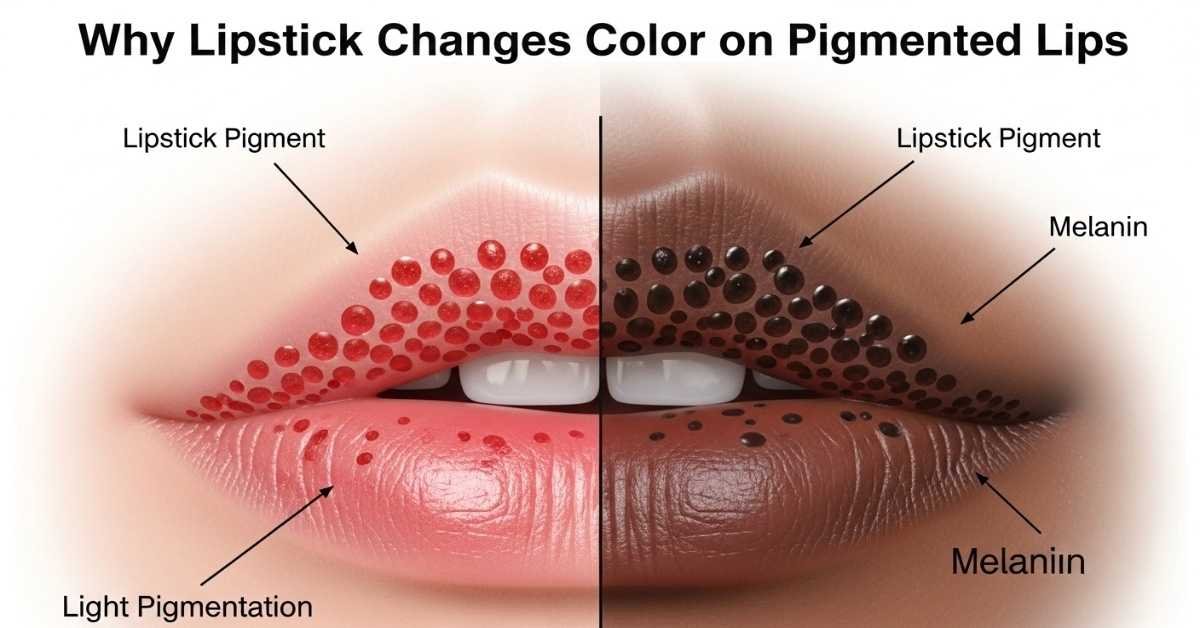
Natural lips aren’t one uniform color. Many people have deeper borders, darker centers, or overall pigmentation that shifts lipstick undertones. When a lipstick is applied, its pigments blend with what’s underneath—changing the final result.
That’s the core reason Why Lipstick Changes Color on Pigmented Lips even when the same shade looks perfect on someone else. Lipstick doesn’t replace your lip color; it layers over it.
Why Does Lipstick Change Color on My Lips?
Several factors work together:
- Underlying pigmentation: Darker lips deepen or warm lipstick tones
- Undertone mixing: Blue-based shades can turn purple; pinks can turn orange
- Opacity of the formula: Sheer lipsticks show more of your natural color
This explains why the same lipstick can look peachy on one person and brownish on another.
The Science Behind Color Shifting Lipstick
If you’ve heard about “color-changing” lipsticks, the science is similar—just less intentional. Pigments respond to the pH and base color of your lips. On pigmented lips, warm undertones often push shades toward orange or brick tones.
Understanding Why Lipstick Changes Color on Pigmented Lips starts with accepting that lips are not a blank canvas.
Why Do Lipsticks Turn Orange on My Lips?
This is one of the most common complaints.
Lipsticks turn orange when:
- The lip base is darker or warmer
- The lipstick has yellow or coral undertones
- The formula is sheer or glossy
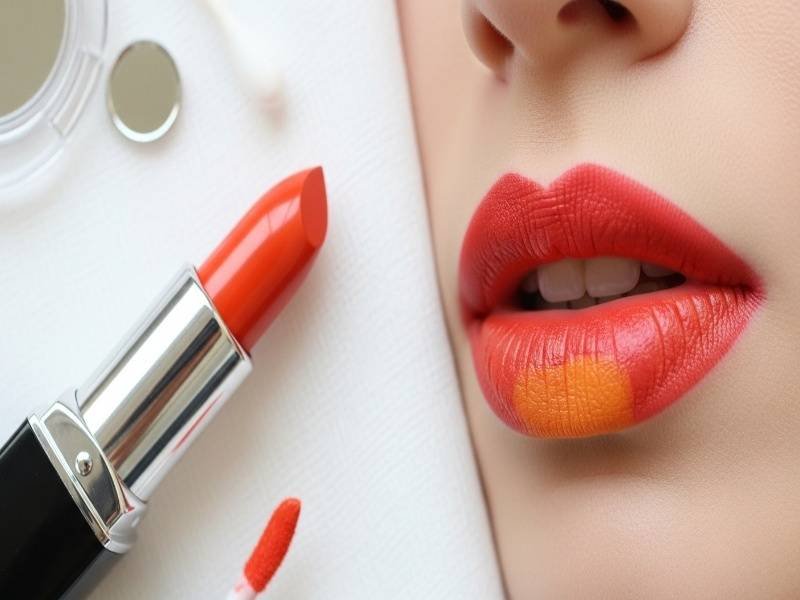
The warmth underneath shows through, shifting reds and pinks toward orange.
How to Neutralize Lip Color Before Lipstick
If you’re asking how to neutralize lip color, the goal isn’t to erase your lips—it’s to softly mute them.
The most effective way is using a thin neutral base. A practical method is explained in foundation on lips before lipstick, where foundation is used lightly to reduce the influence of natural pigmentation without making lips look flat.
How Foundation Neutralizes Pigmented Lips
Foundation works by evening out the base color. When applied sparingly, it:
- Reduces dark borders and uneven tone
- Creates a more neutral surface
- Allows lipstick undertones to show more accurately
This is why foundation can be so effective in addressing Why Lipstick Changes Color on Pigmented Lips—it minimizes color mixing at the base.
Foundation vs Concealer for Lip Neutralization
Both products can neutralize lips, but they behave differently.
- Foundation: lighter, more flexible, better for subtle correction
- Concealer: heavier, more opaque, stronger color cancellation
A side-by-side explanation in foundation vs concealer on lips shows why foundation is usually the safer choice for everyday neutralization.
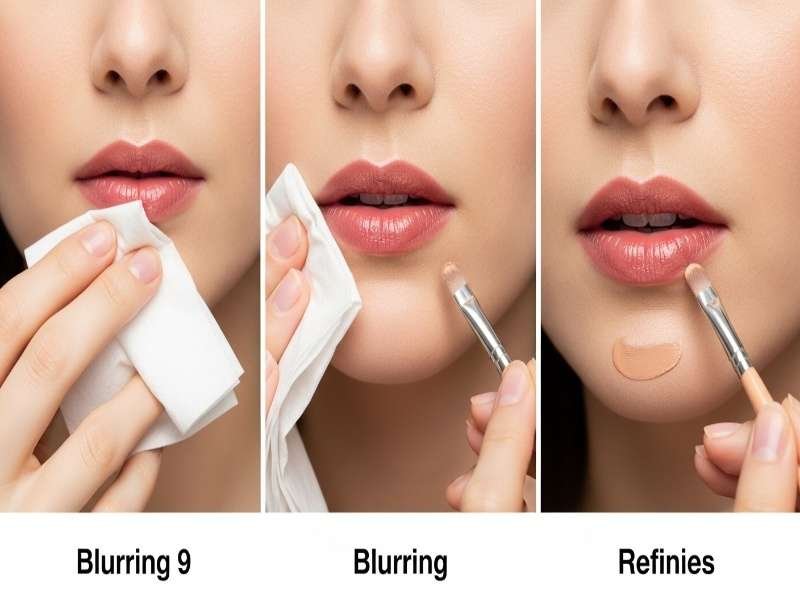
How to Put Lipstick on Pigmented Lips (Step-by-Step)
To get truer color payoff:
- Hydrate lips well and blot
- Apply a very thin layer of foundation
- Let it set briefly
- Apply lipstick in light layers
This method directly addresses Why Lipstick Changes Color on Pigmented Lips without causing dryness or cakiness.
How to Stop Lipstick from Changing Color
Consistency matters more than product hopping.
To stop shade shifting:
- Use opaque or satin formulas
- Neutralize lips lightly before lipstick
- Avoid overly sheer textures if pigmentation is strong
These steps reduce the influence of your natural lip color.
Which Lipstick Is Best for Pigmented Lips?
Certain formulas perform better on pigmented lips:
- Medium to full-coverage lipsticks
- Satin and cream finishes
- Blue-based reds and deeper nudes
Sheer glosses and very light nudes tend to show pigmentation more.
How to Get Lipstick to Stay on Pigmented Lips
Pigmented lips don’t automatically mean poor wear—but uneven bases can shorten longevity.
To improve wear:
- Neutralize lightly
- Apply lipstick in thin layers
- Avoid heavy oils underneath
Even wear is part of solving Why Lipstick Changes Color on Pigmented Lips—not just shade accuracy.
How to Prevent Lip Pigmentation from Affecting Lipstick
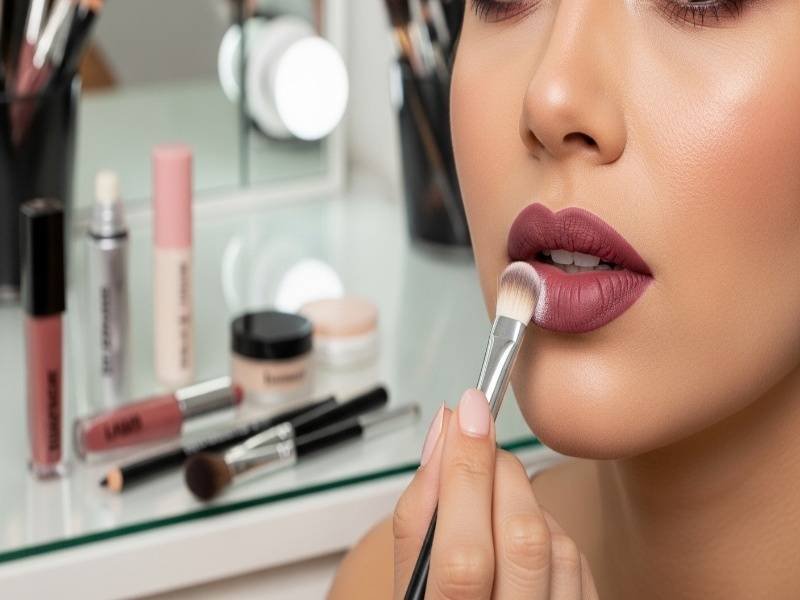
Long-term, you can reduce the impact by:
- Exfoliating gently 2–3 times per week
- Hydrating lips nightly
- Protecting lips from sun exposure
Healthier lips need less correction.
How to Reverse Pigmentation on Lips
Pigmentation doesn’t disappear overnight, but you can improve it over time:
- Avoid smoking and excessive caffeine
- Use SPF lip products
- Maintain consistent hydration
These steps won’t change genetics, but they reduce uneven tone.
What Are the Disadvantages of Lip Neutralization?
Neutralization isn’t perfect.
Possible downsides:
- Dryness if overused
- Lips looking flat if too much product is applied
- Extra prep time
That’s why neutralization should be light and intentional, not a daily heavy step.
When Lip Neutralization Makes Sense
Neutralizing lips is useful when:
- Lipstick shades always look warmer or darker
- You’re wearing light nudes or pastels
- You want true color payoff for photos or events
Skip it when comfort and natural texture matter more.
Final Thoughts: Control the Base, Control the Color
If you’ve struggled with unpredictable shades, the issue isn’t your lipstick—it’s the base. Understanding Why Lipstick Changes Color on Pigmented Lips gives you control over the final result. With light neutralization and the right formulas, lipstick finally looks the way you expect it to.
You don’t need to erase your lips—just balance them.
❓ FAQs – Why Lipstick Changes Color on Pigmented Lips
1. Why does lipstick change color on my lips?
Because lipstick mixes with your natural lip pigmentation.
2. How can I neutralize lip color before lipstick?
Use a thin layer of foundation on hydrated lips.
3. Why do lipsticks turn orange on pigmented lips?
Warm undertones underneath push shades toward orange.
4. Which lipstick works best for pigmented lips?
Opaque satin or cream formulas with balanced undertones.
5. Are there disadvantages to lip neutralization?
Yes—overuse can cause dryness or a flat look.