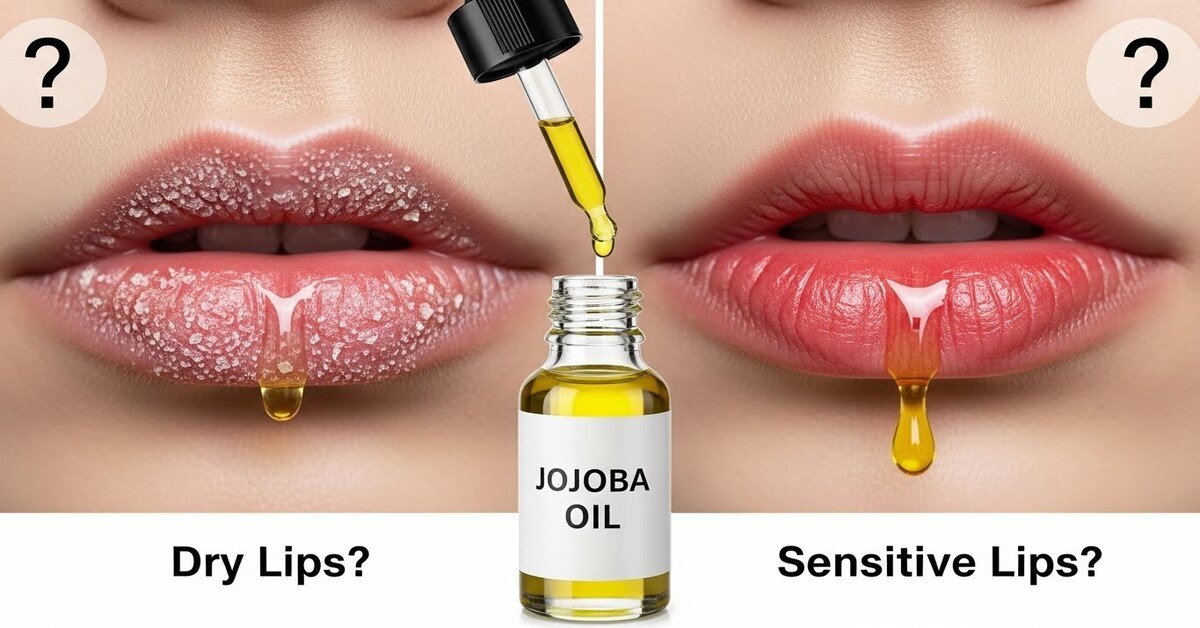
There’s something almost comforting about slipping a balm onto dry, cracked lips at night. The smooth glide, the slight sheen, the promise of softness by morning. But with so many oils and balms on the market, one ingredient keeps popping up in both DIY beauty circles and clinical discussions: jojoba oil. So it’s a question many of us ask: Is jojoba oil good for dry lips? What about sensitive lips?
This isn’t just a beauty blogger question — dermatologists get asked versions of this every day. Lips are unique: they lack oil glands, they lose moisture quickly, and they’re exposed constantly to environmental stress. That’s why the answer isn’t simply “yes” or “no” — it’s about understanding how jojoba oil works and when it works best.
Let’s dive in.
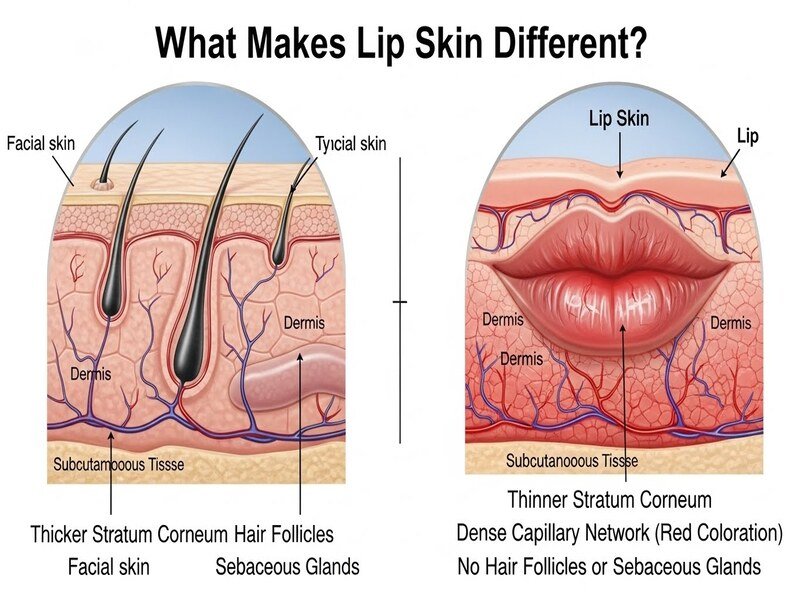
What Makes Lip Skin Different?
Your lips aren’t like the rest of your face. They have:
- No sebaceous (oil) glands — meaning they can’t self-lubricate like cheeks or forehead skin
- Thin stratum corneum — the top layer of skin is much thinner
- High exposure to wind, sun, and dehydration
This combination makes lips especially prone to dryness and sensitivity.
That’s why a product that works on your face might irritate your lips — and conversely, a balm that feels soothing might not actually repair dryness.
Understanding where jojoba oil fits requires a closer look at what it is.
What Is Jojoba Oil — Really? (Not Just “Another Oil”)
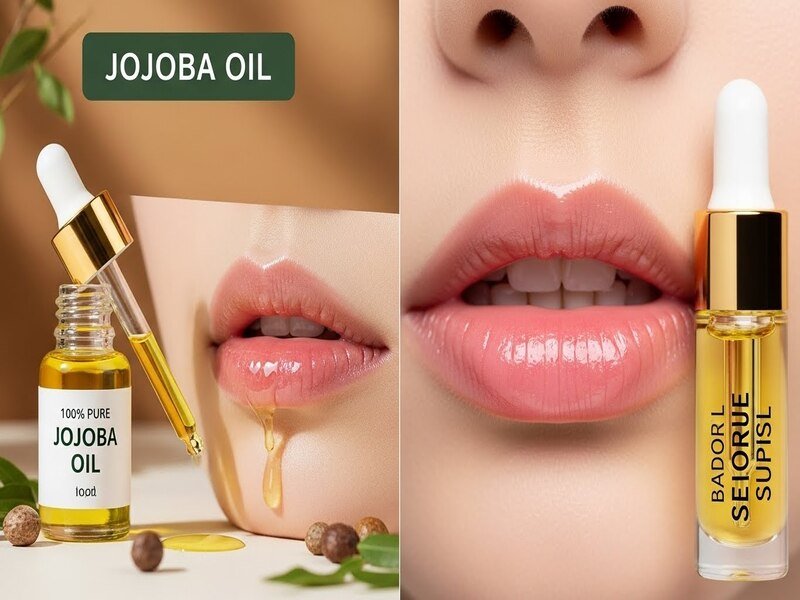
Jojoba oil isn’t technically an oil — it’s a liquid wax ester derived from the seeds of the Simmondsia chinensis plant. In skin science terms, that makes it strikingly similar to human skin lipids, which is why dermatologists appreciate it.
Unlike heavy, greasy oils, jojoba:
- Mimics natural skin lipids
- Absorbs without clogging pores
- Supports the skin’s barrier function
That’s likely why in lip-focused products, jojoba oil is praised for being gentle but effective.
For comparison, many lip formulas also use castor oil — which plays a different role. If you’re curious about castor oil’s safety on lips, you can explore doctor-oriented insight in Is Castor Oil Safe for Lips? What Dermatologists Say.
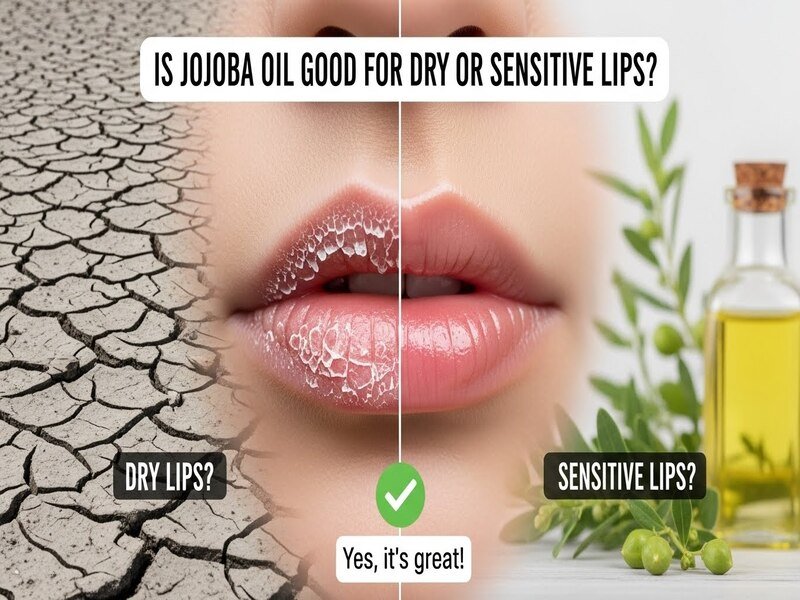
Is Jojoba Oil Good for Dry Lips? (The Straight Answer)
Yes — for most people, jojoba oil is good for dry lips when used in balanced formulations.
Here’s how dermatologists think about it:
🟢 It Helps Seal Moisture
Because jojoba oil closely resembles natural skin lipids, it can help lock in moisture — a key factor for dry or flaky lips.
🟢 It’s Gentle on Sensitive Skin
Jojoba oil is non-irritating for most people, which makes it ideal if your lips are reactive or sensitive.
🟢 It Supports the Lip Barrier
By mimicking natural lipids, jojoba oil supports the skin barrier, which reduces trans-epidermal water loss — a primary cause of chapping.
With dry lips, the goal isn’t just to feel better temporarily — it’s to strengthen and protect. Jojoba oil supports this gently rather than aggressively.
How Jojoba Oil Works (In Plain Lip Terms)
Imagine your lips as a sponge that’s lost some of its natural oils. Instead of trying to force moisture in, jojoba oil acts like a sealant — it helps keep the moisture that’s already there from escaping.
This is very different from how some heavier occlusives work (like petroleum jelly). Jojoba works with your skin’s natural lipids rather than sitting on top as a heavy barrier.
Dermatologists often prefer this approach because:
- It reduces irritation
- It doesn’t trap irritants
- It supports natural regeneration
This behavior is similar to how jojoba oil works inside makeup formulas like lipstick — alongside other agents — which you can read about in Jojoba Oil in Lipstick.
What About Sensitive Lips? Is Jojoba Oil Safe?
Sensitive lips mean:
- Easily irritated skin
- Frequent redness or burning
- Flare-ups with fragranced products
Dermatologists generally consider jojoba oil safe for sensitive lips, because:
- It’s naturally anti-inflammatory
- It’s non-comedogenic
- It’s less likely to cause allergic reactions
However, as with everything skin-related, the caveat is formulation context. Pure jojoba oil can still cause irritation if:
- You’re allergic to plant-derived oils
- It’s used with irritating additives (strong fragrances, harsh actives)
If irritation occurs, stop use and consult a dermatologist.
When Jojoba Oil Alone Isn’t Enough
Jojoba oil works best as part of a balanced formula. Alone, it helps lock in moisture, but it doesn’t hydrate on its own — it doesn’t bring water into your lips.
For truly dry or cracked lips, dermatologists often recommend pairing it with:
- A gentle humectant (like glycerin)
- A thin occlusive layer (balm or wax)
- SPF protection during daytime
This layered approach traps moisture, supports the barrier, and defends against environmental damage. You’ll see this balance in many effective lip products.
How to Use Jojoba Oil for Lips (Pro Tips)
Here’s how dermatologists suggest using jojoba oil for best results:
⭐ 1. Use After Hydration
Apply jojoba oil after you’ve hydrated your lips (for instance, after a humidifier or a gentle lip serum).
⭐ 2. Avoid Overloading
Too much oil alone can feel greasy and might trap irritants — less is more.
⭐ 3. Pair With a Barrier Balm
A balm with waxes or ceramides over jojoba oil locks in moisture longer.
⭐ 4. Watch for Irritation
Even gentle oils can irritate unique skin types — patch test if unsure.
This is similar to how lip formulas balance oils with structure — like how wax levels change in different finishes, a topic covered in wax in lipstick.
Real-World Example: Winter Lip Care Routine
Think about winter — cold air outside, dry indoor heat. Your lips lose moisture faster than you realize. Some people apply pure oils like jojoba right before bed — but if your lips are severely dry or cracked, a formula that combines jojoba with humectants and protective barrier agents often works better.
That’s why many clinical lip products feature jojoba oil alongside other supportive ingredients. It’s not a solo hero — it’s a team player.
Common Myths Derms Want You to Ignore
❌ Myth: “Natural oils are always safer.”
Dermatologists point out that safety depends on formulation, not origin.
❌ Myth: “Heavier oils hydrate better.”
Heavy oils can suffocate delicate lip skin, while jojoba oil supports the natural barrier.
Want to see more myth-busting on lips and makeup? Check lipstick myths vs facts.
Is Jojoba Oil Better Than Other Lip Oils?
Jojoba oil stands out because it mimics human skin lipids. Compared to other oils:
- It’s less greasy
- It’s highly compatible with skin biology
- It plays better with other formulation ingredients
For example, castor oil is also widely used in lip formulas — but its role is more about glide, pigment dispersion, and finish rather than hydration alone. You can read more about how castor oil behaves in lip products in Is Castor Oil Safe for Lips? What Dermatologists Say.
Dermatologist Takeaway: When It’s Most Helpful
Dermatologists will usually say:
✔ Jojoba oil is good for dry lips
✔ It’s safe for sensitive lips in balanced products
✔ It supports barrier function
✔ Alone, it’s helpful but not a complete solution
The key takeaway is this: jojoba oil works best when it’s part of a thoughtfully-formulated lip care routine.
FAQs — Jojoba Oil for Lips
Is jojoba oil safe to use directly on lips?
Yes, for most people — but patch test first if sensitive.
Can jojoba oil help cracked lips?
Yes, especially when paired with barrier-forming agents like wax or ceramides.
Can jojoba oil cause irritation?
Rarely, but possible — especially if allergies to plant oils exist.
Can I use jojoba oil daily on lips?
Yes, especially in well-balanced products.
Is jojoba oil better than petroleum jelly?
Not necessarily better, but it supports the skin barrier more biologically — they serve slightly different functions.